Coal’s critical status debated as Africa balances energy security and transition pressures

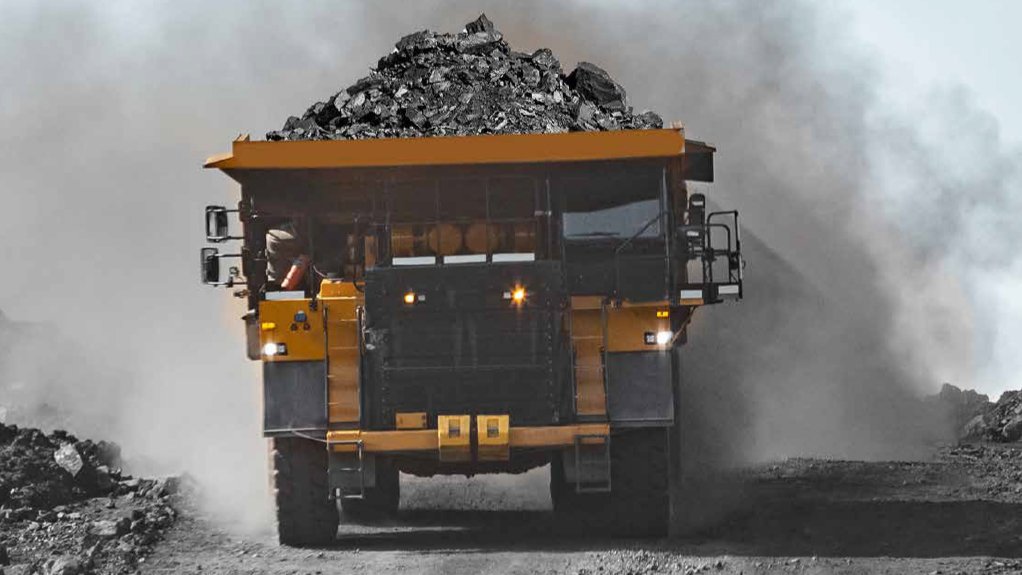
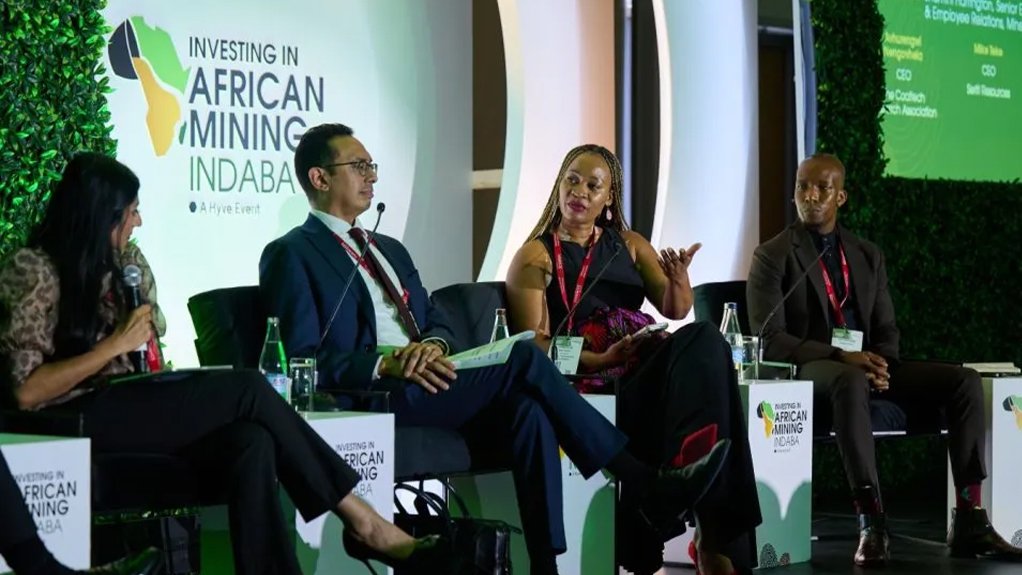
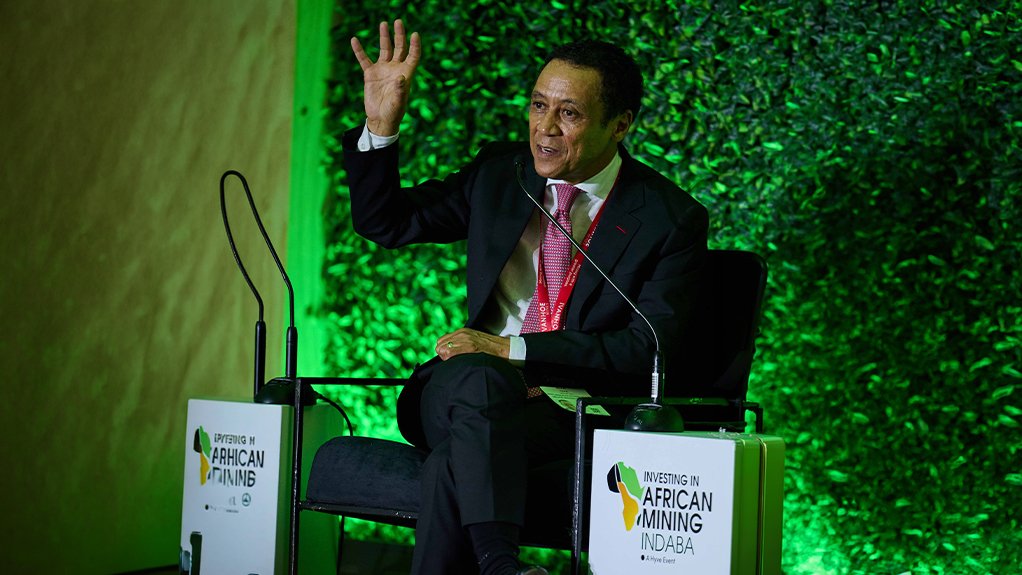
CRITICAL COAL Panellists debate why coal is excluded from most global critical minerals lists, despite its continued centrality to
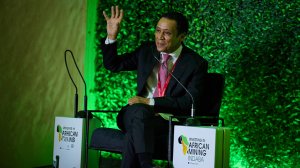
Mike Teke Coal's importance in Africa cannot be understated
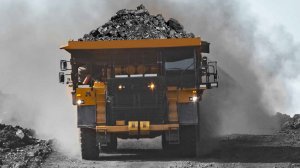
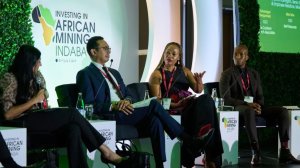


The classification of coal as a “critical mineral” remains a contentious issue globally, but for African economies – particularly South Africa – the debate is far from academic. Instead, it cuts to the heart of energy security, industrial development and the pace of the energy transition.
This was evident during a panel discussion at Investing in African Mining Indaba 2026, where industry leaders, researchers and policymakers interrogated why coal is excluded from most global critical minerals lists, despite its continued centrality to many economies.
Minerals Council South Africa senior executive for environment, health, legacies and employee relations Shamini Harrington highlighted the divergence in definitions between the Global North and resource-rich economies. While countries in Europe and North America typically define critical minerals as those essential for defence and the green energy transition – such as lithium, cobalt and rare earth elements – South Africa includes coal in its own critical minerals strategy owing to its role in supporting domestic industry, employment and energy supply.
This divergence reflects fundamentally different priorities.
For South Africa, coal remains the backbone of the energy system, supplying about 82% of electricity and underpinning industrial activity. Harrington noted that, despite increasing global emphasis on decarbonisation, the country’s immediate realities – including grid stability and economic development – require a more nuanced approach.
Seriti Resources CEO Mike Teke argued that coal’s importance in Africa cannot be understated, particularly given its role in supporting economic growth and enabling a just energy transition.
“Coal is critical for us as a country,” he said, pointing to South Africa’s extensive coal-based infrastructure and the concentration of power stations in Mpumalanga. He added that coal will remain part of the energy mix for decades, particularly as a baseload source needed to complement intermittent renewable energy.
“It’s not coal versus renewables – it’s coal and renewables,” Teke stressed.
From a global perspective, FutureCoal director of strategy and sustainability Paul Baruya suggested that coal’s exclusion from critical minerals lists is partly owing to its abundance and reliability. Unlike minerals such as lithium or cobalt, which face supply constraints and geopolitical concentration, coal is widely available and supported by mature technologies across the value chain.
“In the strict sense of the word, it’s not critical because it is abundant and resilient,” he said.
However, Baruya cautioned that removing coal from the energy system would have far-reaching consequences. He highlighted coal’s central role in steel and cement production, which are essential for infrastructure development, particularly in rapidly growing regions such as Africa.
He also pointed to the continued reliance on coal in global manufacturing supply chains, including for renewable-energy technologies themselves. “About 70% of global steel production depends on coal,” he noted, underscoring the paradox that the energy transition still depends heavily on fossil fuels.
The discussion also underscored the importance of context in defining criticality. Coaltech Research Association CEO Avhurengwi Nengovhela argued that critical minerals frameworks are inherently geography-specific and should not be applied uniformly across regions.
“In a country such as South Africa, criticality speaks to economic growth and socioeconomic considerations.”
He highlighted that about 600-million people in sub-Saharan Africa still lack access to electricity, making energy expansion – rather than rapid transition – the immediate priority. In this context, coal remains a vital resource for both energy access and job preservation, with tens of thousands of direct jobs and many more indirect livelihoods dependent on the sector.
The role of science and innovation also featured prominently in the discussion. Council for Geoscience executive manager Siphelele Buthelezi emphasised that policy decisions should be grounded in evidence rather than shifting geopolitical narratives.
“The rocks never lie,” she said, noting that South Africa still has substantial coal reserves – estimated at more than 60-billion tonnes – capable of supporting long-term energy needs.
Rather than debating whether coal should be phased out, Buthelezi argued that the focus should shift to reducing emissions through technological innovation. This includes carbon capture utilisation and storage, which could enable continued coal use while mitigating environmental impacts.
Research into alternative uses of coal is also gaining momentum. Nengovhela pointed to emerging opportunities in advanced materials and the extraction of rare earth elements from coal by-products such as fly ash. These developments could position coal within new value chains linked to the energy transition.
Simultaneously, panellists acknowledged the environmental challenges associated with coal, particularly carbon emissions and air-quality impacts. However, they argued that solutions lie in technological advancement rather than abrupt discontinuation.
“Can emissions from coal utilisation be materially reduced through technology while preserving energy security? The science says yes,” Buthelezi stated.
Geopolitics was another recurring theme, with Teke warning against allowing external agendas to dictate Africa’s energy choices. He noted that shifting policy priorities in major economies have led to inconsistent signals around fossil fuels and green energy, creating uncertainty for developing countries.
“We need to make decisions that are in the interests of this continent,” he said, cautioning against blindly adopting external frameworks that may not align with local realities.
The discussion ultimately highlighted the complexity of balancing energy security, economic development and climate objectives. While coal may not meet the traditional criteria for a critical mineral in global definitions, its role in Africa’s energy systems and industrial base suggests that alternative classifications may be more appropriate.
Panellists also stressed the importance of language and framing. Nengovhela argued that Africa must define its own terms and priorities, rather than adopting concepts developed elsewhere without adaptation.
“We need to ask: what is critical for us?” he said.
As the global energy transition accelerates, this question is likely to become increasingly important. For Africa, the challenge will be to chart a path that leverages existing resources, supports development and incorporates cleaner technologies – without compromising energy access or economic stability.
The Mining Indaba discussion made it clear that coal’s role is far from settled. Rather than a binary choice between fossil fuels and renewables, the future energy mix in Africa is likely to be defined by integration, innovation and pragmatism.
Article Enquiry
Email Article
Save Article
Feedback
To advertise email advertising@creamermedia.co.za or click here
Research Reports

Projects
Latest News

Showroom
Tsurumi Pumps Africa is a specialist supplier of Japanese-engineered submersible pumping solutions, serving customers across the African continent.
VISIT SHOWROOM
Astore Keymak is one of South Africa’s leading suppliers of high-quality Thermoplastic Pipeline Systems, with branches in the major provinces.
VISIT SHOWROOM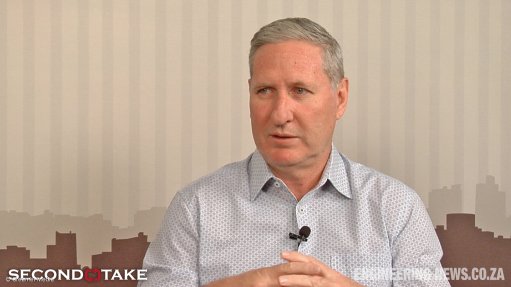
Press Office
Announcements
What's On
Subscribe to improve your user experience...
Option 1 (equivalent of R125 a month):
Receive a weekly copy of Creamer Media's Engineering News & Mining Weekly magazine
(print copy for those in South Africa and e-magazine for those outside of South Africa)
Receive daily email newsletters
Access to full search results
Access archive of magazine back copies
Access to Projects in Progress
Access to ONE Research Report of your choice in PDF format
Option 2 (equivalent of R375 a month):
All benefits from Option 1
PLUS
Access to Creamer Media's Research Channel Africa for ALL Research Reports, in PDF format, on various industrial and mining sectors
including Electricity; Water; Energy Transition; Hydrogen; Roads, Rail and Ports; Coal; Gold; Platinum; Battery Metals; etc.
Already a subscriber?
Forgotten your password?
Receive weekly copy of Creamer Media's Engineering News & Mining Weekly magazine (print copy for those in South Africa and e-magazine for those outside of South Africa)
➕
Recieve daily email newsletters
➕
Access to full search results
➕
Access archive of magazine back copies
➕
Access to Projects in Progress
➕
Access to ONE Research Report of your choice in PDF format
RESEARCH CHANNEL AFRICA
R4500 (equivalent of R375 a month)
SUBSCRIBEAll benefits from Option 1
➕
Access to Creamer Media's Research Channel Africa for ALL Research Reports on various industrial and mining sectors, in PDF format, including on:
Electricity
➕
Water
➕
Energy Transition
➕
Hydrogen
➕
Roads, Rail and Ports
➕
Coal
➕
Gold
➕
Platinum
➕
Battery Metals
➕
etc.
Receive all benefits from Option 1 or Option 2 delivered to numerous people at your company
➕
Multiple User names and Passwords for simultaneous log-ins
➕
Intranet integration access to all in your organisation