Britain’s costly Rwanda misadventure


In the annals of public procurement, few projects rival one that cost £290-million, resulted in the relocation of just four unwanted immigrants to a faraway country and survived three Prime Ministers and numerous court challenges.
This description perfectly fits Britain’s scheme to offload would-be asylum seekers arriving on small boats from across the English Channel onto Rwanda, a policy hatched by Boris Johnson’s administration in 2022 and activated through the passage of the Safety of Rwanda Act in 2023 when Rishi Sunak, a Conservative like Johnson, was at the helm. Liz Truss also backed the deal during her brief tenure as Johnson’s successor as both Prime Minister and Conservative Party leader.
No sooner had Labour’s Keir Starmer assumed office as Prime Minister in July 2024 than he scrapped the scheme, calling it “dead and buried”. By then only four people had moved to Rwanda voluntarily, travelling by commercial flight nogal. No evidence exists that asylum seekers were actually forcibly deported to the East African country under the flagship policy.
The first asylum seeker to move to Rwanda voluntarily left in April 2024, after being offered more than £3 000 in financial aid.
The £290-million of taxpayer money the UK government had forked out before the scheme’s collapse included an initial payment, in April 2022, of £120-million into Rwanda’s Economic Transformation and Integration Fund (ETIF), intended to support economic and social development regardless of how many migrants were relocated, and an additional £20-million as an advance for operational and asylum-processing preparations. Subsequent ETIF transfers of £100-million and £50-million followed in April 2023 and April 2024 respectively.
Rwanda was utterly unimpressed by the Labour government’s move, prompting it to make a beeline for the Permanent Court of Arbitration at The Hague in November last year, claiming the UK had breached binding contractual obligations under the asylum partnership agreement and therefore remained liable for payments that had already been promised, namely £50-million during each of the 2025 and 2026 financial years.
The court ruled late last month that the UK did not have to pay the claimed millions, a decision a Rwandan spokesperson said his government accepted, noting that the matter was now closed.
The scheme was dogged by sustained legal challenges from its inception. In June 2022, the first deportation flight was grounded after an intervention by the European Court of Human Rights. Subsequent challenges culminated in a landmark November 2023 ruling by the UK Supreme Court, which found the scheme unlawful, concluding that asylum seekers faced a real risk of being returned to countries where they would be persecuted.
The Conservative government responded by negotiating a new treaty with Rwanda and passing the Safety of Rwanda Act, which designated Rwanda as a safe country in law. However, further objections persisted, with critics arguing that the legislation sought to limit judicial scrutiny and circumvent the court’s findings.
Viewed from a South African public-finance perspective, the collapsed arrangement would qualify as a textbook example of wasteful expenditure. All the UK authorities can show for the £290-million given to Rwanda is the relocation of just four migrants, all of whom travelled voluntarily, with each receiving a financial incentive to make the move.
Perhaps the most obnoxious aspect of the whole affair was the assumption that Rwanda could simply be designated a safe third country by political fiat. Johnson, Sunak and their allies in the Conservative Party persisted with the scheme despite longstanding concerns about Rwanda’s human rights record.
Besides, when Rwanda previously performed this role, receiving immigrants that Israel didn’t want, it proved that it was not up to the task. As I have reported in this column before, Israel sent 4 000 foreign nationals to Uganda and Rwanda under a so-called voluntary departure scheme from 2014 to 2018, almost half of whom left immediately, with most making their way to Europe.
One deportee tracked down by Israeli newspaper Haaretz in 2018 spoke of being destitute and sleeping on the streets of Kigali, the Rwandan capital.
Critics of the scheme must be celebrating that the arbitration court rejected Rwanda’s claim. Who knows, had the UK been made to pay the £100-million that was sought, it might have been tempted to follow through with the deportations. Many might have ended up as vagabonds in Rwanda’s urban centres, just like the hapless soul ejected by Israel years ago.
Article Enquiry
Email Article
Save Article
Feedback
To advertise email advertising@creamermedia.co.za or click here
Research Reports

Projects

Latest News


Showroom
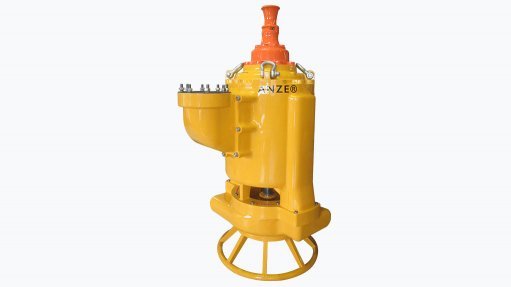
Goodwin Submersible Pumps Africa is sole distributors for Goodwin electrically driven, submersible, abrasion resistance slurry pumps.
VISIT SHOWROOM
We at Hawk High Pressure Pumps specialise in industrial pumps and pumping systems. Our high pressure washing equipment is locally manufactured and...
VISIT SHOWROOM


Press Office
Announcements
What's On
Subscribe to improve your user experience...
Option 1 (equivalent of R125 a month):
Receive a weekly copy of Creamer Media's Engineering News & Mining Weekly magazine
(print copy for those in South Africa and e-magazine for those outside of South Africa)
Receive daily email newsletters
Access to full search results
Access archive of magazine back copies
Access to Projects in Progress
Access to ONE Research Report of your choice in PDF format
Option 2 (equivalent of R375 a month):
All benefits from Option 1
PLUS
Access to Creamer Media's Research Channel Africa for ALL Research Reports, in PDF format, on various industrial and mining sectors
including Electricity; Water; Energy Transition; Hydrogen; Roads, Rail and Ports; Coal; Gold; Platinum; Battery Metals; etc.
Already a subscriber?
Forgotten your password?
Receive weekly copy of Creamer Media's Engineering News & Mining Weekly magazine (print copy for those in South Africa and e-magazine for those outside of South Africa)
➕
Recieve daily email newsletters
➕
Access to full search results
➕
Access archive of magazine back copies
➕
Access to Projects in Progress
➕
Access to ONE Research Report of your choice in PDF format
RESEARCH CHANNEL AFRICA
R4500 (equivalent of R375 a month)
SUBSCRIBEAll benefits from Option 1
➕
Access to Creamer Media's Research Channel Africa for ALL Research Reports on various industrial and mining sectors, in PDF format, including on:
Electricity
➕
Water
➕
Energy Transition
➕
Hydrogen
➕
Roads, Rail and Ports
➕
Coal
➕
Gold
➕
Platinum
➕
Battery Metals
➕
etc.
Receive all benefits from Option 1 or Option 2 delivered to numerous people at your company
➕
Multiple User names and Passwords for simultaneous log-ins
➕
Intranet integration access to all in your organisation