BMI webinar unpacks grid constraints, considerations

BMI power and renewables analyst Antonio Rivero Cruells provides insight into power demand management and flexibility.



As renewable power reach increases and electricity systems face growing pressure from electrification, energy security concerns and shifting demand patterns, both grid infrastructure and battery energy storage systems are becoming central to the next phase of power-sector development, multinational research firm BMI’s 'The Future of Power Management: Grid Investment and Storage Trends Shaping The Energy Transition' webinar, held on June 4, explored.
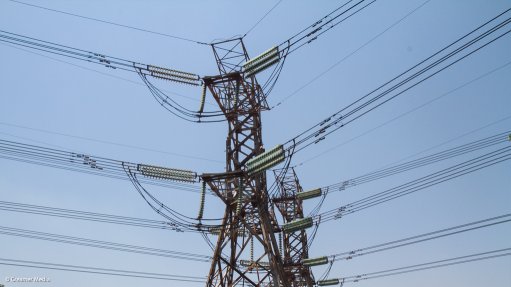
The session delved into how transmission, distribution, interconnection and storage investment are evolving across major markets, and why grids are increasingly becoming the binding constraint on renewable expansion.
BMI power and renewables senior analyst Harvest-Time Obadire outlined that, for the future of power management, in the medium to long term, grid infrastructure trends were expected to include modernisation of grid assets, increasing investment and integration of advanced grid systems.
Risks here entail delays in permitting, high capital costs and ageing infrastructure.
Meanwhile, on the demand side flexibility trends in the short to medium term include a shift to decentralised grids, more demand response and dynamic pricing, and commercial and residential participation.
Risks posed here include integration challenges, regulatory uncertainty and risk of grid instability.
In terms of storage integration, trends in the medium term are expected to be growth in battery storage, declining costs and advances in long-duration storage.
Risks are presented by high investment costs, evolving regulations and supply chain constraints.
BMI power and renewables senior analyst Linda Zeng pointed out that grid constraints were expected to define the pace of electrification, with a significant gap persisting between climate targets and system realities. Grid capacity was expected to remain the primary constraint for renewables growth.
She highlighted that grids were not scaling up fast enough to meet demand. While investment had increased considerably, a significant gap in investment still remained and costs continued to rise.
Zeng warned that wide regional disparities persisted, with outdated grid infrastructure causing highly inefficient grids in sub-Saharan Africa and Latin America.
She emphasised that system-level thinking and new enablers were required for the transition. Critical enablers for the power system of the future included grid forming and system services, network and hardware, demand and distributed energy resources, and markets and regulations.
Supply constraints are also indicated to be limiting the pace of physical grid expansion. While orders are rising, there is slow production expansion, and a growing backlog for grid equipment. Delays in delivery are set to persist.
Moreover, cost inflation is rising and dividing investment.
Zeng advocates a multi-pronged solution, with technical advancements and demand flexibility. Grid-enhancing technologies are emphasised as critical to unlock capacity, while demand flexibility and regulatory reform could potentially play an even greater role (Also see attached video).
She noted that interconnectors offered a potential path to greater flexibility and security. Concrete progress was being made here by the Association of Southeast Asian Nations power grid enhancements.
BMI forecasts global power storage capacity to rise to over 500 GW this year, and exceed 1 050 GW by 2035, with this forecast covering only battery storage and pumped hydropower, therefore, niche technologies are not factored into this.
Article Enquiry
Email Article
Save Article
Feedback
To advertise email advertising@creamermedia.co.za or click here
Research Reports

Projects
Latest Multimedia
Latest News

Showroom

The Steel Tube Export Association of South Africa was established to develop sustainable, internationally competitive carbon steel tube and pipe...
VISIT SHOWROOM
Energy and Densification Systems (EDS) has developed equipment for crushing, milling, blending and densifying products. Based on its globally...
VISIT SHOWROOM


Press Office
Announcements
What's On
Subscribe to improve your user experience...
Option 1 (equivalent of R125 a month):
Receive a weekly copy of Creamer Media's Engineering News & Mining Weekly magazine
(print copy for those in South Africa and e-magazine for those outside of South Africa)
Receive daily email newsletters
Access to full search results
Access archive of magazine back copies
Access to Projects in Progress
Access to ONE Research Report of your choice in PDF format
Option 2 (equivalent of R375 a month):
All benefits from Option 1
PLUS
Access to Creamer Media's Research Channel Africa for ALL Research Reports, in PDF format, on various industrial and mining sectors
including Electricity; Water; Energy Transition; Hydrogen; Roads, Rail and Ports; Coal; Gold; Platinum; Battery Metals; etc.
Already a subscriber?
Forgotten your password?
Receive weekly copy of Creamer Media's Engineering News & Mining Weekly magazine (print copy for those in South Africa and e-magazine for those outside of South Africa)
➕
Recieve daily email newsletters
➕
Access to full search results
➕
Access archive of magazine back copies
➕
Access to Projects in Progress
➕
Access to ONE Research Report of your choice in PDF format
RESEARCH CHANNEL AFRICA
R4500 (equivalent of R375 a month)
SUBSCRIBEAll benefits from Option 1
➕
Access to Creamer Media's Research Channel Africa for ALL Research Reports on various industrial and mining sectors, in PDF format, including on:
Electricity
➕
Water
➕
Energy Transition
➕
Hydrogen
➕
Roads, Rail and Ports
➕
Coal
➕
Gold
➕
Platinum
➕
Battery Metals
➕
etc.
Receive all benefits from Option 1 or Option 2 delivered to numerous people at your company
➕
Multiple User names and Passwords for simultaneous log-ins
➕
Intranet integration access to all in your organisation