



Receive our free daily newsletter:
Machine Learning
Latest 20 Articles in 60 Seconds
South African organisations are using machine learning models for analytics, AI-enhanced automation, natural language processing chatbots and computer vision systems in mining and agriculture, with the South African Revenue Service deploying AI to enhance tax filing and First National Bank using Microsoft's Copilot system to craft communications in native languages. Software engineering company Dariel says businesses are applying AI to fraud detection, credit analysis, customer support, forecasting and decision support, but success requires blending technical capabilities in machine learning and data engineering with domain expertise, process design and risk management, as organisations that realise value are those that make the technology work within day-to-day operations.
Effective AI governance demands addressing "dark data", the unmanaged and underutilised information that exists across emails, contracts, collaboration platforms and archives, says Datacentrix general manager Shakeel Jhazbhay, noting that AI amplifies existing weaknesses when information is fragmented, duplicated or poorly governed. Organisations must audit existing information assets, classify data types, cleanse redundant or obsolete content, establish retention and destruction policies, and only then accelerate AI deployment with tools to parse unstructured data, as businesses that create visibility and trust across information environments will derive the greatest value from AI rather than those deploying technology fastest.
The Draft National Artificial Intelligence Policy commits to harmonising AI privacy controls with the Protection of Personal Information Act and proposes a National AI Commission, AI Ethics Board, AI Regulatory Authority, AI Ombudsperson Office, National AI Safety Institute and AI Insurance Superfund modelled on the Road Accident Fund. Legal analysts at Werksmans say the policy signals regulatory direction but leaves organisations exposed by failing to specify operational infrastructure, noting gaps around data minimisation versus AI's data-hungry training requirements, automated decision-making rights under POPIA Section 71, and cross-border data flows, while warning that seven new bodies risk overlap and diluted accountability without clear governance lines.
Industrial AI has moved from experimentation to active deployment, with 61% of organisations using AI in live operations and 20% reporting scaled, mature deployments, according to Cisco Research's survey of 1 000 operational technology decision-makers across 21 industrial sectors in 19 countries. The survey shows 83% of organisations plan to increase AI spending and 87% expect meaningful outcomes within two years, but readiness gaps are emerging in networking infrastructure, cybersecurity and IT/operational technology collaboration, with 40% citing cybersecurity as the biggest obstacle to scaling AI and only 57% reporting IT/OT collaboration despite its proven criticality to operationalising AI at scale.
Machine Learning Updates

By: Shakeel Jhazbhay - General Manager: Digital Business Solutions at Datacentrix With artificial intelligence moving rapidly from experimentation to strategic priority, today’s businesses are...

By Steven Santini, Vice President for Secure Power, SSA at Schneider Electric The advantages of edge computing are well-documented, clear and tangible. Many industries today benefit from its...
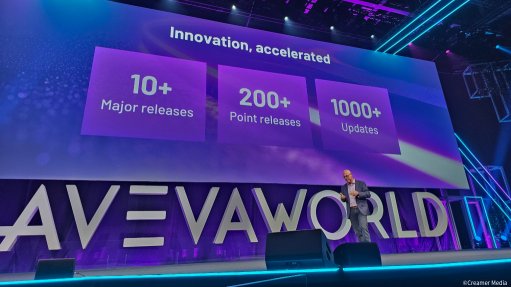
In the world of software-as-a-service, the pace at which industrial software company AVEVA is innovating and upgrading its portfolio has increased dramatically, chief product officer Rob McGreevy...

If you’ve been exploring ways to improve efficiency, automate workflows, or bring more structure to operations, you’ve probably come across the term what is bpm. Short for Business Process...

By Sega Tiro, Executive: Commercial & Growth at ASI Connect Every year on the fourth Thursday of April, the world pauses to recognise something urgent and hopeful: the untapped potential of girls...

While artificial intelligence (AI) systems require information technology (IT) and data science skills to deploy, they also demand industry-specific expertise to ensure their effective integration...

While artificial intelligence (AI) systems require information technology (IT) and data science skills to deploy, they also demand industry-specific expertise to ensure their effective integration...
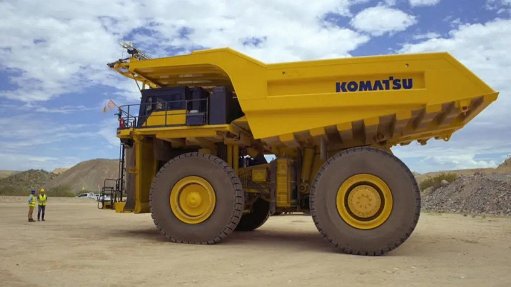
Detailed in a statement in September 2025, a strategic technology collaboration between vehicle intelligence company Applied Intuition and heavy equipment manufacturer Komatsu South Africa is...
AI is delivering measurable operational benefits in use cases such as process automation, automated quality inspection, predictive maintenance, logistics and energy forecasting, the 'State of...
 |
 |
1 |
 |
 |
Research Reports




Projects






Subscribe to improve your user experience...
Option 1 (equivalent of R125 a month):
Receive a weekly copy of Creamer Media's Engineering News & Mining Weekly magazine
(print copy for those in South Africa and e-magazine for those outside of South Africa)
Receive daily email newsletters
Access to full search results
Access archive of magazine back copies
Access to Projects in Progress
Access to ONE Research Report of your choice in PDF format
Option 2 (equivalent of R375 a month):
All benefits from Option 1
PLUS
Access to Creamer Media's Research Channel Africa for ALL Research Reports, in PDF format, on various industrial and mining sectors
including Electricity; Water; Energy Transition; Hydrogen; Roads, Rail and Ports; Coal; Gold; Platinum; Battery Metals; etc.
Already a subscriber?
Forgotten your password?
Receive weekly copy of Creamer Media's Engineering News & Mining Weekly magazine (print copy for those in South Africa and e-magazine for those outside of South Africa)
➕
Recieve daily email newsletters
➕
Access to full search results
➕
Access archive of magazine back copies
➕
Access to Projects in Progress
➕
Access to ONE Research Report of your choice in PDF format
RESEARCH CHANNEL AFRICA
R4500 (equivalent of R375 a month)
SUBSCRIBEAll benefits from Option 1
➕
Access to Creamer Media's Research Channel Africa for ALL Research Reports on various industrial and mining sectors, in PDF format, including on:
Electricity
➕
Water
➕
Energy Transition
➕
Hydrogen
➕
Roads, Rail and Ports
➕
Coal
➕
Gold
➕
Platinum
➕
Battery Metals
➕
etc.
Receive all benefits from Option 1 or Option 2 delivered to numerous people at your company
➕
Multiple User names and Passwords for simultaneous log-ins
➕
Intranet integration access to all in your organisation
