Why industry wide collaboration matters

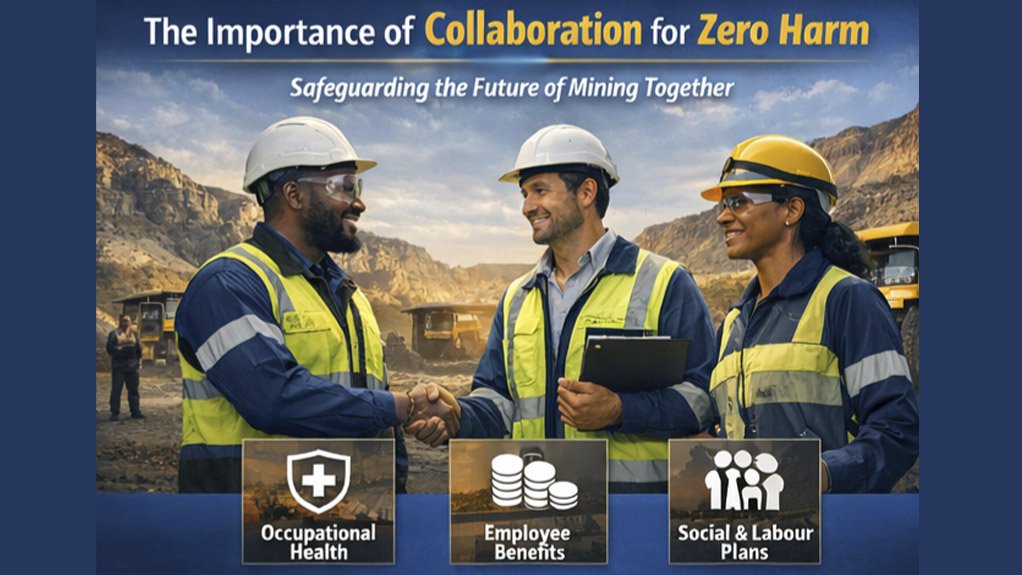


For more than 120 years, human resources solutions provider TEBA has supported the mining industry through collaboration on employment-related processes, policies and systems. Long before collaboration became an industry catchphrase, mining companies recognised that shared challenges required shared solutions. Organised recruitment, followed by coordinated transport, payments, accommodation and immigration management, laid the foundation for a safer and more efficient industry.
A defining milestone came in the early 1980s with the introduction of industry numbers linked to a centralised record of service (ROS) for each employee. This innovation did more than improve administration; it fundamentally reshaped how the industry manages workforce mobility, screening, accountability, risk management, compensation, benefit distributions and occupational health. That its relevance has only grown over the past 40 years is a testament to the foresight behind its creation.
As an independent and verifiable employment history, the ROS plays a critical role in enabling mineworkers, in all categories, to access new opportunities while materially reducing screening and onboarding turnaround times for employers.
For management teams, it provides a clear line of sight into career progression, qualification alignment to jobs and what personal development interventions are required. For accident enquiries it is valuable proof that individuals were fit and proper to be on duty.
Without a consolidated employment record, employers are often forced to disentangle fragmented work histories, verify qualifications retrospectively and retrain already skilled individuals. These inefficiencies delay career progression, increase cost and introduce unnecessary operational risk.
Unlocking Employee Benefits
The ROS, together with TEBA nomination forms, remains central to ensuring mineworkers and their dependants can access pension and provident fund benefits, employee share schemes, and compensation linked to occupational injuries and diseases. This is particularly important for employees who have worked across multiple mining houses or contractors over extended periods, where benefit allocation must be accurate and proportionate.
Where operations have closed, been sold or liquidated, these records often become the only dependable source of employment information available to former employees and beneficiaries, protecting long-term entitlements that might otherwise be lost.
De-risking Occupational Health Screening
Effective occupational health management depends on accurate exposure histories. Occupational medical practitioners rely on the ROS to build a career-long view of work environments, strengthening screening outcomes and enabling earlier identification of risks linked to noise, dust and other occupational exposures.
This independent perspective supports better clinical decision-making and contributes directly to the industry’s broader objective of reducing occupational disease and harm.
Enhancing Social and Labour Plan Effectiveness
Industry-wide workforce data points to clear patterns of urbanisation and reverse urbanisation linked to mining cycles. This mobility directly affects social and labour plan (SLP) delivery because mines are required to recruit from local communities, yet immigration and in-migration can materially change the available pool of “locals”. Where local employment expectations are not met—or are perceived to be compromised—community tensions and operational disruptions are bound to follow.
In parallel, employees may retire, be retrenched or rotate back to labour-sending areas that have not benefited proportionally from SLP commitments, increasing pressure on housing, health services and local economies. These dynamics affect core SLP responsibilities beyond employment, including skills development, local enterprise development, community development and long-term sustainability beyond mine closure. Without collaboration on employee information and shared insight across sites and jurisdictions, forecasting these impacts and designing credible, place-based SLP strategies is not possible.
As the sector continues to confront employment-related risk, skills shortages, illegal activity, growing risk of unclaimed benefits, the provision of post employment services and enhancing the impact of SLPs, collaboration must continue to be effective across individual sites, service provider methodologies, corporate boundaries and geographies.
By working together with TEBA across the full employment lifecycle, the industry can safeguard sites while delivering dignified, responsible services that extend beyond the final turnstile and endure long after mine closure, reinforcing a shared commitment to zero harm.
To discuss how TEBA can support your workforce requirements – visit www.teba.co.za or contact TEBA growth and innovation lead Willem Beeby.
Article Enquiry
Email Article
Save Article
Feedback
To advertise email advertising@creamermedia.co.za or click here
Research Reports

Projects

Latest Multimedia

Latest News


Showroom
Axiom Hydraulics is a trusted leader in South Africa’s hydraulic industry, delivering world-class components, systems, and engineering expertise...
VISIT SHOWROOM
ESAB South Arica, the leading supplier of high-end welding and cutting products to the Southern African industrial market is based in...
VISIT SHOWROOM
Announcements
What's On
Subscribe to improve your user experience...
Option 1 (equivalent of R125 a month):
Receive a weekly copy of Creamer Media's Engineering News & Mining Weekly magazine
(print copy for those in South Africa and e-magazine for those outside of South Africa)
Receive daily email newsletters
Access to full search results
Access archive of magazine back copies
Access to Projects in Progress
Access to ONE Research Report of your choice in PDF format
Option 2 (equivalent of R375 a month):
All benefits from Option 1
PLUS
Access to Creamer Media's Research Channel Africa for ALL Research Reports, in PDF format, on various industrial and mining sectors
including Electricity; Water; Energy Transition; Hydrogen; Roads, Rail and Ports; Coal; Gold; Platinum; Battery Metals; etc.
Already a subscriber?
Forgotten your password?
Receive weekly copy of Creamer Media's Engineering News & Mining Weekly magazine (print copy for those in South Africa and e-magazine for those outside of South Africa)
➕
Recieve daily email newsletters
➕
Access to full search results
➕
Access archive of magazine back copies
➕
Access to Projects in Progress
➕
Access to ONE Research Report of your choice in PDF format
RESEARCH CHANNEL AFRICA
R4500 (equivalent of R375 a month)
SUBSCRIBEAll benefits from Option 1
➕
Access to Creamer Media's Research Channel Africa for ALL Research Reports on various industrial and mining sectors, in PDF format, including on:
Electricity
➕
Water
➕
Energy Transition
➕
Hydrogen
➕
Roads, Rail and Ports
➕
Coal
➕
Gold
➕
Platinum
➕
Battery Metals
➕
etc.
Receive all benefits from Option 1 or Option 2 delivered to numerous people at your company
➕
Multiple User names and Passwords for simultaneous log-ins
➕
Intranet integration access to all in your organisation