Only 14% of global cities meet WHO particulate matter guidelines – IQAir


Only 14% of global cities met the World Health Organisation (WHO) yearly particulate matter with a diameter smaller than 2.5 µm (PM2.5) guideline of 5 µg/m3, down from 17% in the previous year, Swiss air quality technology company IQAir's eighth ‘World Air Quality’ report shows.
Only 13 countries and territories, namely French Polynesia, Puerto Rico, US Virgin Islands, Barbados, New Caledonia, Iceland, Bermuda, Réunion, Andorra, Australia, Grenada, Panama and Estonia, met the WHO annual PM2.5 guideline.
For the 2025 global air pollution report, IQAir analysed data from monitoring stations across 9 446 cities in 143 countries, regions and territories.
The new data shows global air quality progress stalling, as wildfire smoke and climate change intensify global air pollution, IQAir says.
Wildfires, intensified by climate change, played a major role in degrading global air quality in 2025. Record wildfire biomass emissions from Europe and Canada contributed to about 1 380 megatons of carbon being released.
In Northern America, Canada was more polluted than the US for only the second time in the IQAir report’s eight-year history, as its second-worst wildfire season on record affected air quality across Canada, the US and parts of Europe.
Further, the report shows that 130 out of 143 countries, regions and territories, or 91%, did not meet the WHO annual PM2.5 guideline value.
However, the report shows that 75 countries achieved reductions in annual average PM2.5 compared with 2024, while 54 recorded increases compared with the prior year and two countries remained unchanged.
The five most polluted countries were Pakistan at 67.3 µg/m3, Bangladesh at 66.1 µg/m3, Tajikistan at 57.3 µg/m3, Chad at 53.6 µg/m3 and the Democratic Republic of Congo at 50.2 µg/m3.
Loni, in India, was the most polluted city, having recorded an annual average PM2.5 concentration of 112.5 µg/m3, which is a nearly 23% increase from 2024 and more than 22-times the WHO guideline.
Nieuwoudtville, in South Africa’s Northern Cape, was the world’s cleanest city, with an annual average PM2.5 concentration of 1 µg/m3.
Seattle, Washington, was the cleanest major US city for the second consecutive year, with an annual average of 4.5 µg/m3. The most polluted major US city was El Paso, Texas, while the most polluted region in the US was south-east Los Angeles, California.
In the US, annual average PM2.5 levels increased to 7.3 µg/m3, compared with 7.1 µg/m3 the previous year. Smoke from wildfires in both Canada and the US raised averages across parts of the Great Lakes states in the summer and in the Pacific Northwest in the autumn.
In El Paso, historic dust storms triggered a 46% increase in average PM2.5 levels to 11.4 µg/m³, as the city recorded the highest number of major pre-summer dust storms since the 1930s.
The south-east Los Angeles region, including Cudahy, East Los Angeles and Huntington Park, was heavily impacted on by wildland-urban interface fires, and ranked as the most polluted area in the country.
Further, the world’s 25 most polluted cities were all located in India, Pakistan and China, with India home to three of the four most polluted cities.
Additionally, 2025 marked the second consecutive year in which no cities in East Asia met the WHO PM2.5 guideline. Pollution patterns in China indicate a westward shift in elevated concentrations, the report notes.
In Latin America and the Caribbean, air quality trends were largely positive, with 208 cities recording decreases in annual PM2.5 concentrations, 95 recording increases and nine remaining unchanged.
Further, Oceania remained one of the world’s cleanest regions with 61% of cities meeting the WHO guideline, though record-breaking cold in New South Wales, in Australia, in June 2025 led to seasonal PM2.5 spikes.
Europe saw mixed air pollution trends in 2025, with 23 countries recording higher PM2.5 concentrations and 18 recording declines, while winter wood burning, summer trans-boundary smoke from Canadian wildfires and Saharan dust worsened seasonal pollution.
Specifically, 23 countries across Europe recorded increases in annual average PM2.5 concentrations, while 18 recorded decreases and one country was newly added.
Switzerland and Greece experienced increases exceeding 30% owing to transboundary wildfire smoke from Northern America and Saharan dust from Africa.
Malta recorded the largest decrease at nearly 24%.
Despite some regional improvements, major data gaps remain, with only a fraction of the global population having access to hyper-local, real-time air quality information.
Research organisation the Centre for Research on Energy and Clean Air, located in Helsinki, Finland, reported monitoring efforts in 44 countries were weakened and six were left without any monitoring.
Additionally, the end of the US State department’s global air quality monitoring programme at embassies and consulates in March 2025 caused millions to lose access to this trusted air quality data.
“Air quality is a fragile asset that requires active stewardship to protect public health. The 2025 'World Air Quality' report makes clear that without monitoring, we cannot fully understand what’s in the air we breathe,” says IQAir Global CEO Frank Hammes.
“Expanding access to real-time data empowers communities to act. By reducing emissions and addressing climate change, we can drive meaningful, lasting improvements in global air quality,” he says.
The 2025 report underscores the importance of expanding air quality monitoring networks, particularly through low-cost sensors that empower communities, researchers and policymakers with actionable data.
“The World Air Quality Report reveals two competing realities, namely an air pollution crisis and the rise of communities, scientists and data working to meet the challenge,” says environmental protection organisation Greenpeace International senior scientist Dr Aidan Farrow.
“This open, transparent data is an essential tool for holding polluters accountable and securing a healthy environment for everyone,” he says.
IQAir’s ‘World Air Quality’ report serves as a global benchmark to understand air pollution exposure, inform policy decisions and accelerate collective efforts toward cleaner air worldwide.
Article Enquiry
Email Article
Save Article
Feedback
To advertise email advertising@creamermedia.co.za or click here
Research Reports

Projects

Latest Multimedia


Latest News

Showroom
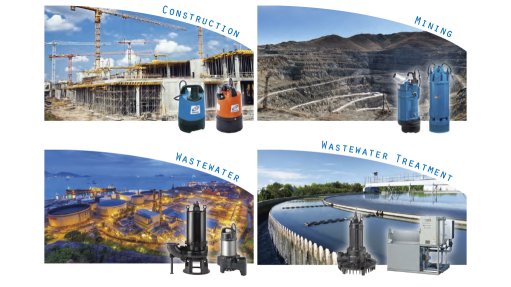
Tsurumi Pumps Africa is a specialist supplier of Japanese-engineered submersible pumping solutions, serving customers across the African continent.
VISIT SHOWROOM
Design, Construction and Maintenance of Site Erected, Welded Bulk Storage Tanks for the Petrochemical, LNG, Ammonia and Sustainable fuel Sectors.
VISIT SHOWROOM


Announcements
What's On
Subscribe to improve your user experience...
Option 1 (equivalent of R125 a month):
Receive a weekly copy of Creamer Media's Engineering News & Mining Weekly magazine
(print copy for those in South Africa and e-magazine for those outside of South Africa)
Receive daily email newsletters
Access to full search results
Access archive of magazine back copies
Access to Projects in Progress
Access to ONE Research Report of your choice in PDF format
Option 2 (equivalent of R375 a month):
All benefits from Option 1
PLUS
Access to Creamer Media's Research Channel Africa for ALL Research Reports, in PDF format, on various industrial and mining sectors
including Electricity; Water; Energy Transition; Hydrogen; Roads, Rail and Ports; Coal; Gold; Platinum; Battery Metals; etc.
Already a subscriber?
Forgotten your password?
Receive weekly copy of Creamer Media's Engineering News & Mining Weekly magazine (print copy for those in South Africa and e-magazine for those outside of South Africa)
➕
Recieve daily email newsletters
➕
Access to full search results
➕
Access archive of magazine back copies
➕
Access to Projects in Progress
➕
Access to ONE Research Report of your choice in PDF format
RESEARCH CHANNEL AFRICA
R4500 (equivalent of R375 a month)
SUBSCRIBEAll benefits from Option 1
➕
Access to Creamer Media's Research Channel Africa for ALL Research Reports on various industrial and mining sectors, in PDF format, including on:
Electricity
➕
Water
➕
Energy Transition
➕
Hydrogen
➕
Roads, Rail and Ports
➕
Coal
➕
Gold
➕
Platinum
➕
Battery Metals
➕
etc.
Receive all benefits from Option 1 or Option 2 delivered to numerous people at your company
➕
Multiple User names and Passwords for simultaneous log-ins
➕
Intranet integration access to all in your organisation