In a water-scarce country every energy decision is a water decision


This article has been supplied.
By: Paul Wani Lado - attorney at the Centre for Environmental Rights
Every March, as South Africa observes National Water Week and World Water Day, we are reminded that safeguarding our water resources is not merely a symbolic gesture; it is an urgent national priority. This year‘s reflection forces us to confront the realities of water insecurity and demands something more uncomfortable: a reckoning with how national policy choices may be deepening the very crisis we claim to confront.
South Africa is already among the world’s most water-stressed countries. It ranks as one of the 30 driest countries in the world with an average rainfall of about 40% less than the annual world average rainfall. South Africa has an average annual rainfall of less than 500 mm, while that of the world is about 850 mm. On top of this, between 37% and 42% of potable water is unaccounted for. This water is lost through leaks, wastage and illegal connections. The international average water usage per day is 173 litres, while South Africans use 61,8% more water than the world average.
Demand continues to rise while supply becomes more uncertain under the pressures of climate change, failing infrastructure and population growth. Experts warn of a significant national water deficit within the next decade.
But water scarcity is not only a function of nature. It is also a function of law and policy. And increasingly, it is shaped by how we choose to produce energy.
Globally, there is growing recognition that water and energy are inseparable. The World Economic Forum (WEF) recently highlighted that energy systems are deeply dependent on water, from extraction and processing to cooling and electricity generation, creating what is known as the “water-energy nexus”.
Crucially, this relationship cuts both ways. Energy choices can either intensify water stress or help to alleviate it.
According to the WEF, a rapid shift toward renewable electricity, combined with improved technologies, could reduce water withdrawals in the energy sector by as much as 84% by 2030. That is not a marginal gain, it is transformative.
Yet, South Africa’s current legislative and policy trajectory risks moving the country in the opposite direction.
In 2024, the President assented to the Upstream Petroleum Resources Development Act, signalling a clear intention to accelerate oil and gas exploration and production. While framed as a pathway to energy security and economic growth, the water implications of this shift have received far less attention. This is a critical omission.
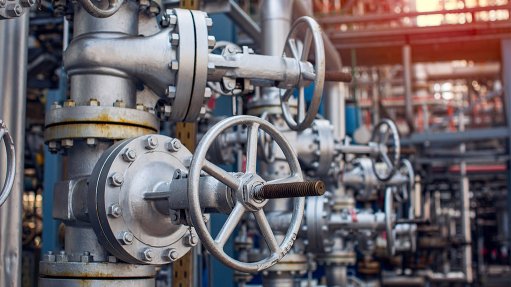
Onshore oil and gas extraction, particularly where it involves hydraulic fracturing, is an intensely water-dependent process. Each well can require millions of litres of water, often in regions where water is already scarce and ecosystems are fragile.
This raises fundamental questions about trade-offs. Water used for extraction is water that cannot be used for agriculture, for sustaining ecosystems, nor for meeting basic human needs.
The WEF’s framing of the water-energy nexus makes clear that these trade-offs are not incidental, they are systemic. Energy, water and food systems are interconnected, and decisions in one domain inevitably reverberate across the others. When law and policy are developed in silos, the risks are consistently underestimated.
South Africa is already experiencing the consequences of those kinds of disconnections. Municipal water failures are disrupting economic activity by way of water shortages. Ageing infrastructure is leaking vast quantities of treated water. Climate variability is making supply less predictable.
In this context, expanding a water-intensive fossil fuel sector is not simply a technical or environmental question. It is a question of national resilience. The contrast with renewable energy, however, is stark.
Wind and solar photovoltaic technologies require negligible water during operation. Unlike fossil fuel extraction and thermal power generation, they do not depend on continuous water inputs. This means that scaling renewables is not only a climate imperative, it is also a water-security strategy.
The WEF’s analysis underscores one point. Energy transitions are not just about reducing carbon emissions, but about reshaping resource use in ways that reduce systemic risk for the economy and for the public at large. For water-scarce countries like South Africa, that insight should be central, not peripheral, to energy planning.
Development should be approached with far greater caution and far more transparency about its water footprint. At a minimum, this requires rigorous and publicly accessible water-use assessments for extractive companies and for municipalities, inter alia, meaningful consideration of cumulative impacts, and strict safeguards to protect groundwater and surface water resources. It also requires confronting the uncomfortable reality that not all economic opportunities are compatible with long-term water security.
National Water Week and World Water Day often focus on individual responsibility such as shorter showers, fixing leaks and using water wisely at home. While these are important habits, they are not where the most consequential decisions are made.
Those decisions are embedded in legislation, policy, licensing frameworks and energy strategies that determine how scarce water resources are allocated across the economy.
If South Africa is serious about securing its water future, it cannot afford to treat water as an afterthought in energy law and policy. May it be borne in mind that in a water-scarce country, every energy decision is a water decision.
Article Enquiry
Email Article
Save Article
Feedback
To advertise email advertising@creamermedia.co.za or click here
Research Reports
Projects

Latest Multimedia
Latest News
Showroom

SafeQuip is a leading distributor and manufacturer of fire safety solutions, offering a comprehensive range of products designed to meet all...
VISIT SHOWROOM
ROSOND provides fast, efficient, safe, and cost-effective drilling and grouting services to mining and exploration industries throughout Africa.
VISIT SHOWROOM



Announcements
What's On
Subscribe to improve your user experience...
Option 1 (equivalent of R125 a month):
Receive a weekly copy of Creamer Media's Engineering News & Mining Weekly magazine
(print copy for those in South Africa and e-magazine for those outside of South Africa)
Receive daily email newsletters
Access to full search results
Access archive of magazine back copies
Access to Projects in Progress
Access to ONE Research Report of your choice in PDF format
Option 2 (equivalent of R375 a month):
All benefits from Option 1
PLUS
Access to Creamer Media's Research Channel Africa for ALL Research Reports, in PDF format, on various industrial and mining sectors
including Electricity; Water; Energy Transition; Hydrogen; Roads, Rail and Ports; Coal; Gold; Platinum; Battery Metals; etc.
Already a subscriber?
Forgotten your password?
Receive weekly copy of Creamer Media's Engineering News & Mining Weekly magazine (print copy for those in South Africa and e-magazine for those outside of South Africa)
➕
Recieve daily email newsletters
➕
Access to full search results
➕
Access archive of magazine back copies
➕
Access to Projects in Progress
➕
Access to ONE Research Report of your choice in PDF format
RESEARCH CHANNEL AFRICA
R4500 (equivalent of R375 a month)
SUBSCRIBEAll benefits from Option 1
➕
Access to Creamer Media's Research Channel Africa for ALL Research Reports on various industrial and mining sectors, in PDF format, including on:
Electricity
➕
Water
➕
Energy Transition
➕
Hydrogen
➕
Roads, Rail and Ports
➕
Coal
➕
Gold
➕
Platinum
➕
Battery Metals
➕
etc.
Receive all benefits from Option 1 or Option 2 delivered to numerous people at your company
➕
Multiple User names and Passwords for simultaneous log-ins
➕
Intranet integration access to all in your organisation