Fire safety cannot be left until the end of construction

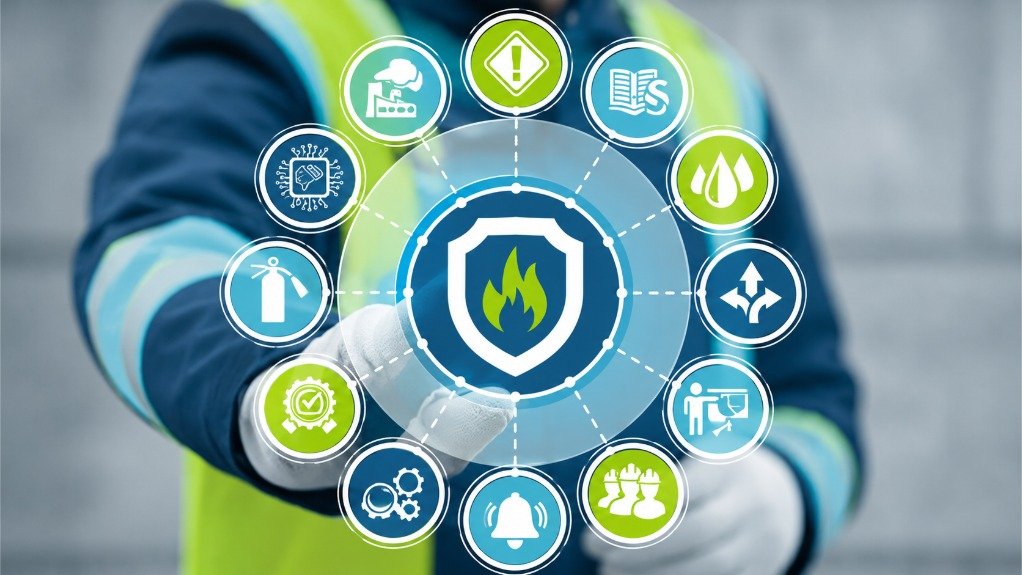



This article has been supplied.
By: Morag Evans - CEO of Databuild
In construction, fire safety can look like something that belongs near the end of a project, when plans are checked, inspections take place, and handover documents are prepared. In reality, the important decisions are made much earlier. A specified product may be changed because of cost or availability, a service route may shift on-site, or a fire-rated element may be adjusted to solve an immediate practical problem.
These decisions are usually made under pressure and often for understandable reasons. But if the fire safety implications are not properly considered, documented, and approved, they can slowly weaken the very systems the building depends on when something goes wrong.
The National Building Regulations and Building Standards Act provides the legal basis for building standards, while Part T of the National Building Regulations deals with fire protection. SANS 10400-T provides deemed-to-satisfy requirements for compliance with Part T, covering areas such as means of escape, fire resistance, compartmentation, detection and alarm systems, fire doors, emergency lighting, and suppression systems.
These frameworks are important, but their existence does not make buildings safe on its own. We have been reminded of this too often. The Usindiso building fire in Johannesburg showed what can happen when fire safety features are not maintained, protected, or respected. The Commission of Inquiry found that firefighting connections had been removed or tampered with, exit doors had been welded shut, evacuation routes had been blocked or converted into living spaces, and the building did not comply with fire safety requirements. Seventy-six people died.
The 2022 Parliament fire also showed that fire safety depends on working systems, not just installed systems. Reports after the fire raised concerns around sprinklers, detection, alarms, and evacuation arrangements. It was a reminder that a building can have fire protection infrastructure on paper and still fail if maintenance, monitoring, and accountability break down.
Construction considerations
Construction adds another layer of risk. During a build, the asset is incomplete. Permanent systems may not yet be operational. Temporary electrical installations, hot works, stored materials, fuel, solvents, packaging, dust, and restricted access can all change a site's fire profile. The Construction Regulations, 2014, issued under the Occupational Health and Safety Act, form part of the legal health and safety framework for construction work, and they reinforce the need for proper planning, supervision, documentation, and risk management during the construction phase.
This is why fire safety has to be understood as a project discipline. The risk is rarely created by one decision. It is created when design intent does not carry through into procurement, when a specified product is substituted without understanding its fire performance, when penetrations through fire-rated walls are not properly sealed, when fire doors are fitted but held open, when escape routes become storage areas, or when documentation is too weak to prove what was installed and tested.
Each decision may look small at the time. Together, they determine whether the building performs as intended when it matters.
Market pressures
This is especially important in a pressured market. Contractors, developers, suppliers, and professional teams are dealing with cost escalation, tight margins, long lead times, and delivery pressure. Those conditions can make substitutions and shortcuts more tempting. A cheaper product, a faster installation, or a small deviation from specification may seem manageable. In fire safety, the margin for error is very thin.
The George building collapse was not a fire incident, but it offers a broader construction lesson that applies here. Government statements on the NHBRC investigation pointed to serious failures across registration, enrolment, inspection, supervision, material quality, technical capability, municipal approval processes, and adherence to health and safety obligations. It showed how construction risk accumulates when oversight weakens across the value chain. Fire safety is no different. It requires continuity from concept to occupation.
Understanding the environment
At Databuild, we see every day how many parties shape the outcome of a construction project before a building is complete. Architects, engineers, quantity surveyors, contractors, subcontractors, suppliers, manufacturers, developers, and public authorities all influence what eventually gets built. The industry needs better discipline around specifications, project information, accountability, and documentation, because fire safety is affected by decisions made long before anyone walks through a building with a checklist.
A compliant design is only the start. It has to carry through into the materials procured, the way those materials are installed, the inspections that verify what was actually done, and the handover records that enable the building to be maintained properly after occupation. From there, responsibility shifts to operations, where fire systems must remain operational, escape routes must stay usable, and the building must continue to reflect the safety assumptions on which it was approved.
Fire safety should not be treated as the concern of one professional at the end of a project. It belongs to every party that designs, specifies, prices, procures, builds, inspects, approves, occupies, and maintains the asset. The regulations provide the baseline. The project team determines whether that baseline survives contact with reality.
Article Enquiry
Email Article
Save Article
Feedback
To advertise email advertising@creamermedia.co.za or click here
Research Reports

Projects


Latest Multimedia


Latest News

Showroom

From batteries for boats and jet skis, to batteries for cars and quad bikes, SABAT Batteries has positioned itself as the lifestyle battery of...
VISIT SHOWROOM
Sika South Africa is a trusted partner for the nation’s infrastructure, commercial, residential, and industrial sectors.
VISIT SHOWROOM


Press Office
Announcements
What's On
Subscribe to improve your user experience...
Option 1 (equivalent of R125 a month):
Receive a weekly copy of Creamer Media's Engineering News & Mining Weekly magazine
(print copy for those in South Africa and e-magazine for those outside of South Africa)
Receive daily email newsletters
Access to full search results
Access archive of magazine back copies
Access to Projects in Progress
Access to ONE Research Report of your choice in PDF format
Option 2 (equivalent of R375 a month):
All benefits from Option 1
PLUS
Access to Creamer Media's Research Channel Africa for ALL Research Reports, in PDF format, on various industrial and mining sectors
including Electricity; Water; Energy Transition; Hydrogen; Roads, Rail and Ports; Coal; Gold; Platinum; Battery Metals; etc.
Already a subscriber?
Forgotten your password?
Receive weekly copy of Creamer Media's Engineering News & Mining Weekly magazine (print copy for those in South Africa and e-magazine for those outside of South Africa)
➕
Recieve daily email newsletters
➕
Access to full search results
➕
Access archive of magazine back copies
➕
Access to Projects in Progress
➕
Access to ONE Research Report of your choice in PDF format
RESEARCH CHANNEL AFRICA
R4500 (equivalent of R375 a month)
SUBSCRIBEAll benefits from Option 1
➕
Access to Creamer Media's Research Channel Africa for ALL Research Reports on various industrial and mining sectors, in PDF format, including on:
Electricity
➕
Water
➕
Energy Transition
➕
Hydrogen
➕
Roads, Rail and Ports
➕
Coal
➕
Gold
➕
Platinum
➕
Battery Metals
➕
etc.
Receive all benefits from Option 1 or Option 2 delivered to numerous people at your company
➕
Multiple User names and Passwords for simultaneous log-ins
➕
Intranet integration access to all in your organisation