Eskom Restructuring Task Team outlines terms of reference for creation of TSO

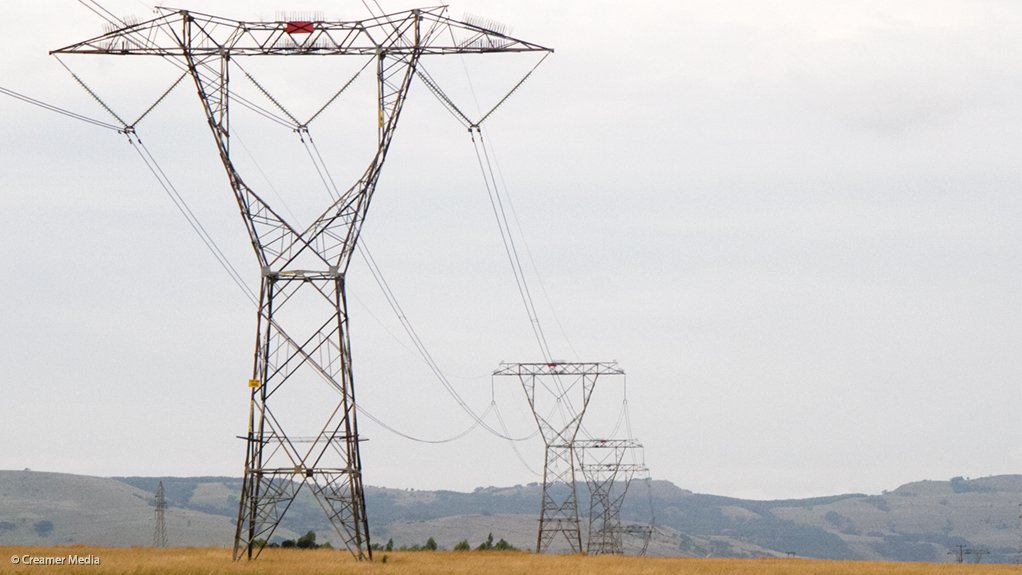


The Eskom Restructuring Task Team (ERTT) has outlined the terms of reference guiding its deliberations on the establishment of an independent State-owned Transmission System Operator (TSO) that owns and controls the country’s transmission assets and is responsible for operating the electricity market.
President Cyril Ramaphosa announced the establishment of the task team during his February State of the Nation Address, while reaffirming government’s support for a fully independent TSO.
The move contradicted an earlier proposal by Eskom for the National Transmission Company South Africa (NTCSA), which was set up in 2024, to remain an Eskom Holdings subsidiary and retain the grid assets, with the new TSO being the system and market operator only.
The task team includes representatives from the Presidency, National Treasury, the Department of Electricity and Energy, Eskom, and the NTCSA and is chaired by National Treasury director-general Duncan Pieterse.
The ERTT was initially given three months, to the end of May, to complete a high-level report for Ramaphosa, but the deadline has been extended to the end of June.
The Electricity Regulation Amendment Act (ERAA) provides for the establishment of the TSO by no later than December 31, 2029, with its function carried out in the interim by the NTCSA.
In an update on the process, the Presidency indicated that the ERTT was being guided by the following principles as set out in its terms of reference:
- Maintain energy security;
- Ensure full independence of the TSO from all market participants;
- Ensure that ownership of the transmission network and any other assets associated with the statutory functions assigned to the TSO in terms of the Electricity Regulation Amendment Act is separated from Eskom;
- Ensure that Eskom is not worse off than its current financial position following the restructuring, and that the TSO is financially sustainable;
- Ensure that the TSO is able to raise the funding required for investment in infrastructure in line with the Transmission Development Plan;
- Avoid any qualified audit opinion for Eskom, the NTCSA or the TSO and ensure that lender requirements are addressed to avoid any default;
- Minimise any impact on South Africa’s fiscal position;
- Prevent any undue financial burden on electricity users; and
- Promote the objectives of electricity market reform, including the successful introduction of independent transmission projects.
The principle of ensuring that Eskom, which is currently trading with the support of a R230-billion debt-relief package, is no worse off than its current financial position following the restructuring is coming under particular scrutiny. Especially after various ratings agencies raised potential risks associated with the unbundling.
“This is the most important part of the issue,” Krutham MD Peter Attard Montalto says.
“It is where fiduciary duty intersects with policy imperatives for reform and is also applicable to other State-owned enterprises (SOEs),” he adds, noting that SOE boards need to abide by the country’s corporate governance rules as outlined in the King Code.
“No worse off does not mean having the same asset level you have now.
“It means being fairly compensated for assets with risks factored in, including issues such as decommissioning costs, and whether the policy environment supports fair compensation through, for instance, cost-reflective tariffs and the resolution of the municipal debt problem,” Attard Montalto explains.
“All this is entirely possible for Eskom’s unbundling – hard, but quite possible – and we are confident the task team can find something workable that also protects creditors.”
The Presidency said the ERTT would develop a detailed proposal and implementation plan for establishing the TSO that drew on international best practice and was fully in line with the ERAA.
It would also address measures required to ensure adequate independence of the NTCSA during the period before the TSO is established so as to ensure non-discriminatory treatment of grid users during the transitional period.
“The work of the ERTT will be undertaken in two phases,” the Presidency added.
“The first phase, which is now expected to be completed at the end of June 2026, will focus on the development of a high-level proposal for establishing the TSO.
“The second phase, which will be completed within a further three months, includes developing a detailed implementation plan with timeframes for completing the restructuring in the manner proposed.”
Article Enquiry
Email Article
Save Article
Feedback
To advertise email advertising@creamermedia.co.za or click here
Research Reports
Projects


Latest Multimedia

Latest News
Showroom
The SAIMM started as a learned society in 1894 after the invention of the cyanide process that saved the South African gold mining industry of the...
VISIT SHOWROOM
Occupational health services, mobile clinics, wellness campaigns, aviation.
VISIT SHOWROOM
Press Office
Announcements
What's On
Subscribe to improve your user experience...
Option 1 (equivalent of R125 a month):
Receive a weekly copy of Creamer Media's Engineering News & Mining Weekly magazine
(print copy for those in South Africa and e-magazine for those outside of South Africa)
Receive daily email newsletters
Access to full search results
Access archive of magazine back copies
Access to Projects in Progress
Access to ONE Research Report of your choice in PDF format
Option 2 (equivalent of R375 a month):
All benefits from Option 1
PLUS
Access to Creamer Media's Research Channel Africa for ALL Research Reports, in PDF format, on various industrial and mining sectors
including Electricity; Water; Energy Transition; Hydrogen; Roads, Rail and Ports; Coal; Gold; Platinum; Battery Metals; etc.
Already a subscriber?
Forgotten your password?
Receive weekly copy of Creamer Media's Engineering News & Mining Weekly magazine (print copy for those in South Africa and e-magazine for those outside of South Africa)
➕
Recieve daily email newsletters
➕
Access to full search results
➕
Access archive of magazine back copies
➕
Access to Projects in Progress
➕
Access to ONE Research Report of your choice in PDF format
RESEARCH CHANNEL AFRICA
R4500 (equivalent of R375 a month)
SUBSCRIBEAll benefits from Option 1
➕
Access to Creamer Media's Research Channel Africa for ALL Research Reports on various industrial and mining sectors, in PDF format, including on:
Electricity
➕
Water
➕
Energy Transition
➕
Hydrogen
➕
Roads, Rail and Ports
➕
Coal
➕
Gold
➕
Platinum
➕
Battery Metals
➕
etc.
Receive all benefits from Option 1 or Option 2 delivered to numerous people at your company
➕
Multiple User names and Passwords for simultaneous log-ins
➕
Intranet integration access to all in your organisation