DMPR fast-tracks domestic petroleum policy in bid for resilience

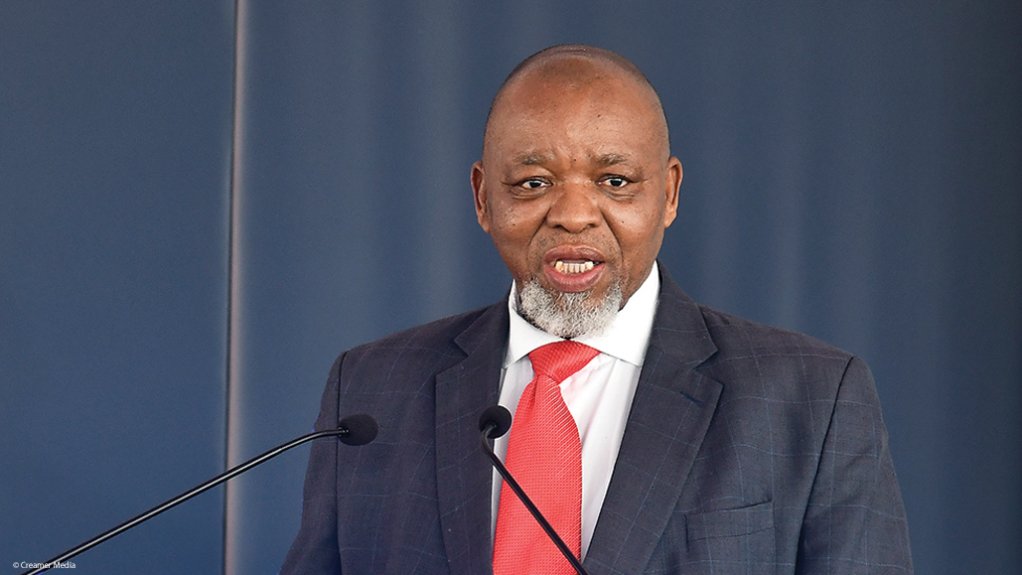


As the Department of Mineral and Petroleum Resources (DMPR) works to enact new oil and gas-focused frameworks and regulations to promote local production and ensure the country is not as dependent on volatile global supplies, North-West University Business School Professor Raymond Parsons implores that any new policies must be cohesive, clear, coordinated and communicated effectively.
Fears of the Brent crude oil price reaching $150/bl if the Strait of Hormuz is closed for a long period as a result of the Middle East conflict have increased, with some stakeholders starting to consider the war to likely be protracted – which has significant impacts on oil-dependent economies such as South Africa.
Despite South Africa importing much of its crude oil from West Africa, the domestic economy is not immune to the much higher global oil price levels that are now likely to prevail.
Mineral and Petroleum Resources Minister Gwede Mantashe lamented in an address delivered at the Southern Africa Oil and Gas Conference, on March 16, how environmental lobby groups have held back key oil and gas developments in the country that would have helped to mitigate against the current Middle East conflict-driven oil price surge.
He said substantial fuel price increases were increasingly unavoidable, adding that countries relying heavily on imports of refined petroleum products remained particularly vulnerable to global market shocks.
The DMPR is engaging with industry players to explore all possible supply sources to maintain product availability in South Africa.
The sustainable long-term solution to the challenge, however, lay in domestic production, Mantashe emphasised, stating that this could only be achieved through the rigorous exploration and responsible exploitation of South Africa’s own petroleum resources.
“One of the biggest challenges facing the development of our petroleum sector remains the persistent opposition from environmental lobby groups who continue to block every oil and gas development initiative in the country,” he stated.
This while South Africa was endowed with significant offshore petroleum potential, including major gas discoveries having been made in the Outeniqua basin and suspected oil discoveries in the Orange basin. These resources could be harnessed responsibly to drive inclusive economic growth, create jobs and eradicate poverty, Mantashe stated.
Mantashe wants to strike a balance between environmental protection and justifiable economic and social development as outlined in South Africa’s Constitution.
The Minister explained rising oil and gas prices had had a direct impact on the cost of living, with a lack of petroleum resources having an even greater impact – energy poverty, rising unemployment and the further entrenchment of inequality.
To this end, increasing South Africa’s petroleum refining capacity was imperative. Mantashe said the legislative framework had been reformed to promote and advance the petroleum sector so that it can make a meaningful contribution to the economy.
The enactment of the Upstream Petroleum Resources Development Act, for example, represents a critical intervention in this regard. The Act not only separates petroleum from mining legislation, but also establishes an enabling regulatory framework aimed at accelerating exploration and production of the nation’s petroleum resources.
Having had extensive consultations with industry stakeholders, the regulations to operationalise the Act will be published by the end of March.
Additionally, DMPR has undertaken public consultation on a modernised Petroleum Products Act, with the Amendment Bill currently undergoing certification processes ahead of submission to Cabinet for approval, and thereafter to Parliament.
Mantashe said these reforms were aimed at ensuring equitable access to, and sustainable development of, the country’s petroleum resources while, in the long term, reducing the country’s reliance on imports of finished products to meet domestic demand.
The new regulations will be championed by the South African National Petroleum Company, which was established last year.
Moreover, in respect of shale gas, Mantashe said a moratorium on shale gas development had remained in place while necessary environmental regulations were developed. Although it was expected that the moratorium would be lifted during 2025, a number of factors delayed this progress.
As of March 16, the Forestry, Fisheries and the Environment, and Water and Sanitation Ministers had committed to finalise and gazette the required regulations in the next few months. DMPR stands ready to lift the shale gas moratorium as soon as the regulations are promulgated.
Mantashe also confirmed that several appeals lodged against environmental authorisations granted for offshore oil and gas exploration projects would be revisited by Forestry, Fisheries and the Environment Minister Willie Aucamp for determinations to ensure that these matters did not remain suspended indefinitely in lengthy litigation processes.
Mantashe called for decisive and responsible action to unlock meaningful social and economic development – which could be unlocked by harnessing the full potential of the petroleum sector.
Parsons said South Africa did have economic buffers and an available layer of reliance with which to manage this strong global headwind, and the economy also gained from the concomitant boost in the prices of precious metals such as gold and platinum.
Additionally, shipping was likely to be rerouted around South Africa, which boded well for the economy, although an anticipated 100% increase in traffic would put strain on already limited port infrastructure, Parsons said.
Ultimately, Parsons said information was now important to promote public understanding and confidence in all the measures government would be taking to protect the economy and cope with the new international energy situation.
He said uncertainty was elevated if governments were perceived to be reactive rather than proactive and that official risk assessments and contingency plans now needed to be aligned with what was happening in business sectors already beginning to experience the economic fallout from the conflict.
Countries such as India and Australia have already publicly announced comprehensive plans and dedicated resources for dealing with the inevitable impact of the Middle East conflict on their economies.
Parsons concluded that South Africa needed to understand and communicate what various options were open to its economy and what could realistically be done about them. “Whatever remedies government is contemplating should now be embodied in a cohesive national statement or programme that clarifies and coordinates policies, communicates them effectively, and forces the decisions that may now be needed.”
Article Enquiry
Email Article
Save Article
Feedback
To advertise email advertising@creamermedia.co.za or click here
Research Reports
Projects
Latest News
Showroom

As a reticulator, Egoli Gas provides natural gas to homes and businesses via underground pipes.
VISIT SHOWROOM
Mitsubishi Chemical Advanced Materials South Africa (Pty) Ltd is a leading manufacturer of high-performance engineering plastics for the mining...
VISIT SHOWROOM
Press Office
Announcements
What's On
Subscribe to improve your user experience...
Option 1 (equivalent of R125 a month):
Receive a weekly copy of Creamer Media's Engineering News & Mining Weekly magazine
(print copy for those in South Africa and e-magazine for those outside of South Africa)
Receive daily email newsletters
Access to full search results
Access archive of magazine back copies
Access to Projects in Progress
Access to ONE Research Report of your choice in PDF format
Option 2 (equivalent of R375 a month):
All benefits from Option 1
PLUS
Access to Creamer Media's Research Channel Africa for ALL Research Reports, in PDF format, on various industrial and mining sectors
including Electricity; Water; Energy Transition; Hydrogen; Roads, Rail and Ports; Coal; Gold; Platinum; Battery Metals; etc.
Already a subscriber?
Forgotten your password?
Receive weekly copy of Creamer Media's Engineering News & Mining Weekly magazine (print copy for those in South Africa and e-magazine for those outside of South Africa)
➕
Recieve daily email newsletters
➕
Access to full search results
➕
Access archive of magazine back copies
➕
Access to Projects in Progress
➕
Access to ONE Research Report of your choice in PDF format
RESEARCH CHANNEL AFRICA
R4500 (equivalent of R375 a month)
SUBSCRIBEAll benefits from Option 1
➕
Access to Creamer Media's Research Channel Africa for ALL Research Reports on various industrial and mining sectors, in PDF format, including on:
Electricity
➕
Water
➕
Energy Transition
➕
Hydrogen
➕
Roads, Rail and Ports
➕
Coal
➕
Gold
➕
Platinum
➕
Battery Metals
➕
etc.
Receive all benefits from Option 1 or Option 2 delivered to numerous people at your company
➕
Multiple User names and Passwords for simultaneous log-ins
➕
Intranet integration access to all in your organisation