Developing the leaders who keep our economy moving


This article has been supplied.
By: Dr Myles Wakeham
Every supply chain success—or failure—ultimately comes down to the quality of the decisions people make. Infrastructure, technology and capital are essential, but they are only enablers. It is knowledgeable professionals who determine whether goods reach markets efficiently, risks are anticipated, costs are controlled and customers receive the service they expect.
South Africa has invested billions of rand in roads, ports, warehouses, distribution centres, transport infrastructure and digital systems. These investments are essential to improving economic competitiveness. Yet the country's greatest supply chain challenge is increasingly one of capability. While employers continue to report persistent skills shortages, the greater concern is a widening capability gap. Nowhere is this more evident than in supply chain management, where professionals must navigate increasingly complex global networks, digital technologies and operational risks. Building another warehouse or purchasing more trucks will not close that gap. It requires sustained investment in something far more valuable: people.
Developing capability
Supply chain management has evolved far beyond procurement and logistics into one of the defining strategic disciplines of the modern economy. It now shapes profitability, competitiveness, organisational resilience, sustainability and customer value. Boards increasingly recognise supply chain performance as a strategic differentiator rather than an operational function. The World Economic Forum identifies resilient, digitally enabled supply chains as fundamental to long-term economic competitiveness, while Gartner continues to rank resilience, digital transformation and talent among the top priorities for supply chain leaders worldwide. In an increasingly interconnected and volatile world, the quality of supply chain decision-making has become a significant source of competitive advantage.
Yet many companies continue to invest heavily in warehouses, vehicles, automation and digital platforms while underinvesting in leadership capability. Gartner's research reveals that only 29% of supply chain organisations have built the capabilities needed to compete in the future, and only 9% have developed the leadership capability required to realise the full value of their investments. The result is a growing gap between technological capability and human capability—one of the greatest barriers to building resilient, high-performing supply chains.
One of the most common mistakes companies make is assuming that operational excellence naturally translates into strategic leadership.
Successful operational managers are frequently promoted into strategic leadership roles. While they possess invaluable operational knowledge, many have never received formal
education in systems thinking, strategic sourcing, demand forecasting, supply chain finance, risk management, sustainability or digital transformation.
Experience remains invaluable, but it is no longer sufficient. Today's supply chain leaders operate in an environment defined by rapidly evolving technologies, global interconnectedness and increasing complexity. They must understand how decisions across procurement, production, finance, marketing and logistics interact to influence cost, resilience, customer service and profitability. Modern supply chains are integrated value networks, not isolated business functions.
Learning at the speed of change
Recent disruptions—from the COVID-19 pandemic to geopolitical conflict, cyber threats and climate-related events—have demonstrated that supply chains are strategic assets rather than back-office functions. Achieving resilience requires professionals capable of balancing efficiency, sustainability and risk.
Technology is accelerating this transformation. Artificial intelligence, automation, predictive analytics and digital platforms are reshaping how companies forecast demand, manage suppliers and optimise operations. Yet technology creates little value without people who understand how to apply it effectively. Digital transformation is ultimately a people challenge.
Professional education can no longer end with a diploma or university degree. In a discipline evolving this rapidly, knowledge acquired only a few years ago may already be outdated. Continuous Professional Development (CPD) is therefore no longer optional; it is a professional responsibility. Just as engineers, accountants and medical practitioners continually update their expertise, supply chain professionals must embrace lifelong learning if they are to lead organisations successfully through constant change.
A national investment in competitive advantage
South Africa faces an equally important national challenge. Government's ambitions to expand manufacturing, strengthen exports, improve logistics performance and stimulate economic growth all depend on efficient, resilient supply chains. Achieving these objectives will require far more than investment in physical infrastructure. It demands a pipeline of highly educated professionals capable of designing, managing and continuously improving increasingly sophisticated supply networks.
Developing that capability requires collaboration between education, industry, professional bodies and government to create clear pathways to internationally recognised qualifications and lifelong learning.
Industry, too, has an important responsibility. Education should never be viewed as a compliance exercise or discretionary cost, but as a strategic investment in organisational
capability. Every rand invested in developing supply chain professionals can improve operational performance, reduce risk and strengthen profitability.
Supply chain management also offers one of South Africa's most exciting career opportunities. It combines business, technology and leadership in a profession that directly influences organisational success and national economic performance. Yet many young South Africans remain unaware of its potential, even as demand for skilled supply chain professionals continues to grow locally and internationally.
If South Africa is serious about improving competitiveness, attracting investment, strengthening industrial capability and creating sustainable employment, developing world-class supply chain professionals must become a national priority.
Article Enquiry
Email Article
Save Article
Feedback
To advertise email advertising@creamermedia.co.za or click here
Research Reports
Projects


Latest Multimedia


Showroom
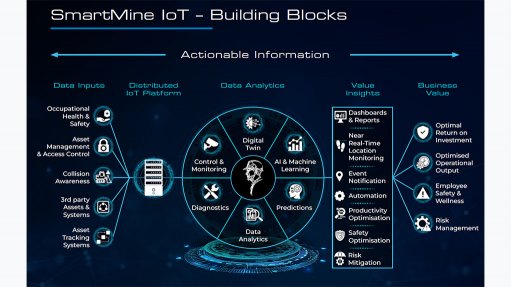
SmartMine IoT has been developed with the mining industry in mind, to provides our customers with powerful business intelligence and data modelling...
VISIT SHOWROOM

Press Office
Announcements
What's On
Subscribe to improve your user experience...
Option 1 (equivalent of R125 a month):
Receive a weekly copy of Creamer Media's Engineering News & Mining Weekly magazine
(print copy for those in South Africa and e-magazine for those outside of South Africa)
Receive daily email newsletters
Access to full search results
Access archive of magazine back copies
Access to Projects in Progress
Access to ONE Research Report of your choice in PDF format
Option 2 (equivalent of R375 a month):
All benefits from Option 1
PLUS
Access to Creamer Media's Research Channel Africa for ALL Research Reports, in PDF format, on various industrial and mining sectors
including Electricity; Water; Energy Transition; Hydrogen; Roads, Rail and Ports; Coal; Gold; Platinum; Battery Metals; etc.
Already a subscriber?
Forgotten your password?
Receive weekly copy of Creamer Media's Engineering News & Mining Weekly magazine (print copy for those in South Africa and e-magazine for those outside of South Africa)
➕
Recieve daily email newsletters
➕
Access to full search results
➕
Access archive of magazine back copies
➕
Access to Projects in Progress
➕
Access to ONE Research Report of your choice in PDF format
RESEARCH CHANNEL AFRICA
R4500 (equivalent of R375 a month)
SUBSCRIBEAll benefits from Option 1
➕
Access to Creamer Media's Research Channel Africa for ALL Research Reports on various industrial and mining sectors, in PDF format, including on:
Electricity
➕
Water
➕
Energy Transition
➕
Hydrogen
➕
Roads, Rail and Ports
➕
Coal
➕
Gold
➕
Platinum
➕
Battery Metals
➕
etc.
Receive all benefits from Option 1 or Option 2 delivered to numerous people at your company
➕
Multiple User names and Passwords for simultaneous log-ins
➕
Intranet integration access to all in your organisation