Conference underscores importance of sustainability in a volatile world

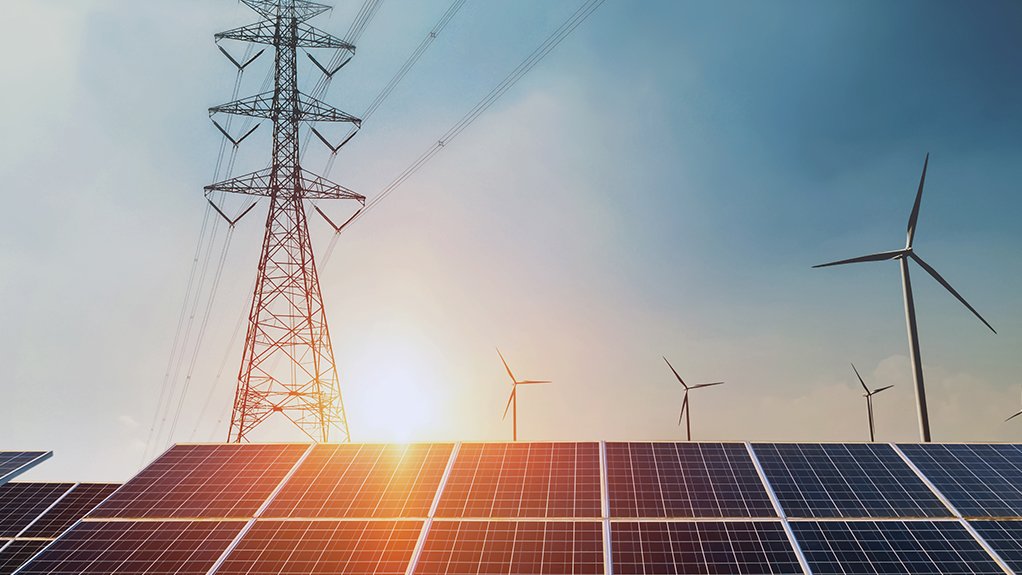
Local energy solutions are posited to protect South Africa from global volatility
Photo by Adobe



With global tensions at a breaking point and contributing to higher energy prices, South Africa should focus its efforts on sustainability, as this would be a “national defence” for the country, Topco Media CEO Ralf Fletcher said on March 24.
He was speaking on the first day of the company’s Future of Sustainability Conference 2026, which is being held this week in Fourways.
“Every local energy solution we build is a strike against our dependence on a volatile world,” he emphasised, noting that sustainability would provide self-reliance for the country.
In his keynote address, titled ‘The Next Decade of Development: What Must Change Now to Secure Africa’s Future’, UN Resident Coordinator in South Africa Nelson Muffuh pointed out that conversations about sustainability in Africa had historically focused on what was lacking, such as capital, capacity or policy coherence.
However, this framing was no longer accurate nor useful, because the continent was no longer waiting for permission to develop. Instead, it was asserting agency, economically, politically and institutionally, evidenced by South Africa’s recent leadership of the G20, which placed debt sustainability, climate finance, digital public goods and reform of the international financial and global architecture firmly on the agenda, Muffuh emphasised.
He explained that the focus would be on systemic fairness and functionality, as the world looked ahead to 2030.
“. . . Africa is no longer asking whether the global system can deliver development. It is asking whether the global system can remain legitimate without inclusive reform.”
Muffuh called for honesty about the scale of the challenge, which was a “development emergency”. It is halfway to the 2030 deadline of the UN’s Sustainable Development Goals (SDGs), but the world was “dangerously off track” to meeting these, he warned.
“This is also in line with South Africa’s own National Development Plan that comes to an end in 2030. So, it is not because the visions are lacking, or the frameworks, or even the ambition. It is because we face a crisis of delivery,” Muffuh warned.
He pointed out that development finance was contracting precisely when it was most needed; geopolitical fragmentation and conflicts were rising, with the cost of capital rising along with it, and climate shocks were compounding inequality.
Muffuh called for alignment, coherence and reinforced delivery – to ensure capital was aligned with outcomes, institutions were aligned with urgency, and commitments were aligned with implementation.
“Therefore, this decade must be defined not by the promises that we make, but by whether we can deliver at speed and at scale,” he asserted.
He highlighted the need to move from fragmented projects to delivery platforms, warning that pilots were no longer enough. Mechanisms that aligned public policy, private capital, development finance and institutional capacity around bankable and scalable transitions were required, he added.
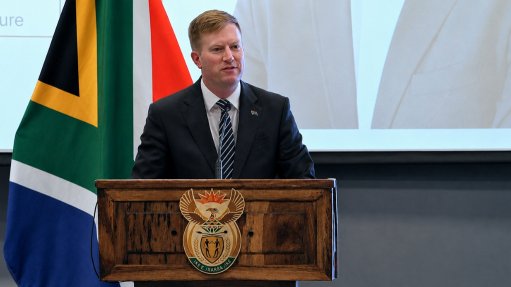
Meanwhile, in his address: “Rebuilding Trust Through Coherent Environmental Governance”, Department of Forestry, Fisheries and the Environment Deputy Minister Narend Singh pointed out that the world was increasingly recognising that global challenges such as climate change, environmental degradation, unsustainable consumption and production practices and resource scarcity had a significant impact on economies, human health and wellbeing.
He echoed the call for this to be addressed collectively, with international, national and local action.
Also touching on the SDGs, Singh noted that the environmental sector was responsible for the implementation of eight of the 17 SDGs, with about 70% of the goals directly environmental in focus or cross-cutting in nature to address the sustainability of natural resources.
“We are confronted by the reality of some SDGs have made remarkable progress over the last 11 years, while the remaining SDGs have had mixed and uneven progress and are either progressing too slowly or regressing,” he informed.
Singh said that the challenges in implementing the SDGs, including financing for their implementation, were issues that South Africa had consistently raised. He said there was risk that development financing would be redirected to other priorities, placing countries like South Africa behind in its SDG implementation, and broader development targets.
LOCAL MEASURES
Singh pointed out that South Africa was at a “critical intersection” in its environmental journey, with considerable natural resources, but grappling with the urgent realities of climate change, addressing the triple challenges of poverty, inequality and unemployment and the necessity of ensuring that the natural wealth benefited the collective.
He underscored the importance of stronger institutional coordination, clearer accountability and improved policy implementation to positively influence environmental governance.
“As we seek practical ways to address the global challenge of climate change, we must enhance our adaptation measures on our economy, particularly the industries, our households and society at large as well as on our environment. The department has accelerated various instruments to ensure that we do everything we can to improve our country’s chances to withstand the impacts of climate change,” he informed.
This includes recent consultations with sector departments, provinces and industry on draft Carbon Budget and Mitigation Plan regulations, laying the groundwork for how major emitters will be held accountable.
These consultations are a precursor to the publishing of the sectoral emission targets (SETs) for public comment, pivotal to translating the Climate Change Act into concrete sector commitments.
As part of the implementation of the Climate Change Act, the department had trained district municipalities on mainstreaming climate adaptation into planning instruments, while further advancing the development of adaptation scenarios to help protect vulnerable communities from the impacts of extreme weather, Singh averred.
He said the department was developing the adaptation scenarios to form the basis for adaptation planning in the country.
“We have enhanced our coordination mechanism with the establishment of the intergovernmental working group on climate change, a technical working group that brings the adaptation stakeholders together and the Presidential Climate Change to provide advice on the just transition.”
As part of the country’s just energy transition, it is piloting green hydrogen and low-carbon steel with the support of development finance institutions and private investors.
Singh stressed that environmental governance would require modernisation of the country’s regulatory frameworks to ensure that its systems were transparent, efficient and responsive to people, planet and prosperity objectives.
In collaboration with the Department of Petroleum and Mineral Resources, the provincial Environmental Affairs departments and other relevant sector stakeholders, the department has launched a national multi-sector stakeholder consultation process on the proposed reforms to South Africa’s environmental-impact assessment (EIA) system.
These proposed reforms aim to strengthen the ongoing sector-led initiative to improve the efficacy of the EIA process, allowing flexibility to apply other instruments, modernise and strengthen the country’s environmental governance framework.
In terms of policy and regulation the department was reforming environmental policies and laws to remove bottlenecks and ensure their integration and alignment, Singh indicated.
In this regard, the department is processing about ten Bills for consideration and adoption by Cabinet and Parliament.
In the current financial year ending on March 31, the department processed about 69 subordinate instruments. These subordinate instruments were developed, reviewed and amended to ensure that the primary legislation was implementable, he pointed out.
Article Enquiry
Email Article
Save Article
Feedback
To advertise email advertising@creamermedia.co.za or click here
Research Reports
Projects
Latest Multimedia

Latest News


Showroom

Sika South Africa is a trusted partner for the nation’s infrastructure, commercial, residential, and industrial sectors.
VISIT SHOWROOM
Sulzer South Africa, established in 1922, partners with critical industries like power, oil & gas, water, mining, and chemicals to boost...
VISIT SHOWROOM


Announcements
What's On
Subscribe to improve your user experience...
Option 1 (equivalent of R125 a month):
Receive a weekly copy of Creamer Media's Engineering News & Mining Weekly magazine
(print copy for those in South Africa and e-magazine for those outside of South Africa)
Receive daily email newsletters
Access to full search results
Access archive of magazine back copies
Access to Projects in Progress
Access to ONE Research Report of your choice in PDF format
Option 2 (equivalent of R375 a month):
All benefits from Option 1
PLUS
Access to Creamer Media's Research Channel Africa for ALL Research Reports, in PDF format, on various industrial and mining sectors
including Electricity; Water; Energy Transition; Hydrogen; Roads, Rail and Ports; Coal; Gold; Platinum; Battery Metals; etc.
Already a subscriber?
Forgotten your password?
Receive weekly copy of Creamer Media's Engineering News & Mining Weekly magazine (print copy for those in South Africa and e-magazine for those outside of South Africa)
➕
Recieve daily email newsletters
➕
Access to full search results
➕
Access archive of magazine back copies
➕
Access to Projects in Progress
➕
Access to ONE Research Report of your choice in PDF format
RESEARCH CHANNEL AFRICA
R4500 (equivalent of R375 a month)
SUBSCRIBEAll benefits from Option 1
➕
Access to Creamer Media's Research Channel Africa for ALL Research Reports on various industrial and mining sectors, in PDF format, including on:
Electricity
➕
Water
➕
Energy Transition
➕
Hydrogen
➕
Roads, Rail and Ports
➕
Coal
➕
Gold
➕
Platinum
➕
Battery Metals
➕
etc.
Receive all benefits from Option 1 or Option 2 delivered to numerous people at your company
➕
Multiple User names and Passwords for simultaneous log-ins
➕
Intranet integration access to all in your organisation