Collective bargaining provides stability and certainty in the industry – Seifsa


The three-year wage agreement concluded in the metals and engineering industry in 2024 was reached during a period of significant economic pressure for the industry, but, despite these challenges, the sector experienced a relatively stable industrial relations environment over the past three years, says employer organisation the Steel and Engineering Industries Federation of Southern Africa (Seifsa).
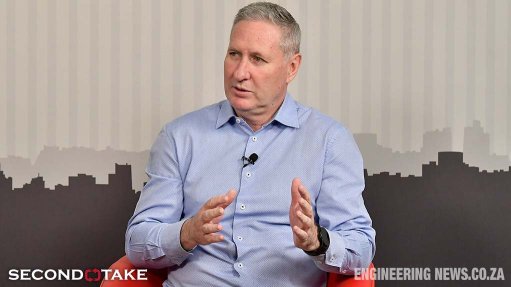
Employers have been able to plan with greater certainty and employees have benefited from a structured collective bargaining process. This stability is the result of engagement, negotiation and compromise between organised business and organised labour, says Seifsa executive director Lucio Trentini.
Debate around collective bargaining and the extension of bargaining council agreements is healthy for labour relations in South Africa’s metals and engineering industry, he says, while also stressing the importance of collective bargaining remaining credible, representative and capable of delivering outcomes that provide certainty to employers and employees.
Employers are free to join the employer organisation they believe best represents their interests and employees are free to choose the trade union they believe best serves theirs. These freedoms are fundamental to the labour relations system.
Businesses invest where there is predictability. Employees prosper where there is stability. Industries grow when employers and trade unions engage through recognised and credible institutions capable of resolving differences and reaching agreements, Trentini says.
The 2025 membership verification exercise conducted by the Metals and Engineering Industries Bargaining Council confirmed that the Seifsa associations remain the largest employer grouping within the council, accounting for 56.9% of all employees employed by employers represented on the council.
The verification exercise also confirmed that the trade unions party to the council represent 53.2% of the employees employed by employers represented on the council.
This demonstrates that collective agreements concluded within the bargaining council are negotiated by parties that satisfy the representation requirements of the Labour Relations Act, says Trentini.
Debate around representation, exemptions, economic impact and the extension of agreements is both legitimate and necessary. Robust debate is essential, if institutions are to remain relevant and responsive to changing economic realities, he says.
Regardless of differing views, the broader objective should remain a labour relations environment that promotes certainty, stability, investment, employment and sustainable growth in the metals and engineering sector.
The wage increases applicable for the 2026/27 financial year form part of a three-year agreement concluded in 2024 following negotiations between representative employer organisations and trade unions within the Metals and Engineering Industries Bargaining Council.
A further review application concerning the extension of the 2021 to 2024 Main Agreement is expected to be heard before the Labour Court.
The courts have been called upon on numerous occasions to consider challenges relating to collective bargaining and the extension of agreements.
Seifsa welcomes the opportunity for the matter to be considered through the appropriate legal channels and looks forward to placing the relevant facts before the court, Trentini says.
Article Enquiry
Email Article
Save Article
Feedback
To advertise email advertising@creamermedia.co.za or click here
Research Reports

Projects
Latest Multimedia
Latest News


Showroom
ZF Aftermarket is the after-sales division of the world-renowned German ZF group, a global leader in mobility technology.
VISIT SHOWROOM
From batteries for boats and jet skis, to batteries for cars and quad bikes, SABAT Batteries has positioned itself as the lifestyle battery of...
VISIT SHOWROOM

Announcements
What's On
Subscribe to improve your user experience...
Option 1 (equivalent of R125 a month):
Receive a weekly copy of Creamer Media's Engineering News & Mining Weekly magazine
(print copy for those in South Africa and e-magazine for those outside of South Africa)
Receive daily email newsletters
Access to full search results
Access archive of magazine back copies
Access to Projects in Progress
Access to ONE Research Report of your choice in PDF format
Option 2 (equivalent of R375 a month):
All benefits from Option 1
PLUS
Access to Creamer Media's Research Channel Africa for ALL Research Reports, in PDF format, on various industrial and mining sectors
including Electricity; Water; Energy Transition; Hydrogen; Roads, Rail and Ports; Coal; Gold; Platinum; Battery Metals; etc.
Already a subscriber?
Forgotten your password?
Receive weekly copy of Creamer Media's Engineering News & Mining Weekly magazine (print copy for those in South Africa and e-magazine for those outside of South Africa)
➕
Recieve daily email newsletters
➕
Access to full search results
➕
Access archive of magazine back copies
➕
Access to Projects in Progress
➕
Access to ONE Research Report of your choice in PDF format
RESEARCH CHANNEL AFRICA
R4500 (equivalent of R375 a month)
SUBSCRIBEAll benefits from Option 1
➕
Access to Creamer Media's Research Channel Africa for ALL Research Reports on various industrial and mining sectors, in PDF format, including on:
Electricity
➕
Water
➕
Energy Transition
➕
Hydrogen
➕
Roads, Rail and Ports
➕
Coal
➕
Gold
➕
Platinum
➕
Battery Metals
➕
etc.
Receive all benefits from Option 1 or Option 2 delivered to numerous people at your company
➕
Multiple User names and Passwords for simultaneous log-ins
➕
Intranet integration access to all in your organisation