Coal still crucial for industrial applications

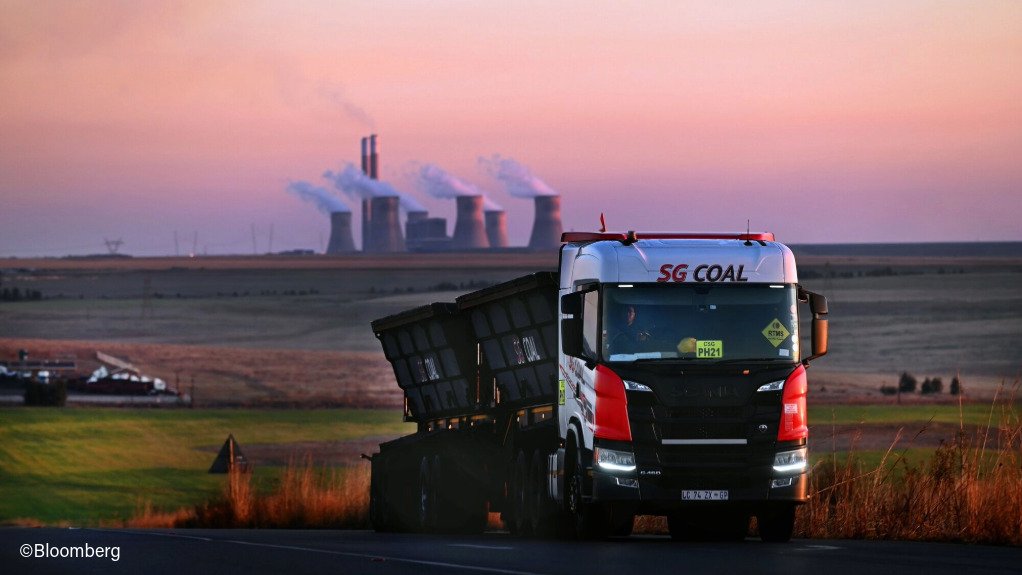
COAL STILL CRUCIAL For businesses reliant on high-temperature process heat, coal is a function of cost and availability, and these structural realities do not shift as quickly as policy or ambition
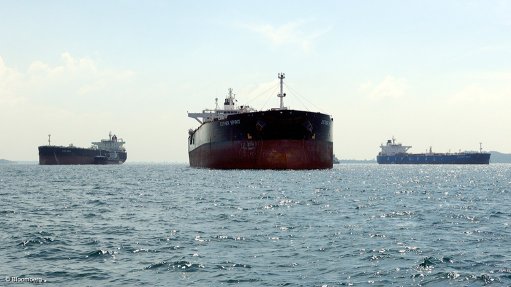
Photo by Bloomberg


South Africa’s decarbonisation debate often starts from a simple premise: coal must be replaced. “In principle, the direction is clear. In practice, it collides with a far more complex reality,” says integrated energy solutions provider Energy Partners CEO Manie de Waal.
He observes that industrial heat in South Africa remains heavily coal-dependent, not by preference, but by necessity.
“For businesses reliant on high-temperature process heat, coal is a function of cost and availability, and these structural realities don’t shift as quickly as policy or ambition.”
While renewable power, alternative fuels and storage technologies are advancing rapidly, De Waal remarks that they are not capable of providing a like-for-like substitute for coal across most industrial applications.
Liquefied petroleum gas and liquefied natural gas are often positioned as the most viable near-term replacements, but De Waal warns they face the same constraints underpinning coal's persistence: cost and security of supply.
Domestic gas infrastructure remains uneven, with viable access limited to specific industrial corridors.
Moreover, South Africa is approaching a structural gas shortfall, with supply from Mozambique’s Pande-Temane fields expected to decline towards 2028, increasing reliance on imported gas.
“This exposes users to volatile global pricing dynamics and logistics constraints [and] introduces both cost volatility and supply risk at a scale that many industrial operators are not positioned to absorb,” De Waal explains.
Biomass and biomethane are frequently cited as long-term solutions but their applicability is highly site-specific, and they introduce handling and combustion complexity that differs materially from coal. Moreover, feedstock supply chains are constrained.
Electrification and liquid fuels are being explored as well, but both pathways carry significant cost implications, particularly where high-temperature heat is required.
“For many businesses, the question is not whether to decarbonise, but how to do so without introducing unacceptable operational or financial risk.”
Fuel decisions cannot be made in isolation, and cost, supply stability and system performance remain tightly linked, and must be considered with the aim of maintaining production continuity.
In such a context, coal remains one of the most accessible and logistically dependable fuel sources in the country, particularly for inland operations, De Waal points out.
His view is that the first credible step in most industrial decarbonisation pathways is not immediate fuel switching, but integrated system-level optimisation. While many businesses cannot move away from coal, the technology exists to drastically cut emissions.
“We’ve seen businesses reduce coal [use] by 8% to 15% through these interventions. They aren’t theoretical improvements, but measurable reductions in fuel consumption, emissions intensity and operating costs,” he states.
Servitisation models strengthen this further by shifting performance and optimisation responsibility to specialist providers and enabling sustained efficiency gains over time.
De Waal concludes that, for South African industry, the transition will not be linear, but it can still be deliberate, measurable and economically grounded.
Article Enquiry
Email Article
Save Article
Feedback
To advertise email advertising@creamermedia.co.za or click here
Research Reports

Projects


Latest Multimedia
Latest News
Showroom
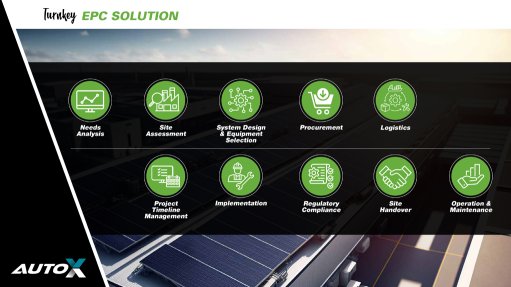
Rentech provides renewable energy products and services to the local and selected African markets. Supplying inverters, lithium and lead-acid...
VISIT SHOWROOM
Rio Carb is an OEM (Original Equipment Manufacturer) of R-C700 Chromium Carbide (CrC) alloy clad wear plates and pipes used for heavy materials...
VISIT SHOWROOM
Press Office
Announcements
What's On
Subscribe to improve your user experience...
Option 1 (equivalent of R125 a month):
Receive a weekly copy of Creamer Media's Engineering News & Mining Weekly magazine
(print copy for those in South Africa and e-magazine for those outside of South Africa)
Receive daily email newsletters
Access to full search results
Access archive of magazine back copies
Access to Projects in Progress
Access to ONE Research Report of your choice in PDF format
Option 2 (equivalent of R375 a month):
All benefits from Option 1
PLUS
Access to Creamer Media's Research Channel Africa for ALL Research Reports, in PDF format, on various industrial and mining sectors
including Electricity; Water; Energy Transition; Hydrogen; Roads, Rail and Ports; Coal; Gold; Platinum; Battery Metals; etc.
Already a subscriber?
Forgotten your password?
Receive weekly copy of Creamer Media's Engineering News & Mining Weekly magazine (print copy for those in South Africa and e-magazine for those outside of South Africa)
➕
Recieve daily email newsletters
➕
Access to full search results
➕
Access archive of magazine back copies
➕
Access to Projects in Progress
➕
Access to ONE Research Report of your choice in PDF format
RESEARCH CHANNEL AFRICA
R4500 (equivalent of R375 a month)
SUBSCRIBEAll benefits from Option 1
➕
Access to Creamer Media's Research Channel Africa for ALL Research Reports on various industrial and mining sectors, in PDF format, including on:
Electricity
➕
Water
➕
Energy Transition
➕
Hydrogen
➕
Roads, Rail and Ports
➕
Coal
➕
Gold
➕
Platinum
➕
Battery Metals
➕
etc.
Receive all benefits from Option 1 or Option 2 delivered to numerous people at your company
➕
Multiple User names and Passwords for simultaneous log-ins
➕
Intranet integration access to all in your organisation