Better procurement strategy can expand South Africa's industrial base




ACTOM Group CEO Mervyn Naidoo
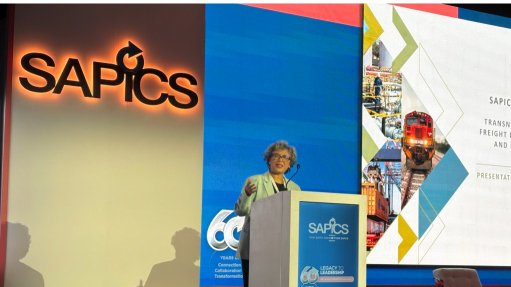
DTIC acting deputy director-general Dr Tebogo Makube
SEIFSA CEO Tafadzwa Chibanguza





With smarter localisation, clearer procurement rules and a more deliberate industrial strategy, public spending could again become a powerful engine for rebuilding factories, expand supply chains and restore confidence in South Africa as a manufacturing country, public and private professionals say.
Localisation is not about closing the economy, but about using the State’s buying power to build a stronger, more competitive manufacturing base that can serve domestic and export markets, says electromechanical equipment manufacturer ACTOM Group CEO Mervyn Naidoo.
South Africa does not lack industrial capability; it lacks a procurement system designed to nurture and expand it.
With clear rules, long‑term visibility and firm designation, public spending can again become a catalyst for investment, job creation and industrial renewal, he says.
“The problem is not a lack of opportunity, but a lack of coherence. Public procurement is too often fragmented and inconsistent, and contracts are awarded for short periods, with no guarantee of continuity or commitment to local industry.
“Nobody is going to invest in long‑term capacity, automation or technology upgrades when demand is uncertain. The result is predictable, as imports fill the gap, local factories sit underutilised, and the country loses skills, tax revenue and jobs,” he says.
State-owned Eskom’s Transmission Development Plan is an example of long‑term visibility already in place. With a 15- to 20‑year pipeline of grid infrastructure ahead, South Africa has a rare opportunity to use this demand to rebuild domestic manufacturing.
If government paired this pipeline with firm local‑content rules, long‑horizon contracts and sector designation, companies would have the confidence to invest in new plants, expand capacity and train workers, Naidoo emphasises.
Localisation is a policy tool used worldwide to secure industrial capabilities, adds Department of Trade, Industry and Competition acting deputy director-general Dr Tebogo Makube.
However, South Africa’s challenge is that the current procurement framework places overwhelming weight on price. Under the 80%:20% and 90%:10% systems, price accounts for up to 90% of the evaluation.
“This makes it extremely difficult for local manufacturers, who face higher electricity tariffs, unreliable municipal services and rising logistics costs, to compete against imports from countries with lower input costs or State‑supported industries,” he says.
Further, localisation must apply across procurement methods. Whether a project is delivered through engineering, procurement and construction contractors, public‑private partnerships or direct departmental procurement, if public money is being spent, local content rules should apply.
This clarity is essential to prevent loopholes that allow imported products to bypass designation, he says.
The Preferential Procurement Act of 2024 aims to rebalance this. Once regulations are finalised, designated products will again require minimum local‑content thresholds as a first‑stage evaluation criterion. Bids that do not meet these requirements will not proceed to price evaluation, says Makube.
Meanwhile, the metals and engineering value chain relies heavily on public procurement, with about one-quarter of domestic sales stemming from the public sector. This figure can exceed 60% in some subsectors, industry organisation Steel and Engineering Industries Federation of Southern Africa CEO Tafadzwa Chibanguza points out.
When procurement is inconsistent, the entire ecosystem suffers. Localisation is not a barrier to global competitiveness, but a prerequisite for it. Many of South Africa's manufacturers are operating at 50% to 70% capacity, with fixed costs spread across too few orders, he adds.
“When public procurement lifts utilisation, companies can reduce per‑unit costs, improve efficiency and become more competitive internationally. Localisation is a platform for export readiness, and not a retreat from global markets,” he says.
Additionally, the multiplier effects are often ignored in procurement decisions. A locally manufactured transformer supports upstream steel and copper producers, downstream fabricators, logistics providers, engineers and service centres.
These economic linkages exceed the value of the final product and are lost entirely when imports replace local production, says Chibanguza.
South Africa’s manufacturing sector has become largely stagnant, with years of factory closures, shrinking order books, rising input costs and erratic demand hollowing out industrial capacity that once anchored hundreds of thousands of jobs, the organisations say.
Rewriting the rules of procurement is a strategic choice about the kind of economy South Africa wants to build, namely one where factories are busy, skills are deepened, and public money works harder for long‑term growth, they state.
Article Enquiry
Email Article
Save Article
Feedback
To advertise email advertising@creamermedia.co.za or click here
Research Reports

Projects


Latest Multimedia

Latest News


Showroom

ESAB South Arica, the leading supplier of high-end welding and cutting products to the Southern African industrial market is based in...
VISIT SHOWROOM
CSIR International Convention Centre (CSIR ICC) - the leading conference and events venue in Pretoria/Tshwane.
VISIT SHOWROOM



Press Office
Announcements
What's On
Subscribe to improve your user experience...
Option 1 (equivalent of R125 a month):
Receive a weekly copy of Creamer Media's Engineering News & Mining Weekly magazine
(print copy for those in South Africa and e-magazine for those outside of South Africa)
Receive daily email newsletters
Access to full search results
Access archive of magazine back copies
Access to Projects in Progress
Access to ONE Research Report of your choice in PDF format
Option 2 (equivalent of R375 a month):
All benefits from Option 1
PLUS
Access to Creamer Media's Research Channel Africa for ALL Research Reports, in PDF format, on various industrial and mining sectors
including Electricity; Water; Energy Transition; Hydrogen; Roads, Rail and Ports; Coal; Gold; Platinum; Battery Metals; etc.
Already a subscriber?
Forgotten your password?
Receive weekly copy of Creamer Media's Engineering News & Mining Weekly magazine (print copy for those in South Africa and e-magazine for those outside of South Africa)
➕
Recieve daily email newsletters
➕
Access to full search results
➕
Access archive of magazine back copies
➕
Access to Projects in Progress
➕
Access to ONE Research Report of your choice in PDF format
RESEARCH CHANNEL AFRICA
R4500 (equivalent of R375 a month)
SUBSCRIBEAll benefits from Option 1
➕
Access to Creamer Media's Research Channel Africa for ALL Research Reports on various industrial and mining sectors, in PDF format, including on:
Electricity
➕
Water
➕
Energy Transition
➕
Hydrogen
➕
Roads, Rail and Ports
➕
Coal
➕
Gold
➕
Platinum
➕
Battery Metals
➕
etc.
Receive all benefits from Option 1 or Option 2 delivered to numerous people at your company
➕
Multiple User names and Passwords for simultaneous log-ins
➕
Intranet integration access to all in your organisation