AfCFTA shifts from treaty architecture to operational trade system amid persistent frictions

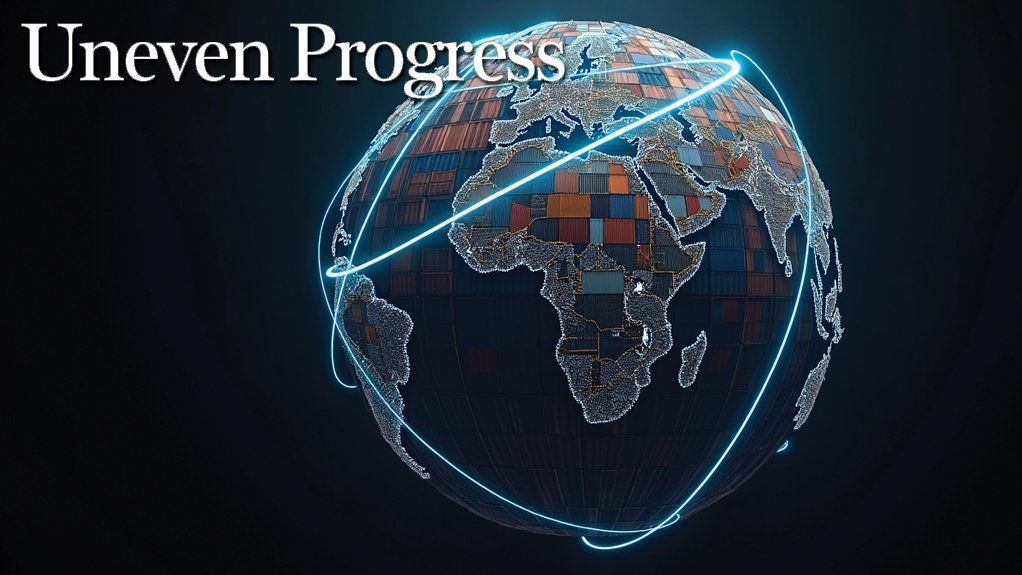



A quiet shift is under way on the African continent. The African Continental Free Trade Area (AfCFTA) Agreement, long billed as the most ambitious economic integration initiative since the formation of the African Union (AU), is no longer simply a treaty – it is becoming a system that businesses can use, albeit slowly and unevenly.
In its early years, the agreement was dominated by diplomacy – signatures, ratifications, and negotiations over rules. That phase is now largely complete. The agreement has reached near-universal buy-in, having been signed by all 55 AU member States bar Eritrea, with 49 having deposited their instruments of ratification with the AU Commission as of January.
More importantly, the scope of the agreement has expanded well beyond commodity tariff reduction and progressive services trade liberalisation under Phase I protocols, which were adopted in March 2018 and are embedded in the founding legal package of the agreement.
Following the adoption of Phase II protocols – covering investment, competition policy and intellectual property – in 2023, the AU Assembly approved a further set of rules on digital trade and on women and youth in trade, comprising Phase III, in February 2025.
Digital Momentum
The digital trade protocol is the most likely to transform commercial opportunities quickly when it enters into force, as it will create a framework for cross-border digital services, data flows and e-commerce under AfCFTA rules. For Africa’s growing software, fintech and digital services sectors, a continental legal framework for digital services removes real and persistent regulatory uncertainty.
Moreover, 25 countries have submitted schedules of specific commitments on trade in services, a notoriously difficult area where national sensitivities about professional licensing, financial services and telecommunications often override integration impulses, Mark-Anthony Johnson, founder and CEO of Gibraltar-headquartered global asset and investment management firm JIC Holdings, wrote in a commentary in March.
The adoption of all phases of the AfCFTA Agreement’s protocols marks a significant shift, establishing the framework for a rules-based continental market.
The clearest sign of progress lies not in communiqués but in cargo. The Guided Trade Initiative (GTI), launched in 2022 to kick-start and test the agreement’s implementation, began with only a handful of initial members, a number that had increased to 39 by mid-2025, and has since facilitated commercially meaningful trade volumes.
At the same time, progress on tariff liberalisation has gathered pace, with 45 countries having submitted tariff offers by 2024, a number that increased to 48 in 2025. Twenty-three countries have domesticated these offers into their national legislation.
Trade Enablement
While developments around tariffs have been the more visible indicators of progress, a quieter revolution has been in the “plumbing” that facilitates trade, with a suite of institutions and mechanisms now taking shape.
These include the African Trade Observatory, the online platform for reporting non- tariff barriers (NTBs), and the AfCFTA Adjustment Fund, which is backed by the African Export-Import Bank (Afreximbank) and is designed to support African governments and private-sector entities in managing short-term adjustment costs associated with implementing the AfCFTA Agreement.
The fund, operationalised through a joint venture between Afreximbank and the AfCFTA secretariat, which is based in Accra, Ghana, helps countries achieve fiscal stabilisation, while enabling businesses to retool and modernise, and to improve productivity and competitiveness. It has committed $1- billion for the private sector and $10-million for State parties.
Its first investment of $10-million in telecoms company Telecel Global Services was closed in July last year, with AfCFTA secretary-general Wamkele Mene saying at the time: “This transaction demonstrates how the AfCFTA Adjustment Fund is beginning to serve its intended purpose – supporting State parties and the private sector as we work to make this agreement commercially meaningful.
“By investing in digital infrastructure, we are addressing some of the most critical enablers of trade facilitation, industrialisation and regional value-chain development.”
But perhaps the most transformative trade-facilitation mechanism is the Pan-African Payment and Settlement System (PAPSS), which enables cross-border transactions in local currencies, reducing reliance on external corresponding banking systems and lowering both transaction costs and time.
According to a World Bank study, sending money across African borders incurs fees equivalent to between 7% and 8% of the total value of the remitted amount – compared with the global average of 6% to 7% – with settlement typically taking three to seven business days.
Officially launched in 2022 and also backed by Afreximbank and the AfCFTA Secretariat, along with the AU Commission, PAPSS connects 19 countries across four African regions, as well as 150 commercial banks.
Speaking in August 2025, when welcoming the Bank of Algeria to the network, PAPSS CEO Mike Ogbalu III noted: “PAPSS has reduced intra-African cross-border trade transaction costs among participating countries and enabled savings of up to 27% for end-users, while helping banks experience transaction volume surges of over 1 000% through digital channels integration.
“As our network grows, we’re making African payments faster, more affordable, and accessible, catalysing economic growth and unlocking new opportunities for businesses and communities across Africa.”
Two major product launches in 2025 expanded PAPSS’s reach: the PAPSSCARD, a pan-continental payment card that enables cardholders to pay in local currencies across participating markets, and the PAPSS African Currency Market, a foreign exchange marketplace specifically for African currencies.
As evidence of its impact, PAPSS pilots saved between $5-million and $8-million in foreign exchange conversion fees during its first two years, while customs clearance time on the Tema-Abidjan trade corridor, which links Ghana and Côte d’Ivoire, fell from 12 hours to 9.5 hours.
In another major step forward, African heads of State and government signed off on the rules of origin for automotive products under the AfCFTA framework at their assembly in February, laying the foundation for duty- and quota-free trade in vehicles and components across the continent.
Prior to this development, commentators had expressed concern that although agreement had been reached on 92.3% of tariff lines, the remaining 7.7%, which included textiles, clothing and automotive products, comprised high-value manufacturing sectors where Africa most needs predictable rules to attract investment.
Johnson is optimistic that the outstanding rules of origin – which determine whether a product qualifies for preferential tariff rates – will be concluded this year.
Integration Friction
Yet for all the momentum, the AfCFTA remains a work in progress. For example, only 37 countries have submitted tariff schedules, while the free movement of people is still under negotiation.
Moreover, NTBs remain a dominant practical obstacle. Only about half the NTB complaints lodged through the AfCFTA Secretariat’s African Trade Observatory were resolved by 2025. While this represents welcome progress, it also means that about 50% of filed complaints were not resolved.
Dwell times of about 126 hours and logistics costs equating to nearly double the global average have been identified as some of the main NTBs, with both figures reflecting infrastructure gaps in roads, ports and border posts that tariff schedules alone cannot fix.
Regulatory fragmentation across the continent also means that a product that, for example, meets health and safety standards in one country may not meet different standards in another country.
Commentators also point out that, for smaller economies with fragile fiscal positions that rely on import tariffs for government revenue, opening markets under the AfCFTA may require replacing that revenue with domestic taxation, which in turn depends on functional tax administration infrastructure that many African countries lack.
The small-business knowledge gap is also likely to slow the AfCFTA’s rollout, with observers noting that many such businesses are not always aware of the tariff schedules applicable to their products or the countries that have submitted tariff offers. While the AfCFTA Secretariat provides such information, its reach remains limited.
As the midpoint of 2026 approaches, the AfCFTA has definitely crossed an important threshold, with the question now being whether it will function at scale.
If successful, the AfCFTA – the world’s largest free trade area by number of participating countries, covering 1.4-billion people and boasting a combined GDP of about $3.4-trillion – could lift intra-African trade, which stood at $192-billion in 2023, or 14% to 16% of total African trade, and is projected to reach $230-billion this year, by about $276-billion by 2045.
While intra-African trade remains at relatively low levels, trade among EU nations is above 70%, while that among Asian nations is around 60%.
A new report from the Institute of Security Studies, published in March, forecasts that successful implementation of the AfCFTA will result in continental GDP being 10% higher than the $6.5-trillion that will be attained by 2043 if the current trajectory is maintained. This translates into 32.1-million fewer people living in extreme poverty.
Ultimately, the AfCFTA’s success will hinge not on the breath of its agreements but on the depth of its implementation. The legal architecture is largely now in place, and early signs of commercial uptake are encouraging.
However, translating ambition into everyday business reality will require sustained political will, institutional coordination and private-sector engagement. If these elements align, the AfCFTA could move beyond incremental gains to fundamentally reshape how African economies trade, compete and grow. If not, it risks remaining an impressive framework whose full potential is never realised.
Article Enquiry
Email Article
Save Article
Feedback
To advertise email advertising@creamermedia.co.za or click here
Research Reports

Projects


Latest Multimedia

Latest News


Showroom

ESAB South Arica, the leading supplier of high-end welding and cutting products to the Southern African industrial market is based in...
VISIT SHOWROOM
Developed to exceed the latest EN 15964 standards for police breathalysers proving that it will remain accurate and reliable for many years to come.
VISIT SHOWROOM


Announcements
What's On
Subscribe to improve your user experience...
Option 1 (equivalent of R125 a month):
Receive a weekly copy of Creamer Media's Engineering News & Mining Weekly magazine
(print copy for those in South Africa and e-magazine for those outside of South Africa)
Receive daily email newsletters
Access to full search results
Access archive of magazine back copies
Access to Projects in Progress
Access to ONE Research Report of your choice in PDF format
Option 2 (equivalent of R375 a month):
All benefits from Option 1
PLUS
Access to Creamer Media's Research Channel Africa for ALL Research Reports, in PDF format, on various industrial and mining sectors
including Electricity; Water; Energy Transition; Hydrogen; Roads, Rail and Ports; Coal; Gold; Platinum; Battery Metals; etc.
Already a subscriber?
Forgotten your password?
Receive weekly copy of Creamer Media's Engineering News & Mining Weekly magazine (print copy for those in South Africa and e-magazine for those outside of South Africa)
➕
Recieve daily email newsletters
➕
Access to full search results
➕
Access archive of magazine back copies
➕
Access to Projects in Progress
➕
Access to ONE Research Report of your choice in PDF format
RESEARCH CHANNEL AFRICA
R4500 (equivalent of R375 a month)
SUBSCRIBEAll benefits from Option 1
➕
Access to Creamer Media's Research Channel Africa for ALL Research Reports on various industrial and mining sectors, in PDF format, including on:
Electricity
➕
Water
➕
Energy Transition
➕
Hydrogen
➕
Roads, Rail and Ports
➕
Coal
➕
Gold
➕
Platinum
➕
Battery Metals
➕
etc.
Receive all benefits from Option 1 or Option 2 delivered to numerous people at your company
➕
Multiple User names and Passwords for simultaneous log-ins
➕
Intranet integration access to all in your organisation