REIPPPP Value Assessment in South Africa’s Liberalised Electricity Market


This article has been supplied and will be available for a limited time only on this website.
By: Robert Futter - Advisory Partner at Cresco; Olga Suchkova, Associate Director at Cresco; Alexandra Felekis, Partner at Bowmans
South Africa’s Renewable Energy Independent Power Producer Procurement Programme (REIPPPP) has long been regarded as one of the most successful public-private partnership programmes in emerging markets. It catalysed billions in investment, established a credible procurement framework, and enabled the rapid introduction of renewable energy into the national generation mix. However, as the power system and policy landscape have evolved, so too must the assessment of REIPPPP’s continued relevance and design.
The early bid windows (BW1 to BW4) can be considered an unequivocal success. At a time when South Africa faced acute capacity shortages, policy uncertainty, and limited private sector participation in generation, REIPPPP provided a bankable, transparent, and competitive capacity procurement mechanism. While the tariffs in the initial rounds were relatively high, this reflected global technology costs at the time as well as a risk premium associated with a first-of-its-kind programme. Crucially, these rounds achieved their primary objective: they unlocked private investment, established a local renewable energy industry, and diversified the generation mix.
Moreover, the programme created institutional credibility. Standardised documentation, government-backed support mechanisms, and a disciplined procurement process built investor confidence and enabled South Africa to emerge as a leading destination for renewable energy investment. In this context, higher early-stage costs were justified by the long-term structural benefits delivered to the sector.
"The early rounds were expensive per unit, but small in volume. They created a market for renewables and that in itself is far more valuable than the legacy costs they created." – Olga Suchkova
However, from Bid Window 5 onward, the trajectory of the programme becomes more complex. While procurement continued, its alignment with national grid realities and broader energy sector reform objectives has increasingly come into question. The market context in which REIPPPP operates has fundamentally shifted: private procurement has accelerated, regulatory reforms have enabled bilateral trading, and the system is now constrained less by generation capacity than by transmission infrastructure. REIPPPP could still attract bids, but it could not reliably convert them into buildable, grid-connected capacity in the right places. It showed that without transmission expansion, faster permitting, and more flexible market structures, auctions can become a queue for scarce grid access rather than a true capacity-allocation mechanism.
Against this backdrop, the continued reliance on a centralised, government-backed procurement model for standard renewable energy technologies appears increasingly misaligned. Over the last couple of years wind and solar PV have become commercially viable and actively pursued by private buyers without the need for sovereign support. In effect, government intervention in this segment began to crowd into a space that the market was already capable of serving efficiently.
At the same time, the programme did not sufficiently adapt its design to reflect emerging system constraints. Grid capacity – particularly in high-resource areas – has become the binding constraint on new generation. Yet auction design continued to prioritise energy price competition without adequately incorporating locational signals, grid availability, or system value. The result has been procurement outcomes that are, at best, difficult to implement and, at worst, disconnected from the physical realities of the network.
This raises a more fundamental question: what should be the role of government-backed procurement in a maturing and increasingly liberalised electricity market?
In principle, state support should be directed toward areas where market failures persist or where system needs are not adequately met by private incentives alone. In South Africa’s case, this no longer applies to utility-scale wind and solar generation in isolation. Instead, the most pressing needs relate to transmission expansion, generation flexibility, and overall system resilience as the share of variable renewable energy increases.
"The role of the State in mature, liberalised markets should be to create an enabling environment which adapts to the market developments. Only in instances where there is market failure is there a need for the State to step in as the supplier of last resort – this is aligned with amended Section 34 in the Electricity Regulation Amendment Act." – Alexandra Felekis
Future iterations of REIPPPP (or any successor mechanism) should therefore pivot accordingly. Rather than continuing to procure energy on a technology-specific basis with full revenue certainty, the programme should focus on enabling investments that address system constraints and enhance market functionality.
This shift is particularly important in light of the anticipated implementation of the South African Wholesale Electricity Market (SAWEM). SAWEM aims to introduce competition, price discovery, and more dynamic system operation. However, the current REIPPPP structure, characterised by long-term, fully hedged contracts underpinned by government guarantees, effectively insulates participants from market signals. This creates a structural tension: on the one hand, policy seeks to promote competition; on the other, procurement design continues to remove exposure to price risk and operational incentives.
To align with SAWEM, procurement frameworks must evolve to encourage market participation rather than bypass it. This could include mechanisms that introduce partial merchant exposure, incentivise dispatchability and flexibility, or reward locational value. Without such changes, there is a risk that legacy procurement models will undermine the effectiveness of the market reform.
"REIPPP generators are fully hedged through transition. Everyone else pays for the spread between their contracted rate and the market price." – Robert Futter
The argument against further REIPPPP rounds is not an argument against all government-backed procurement of capacity. There remain categories where the private sector will not step forward without a government-supported framework, and where the public benefit justifies the structure.
Gas peaker procurement is the clearest example. The private sector will not finance long-term peaker capacity against the merchant risk of an illiquid spot market. A REIPPPP-style structure – competitive, transparent, time-limited – is the appropriate vehicle. The same logic applies to the procurement of the ancillary services, which is rapidly gaining relevance and urgency.
Looking ahead, several priority areas emerge for the evolution of REIPPPP (or any successor mechanism):
First, procurement should become more targeted, focusing on transmission-constrained areas and integrating grid expansion planning. This may involve co-optimising generation and network investments or introducing location-specific bidding frameworks.
Second, greater emphasis should be placed on flexibility and system services. This includes battery energy storage, hybrid projects, and technologies capable of providing ancillary services such as frequency response and reserve capacity.
"In the future public procurement should focus on capacity, ancillary services and technologies which support stabilisation of the grid such as the Independent Transmission Projects (ITP) Programme and the Gas IPP Programme." – Alexandra Felekis
Third, contract structures should be redesigned to introduce appropriate levels of market exposure. This would support the development of SAWEM by encouraging generators to respond to price signals and participate actively in balancing and ancillary services markets.
Finally, government support should be used strategically to unlock investments that would not otherwise occur – particularly in grid infrastructure and system balancing – rather than continuing to subsidise mature and commercially viable generation technologies.
REIPPPP has played a foundational role in South Africa’s energy transition. Its early success is undeniable. However, the conditions that justified its original design no longer fully apply. The next phase of reform requires a more nuanced and targeted approach, one that recognises the realities of grid constraints, leverages private sector capabilities, and aligns procurement with the objectives of a competitive and resilient electricity market.
Article Enquiry
Email Article
Save Article
Feedback
To advertise email advertising@creamermedia.co.za or click here
Research Reports

Projects

Latest Multimedia

Latest News
Showroom
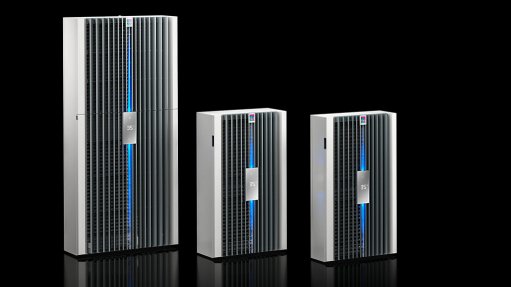
Rittal is a world leading provider of top-quality integrated systems for enclosures, power distribution, climate control, IT infrastructure and...
VISIT SHOWROOM
Electrifying the world in a safe, smart, and sustainable way, ABB Electrification is a global technology leader in electrical distribution and...
VISIT SHOWROOM


Announcements
What's On
Subscribe to improve your user experience...
Option 1 (equivalent of R125 a month):
Receive a weekly copy of Creamer Media's Engineering News & Mining Weekly magazine
(print copy for those in South Africa and e-magazine for those outside of South Africa)
Receive daily email newsletters
Access to full search results
Access archive of magazine back copies
Access to Projects in Progress
Access to ONE Research Report of your choice in PDF format
Option 2 (equivalent of R375 a month):
All benefits from Option 1
PLUS
Access to Creamer Media's Research Channel Africa for ALL Research Reports, in PDF format, on various industrial and mining sectors
including Electricity; Water; Energy Transition; Hydrogen; Roads, Rail and Ports; Coal; Gold; Platinum; Battery Metals; etc.
Already a subscriber?
Forgotten your password?
Receive weekly copy of Creamer Media's Engineering News & Mining Weekly magazine (print copy for those in South Africa and e-magazine for those outside of South Africa)
➕
Recieve daily email newsletters
➕
Access to full search results
➕
Access archive of magazine back copies
➕
Access to Projects in Progress
➕
Access to ONE Research Report of your choice in PDF format
RESEARCH CHANNEL AFRICA
R4500 (equivalent of R375 a month)
SUBSCRIBEAll benefits from Option 1
➕
Access to Creamer Media's Research Channel Africa for ALL Research Reports on various industrial and mining sectors, in PDF format, including on:
Electricity
➕
Water
➕
Energy Transition
➕
Hydrogen
➕
Roads, Rail and Ports
➕
Coal
➕
Gold
➕
Platinum
➕
Battery Metals
➕
etc.
Receive all benefits from Option 1 or Option 2 delivered to numerous people at your company
➕
Multiple User names and Passwords for simultaneous log-ins
➕
Intranet integration access to all in your organisation