

New lubrication system improves asset reliability for paper producer

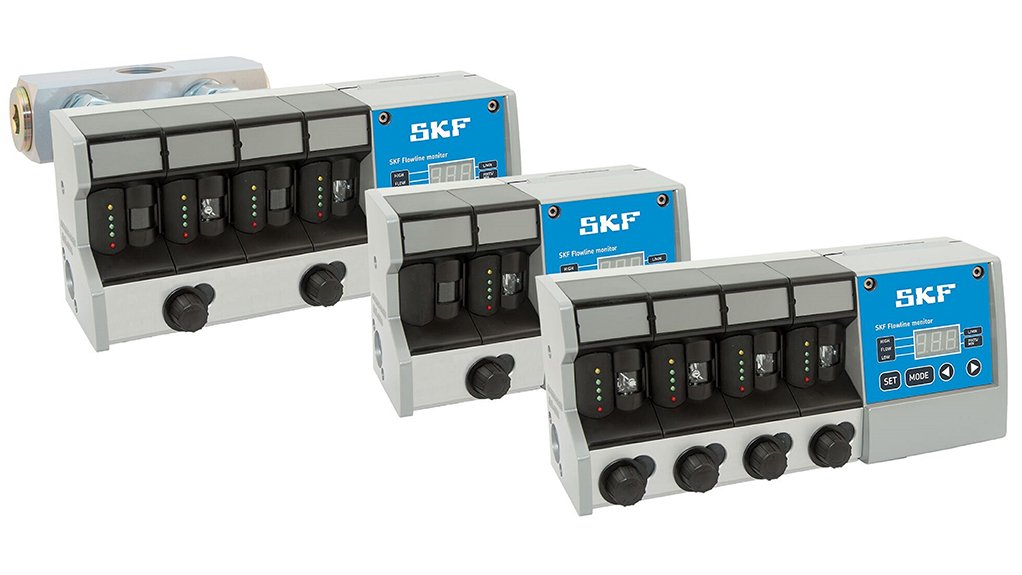


Paper mills transform raw materials such as wood pulp or recycled fibres into finished paper products using machinery and chemical processes, whereby fibres are broken down and formed into continuous sheets which are then dried and finished. SKF South Africa says its lubrication systems, powered by integrated state‑of‑the‑art technology, help paper mills improve performance across the paper industry.
SKF application engineering manager: Lubsys Donatien Makopo outlines how an updated system was recently installed at an existing customer’s paper mill, where oil leakages began to occur on an ageing Safematic lubrication system that lacked the latest technology and adequate monitoring capabilities required to track the performance of individual oil meters.
“Relentless advances in technology, coupled with intensifying production pressures, are quickly outpacing older systems which inevitably fall behind. Understanding these challenges, SKF continually integrates the latest innovations to help boost reliability, optimise performance and curtail operational costs, all factors that are fundamental to customers’ sustainable operations and long‑term business success. In line with this commitment, the Safematic systems’ limitations, including the absence of individual oil flow control and customisable alarm settings, were addressed and transformed in our new Flowline range, to deliver advanced monitoring and smarter lubrication management,” continues Makopo.
The customer sought a modern lubrication system replacement and SKF recommended an upgrade to its advanced Flowline Monitor Oil Meters to align with the customer’s operational requirements of dividing, measuring and controlling flow rates in oil‑circulation lubrication systems.
The SKF Flowline Monitor is available in three different flow‑meter sizes, enabling precise control and monitoring of flows from 0.1 l/min to 100 l/min across operating viscosities ranging from 32 mm²/s to 1 000 mm²/s. Highlighting the benefits for the customer, Makopo explains: ”Each flow meter operates independently and can be programmed or adjusted separately, ensuring precise control at every lubrication point. The Flowline Monitor consistently delivers accurate results regardless of oil temperature or viscosity changes, while its turbine‑based monitoring and adjusting‑valve technology ensures minimal pressure.’”
Makopo also highlights the system’s easy‑to‑use interface, which provides operators with clear, accurate flow readings for each lubrication point, and process controls aimed at ensuring comprehensive oversight and reliability. In addition, computer configuration and remote monitoring capabilities add flexibility and ease of integration, while monitoring modules are also available, providing both common and individual alarms for each lubrication point. The design incorporates panel mounting with improved lighting for enhanced visibility.