Mine safety training evolves, incorporating critical thinking

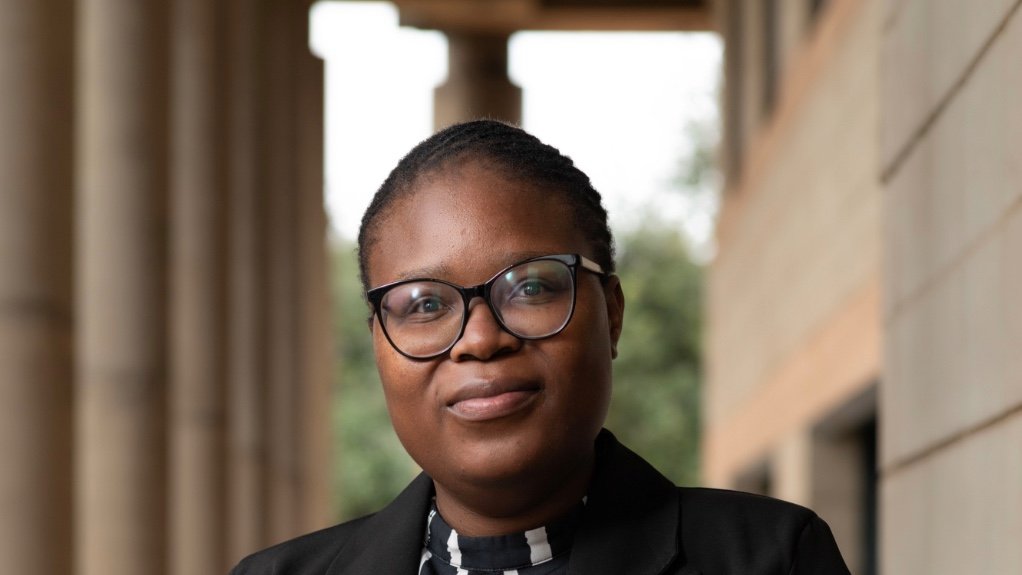
DR PONTSHO TWALA Improved skills development has supported an increase in health and safety metrics for mining personnel
HEALTH & SAFETY SUCCESS Over the years, the Wits Mining Institute has built expertise in occupational health and safety



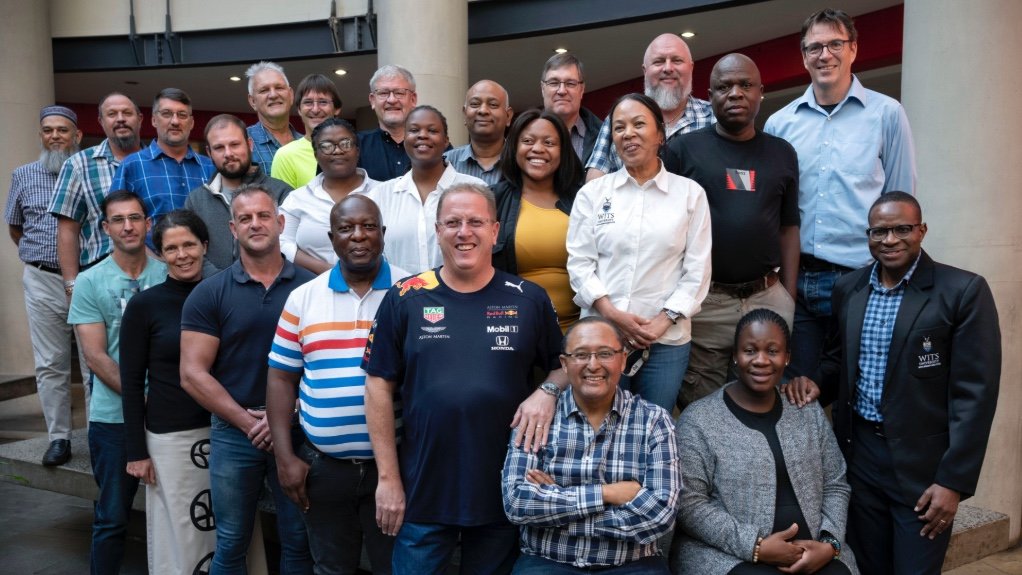
The mining sector’s significant progress in health and safety factors, with fatalities declining from 200 incidents to 41 over the past two decades from – 2005 to 2025, has been supported by improved skills development, according to minerals research institute Wits Mining Institute (WMI).
Training has been key to this progress, ensuring that employees have the knowledge and competence to identify hazards, respond effectively to risks and work safely, says newly appointed WMI director Dr Pontsho Twala. She adds that this has helped move the sector beyond compliance towards a more integrated, evidence-based and practitioner-led training model.
Over the years, the WMI has built expertise in occupational health and safety (OHS) and is again rolling out its OHS training programme in 2026. According to Twala, the new programme reflects both the complexity of modern mining and the WMI’s broader multidisciplinary mandate.
With support from diversified miner Sibanye-Stillwater, the OHS training programme was developed for their employees to strengthen health and safety capabilities, and is now available to the wider sector. It is designed to grow the capacity of OHS practitioners across mining in South Africa.
The course was developed in response to gaps in existing safety training in the mining sector.
Research by WMI found that much of the industry’s current training is fragmented, leading to inconsistent safety performance and thereby highlighting the need for an industry‑recognised programme that provides a strong foundation for practitioners leading health and safety in operations.
The programme is accredited by the University of the Witwatersrand and is supported by evidence‑based research, ensuring practical relevance to the mining sector’s operational and safety challenges. For the WMI, the OHS programme also represents its broader strategic direction of translating research into tangible skills development, she points out.
“Since 2023, we rolled out the programme exclusively to Sibanye-Stillwater operations . . . The success of the programme in the last three years has led to us opening it up to the wider mining industry,” says Twala.
At the core of the 2026 offering are two structured pathways including a foundational course comprising three modules and an advanced certificate in OHS practice.
The first course builds a baseline understanding of the mining environment, legislation and risk management, while the second course develops higher-order analytical capability over a five- to six-month period.
Integrating Theory, Practice
The deliberate integration of theory, practice and systems thinking is what distinguishes the WMI’s training approach, explains Twala.
“The programme content explicitly links OHS to the mineral value chain; environmental, social and governance considerations; and operational decision-making. This ensures that safety is not treated as a function within a silo, but as part of a broader production system,” she says.
Another defining feature of the courses is the emphasis on critical thinking, particularly within the Advanced OHS certificate course. Instead of relying on prescriptive rules, participants are trained to interrogate safety challenges within their own operations.
“We give the participants tools that enable them to look at OHS as a system that is connected to other components within a mining operation,” she adds.
The OHS course is operationalised through a strong applied research component whereby participants are required to identify a real-world issue within their workplace and work through a structured process of problem definition, data collection, analysis and communication.
“We take them through the process of defining the issue, investigating it and collecting the necessary data,” explains Twala. This approach aligns with the programme’s broader goal of cultivating a proactive safety culture.
The WMI also uses an innovative delivery model for its programmes, with its courses being highly interactive and drawing heavily on industry expertise.
“We get beyond the theory by inviting practitioners who understand the environment and the challenges . . . Participants do not just listen, they engage, exchange experiences and discuss what is working on the ground and what is not,” she says.
Being able to work with a major mining house adds valuable practical relevance, while supporting the WMI’s ambition to establish an industry-wide benchmark for OHS training, states Twala.
Working Professionals
The OHS courses are structured to suit the needs of working professionals, with modules delivered in a hybrid format to combine online learning with face-to-face sessions.
Continuous assessment is done through assignments and applied tasks.
Participants who have completed the programme say that this approach fits well with their work commitments and helps them apply what they learn at work.
The WMI runs its OHS courses in three different cycles during 2026.
While Course 1: the Mineral Value Chain for OHS, has already been run once, it will be offered again in June and September.
Course 2: Fundamentals of OHS in Mining, runs in May, August and October; while Course 3: OHS Practice in Mining, will run in July and October, and again in February 2027.
Additionally, the WMI will be hosting stakeholder dialogues under the theme “Beyond the Fence: How Community Environments Shape Health and Safety Performance in Mining” with the first dialogue taking place on May 27.
WMI will also deliver executive training on OHS on September 10 and 11. This course is targeted at senior leaders and decision-makers in the mining sector.
“Health and safety responsibility sits at all levels, and senior leaders play a key role in setting priorities, culture and accountability across the organisation,” concludes Twala.
Article Enquiry
Email Article
Save Article
Feedback
To advertise email advertising@creamermedia.co.za or click here
Research Reports

Projects


Latest Multimedia

Latest News

Showroom
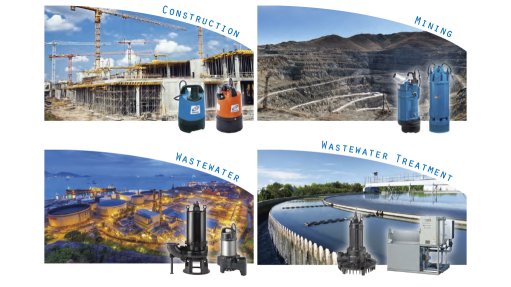
Tsurumi Pumps Africa is a specialist supplier of Japanese-engineered submersible pumping solutions, serving customers across the African continent.
VISIT SHOWROOM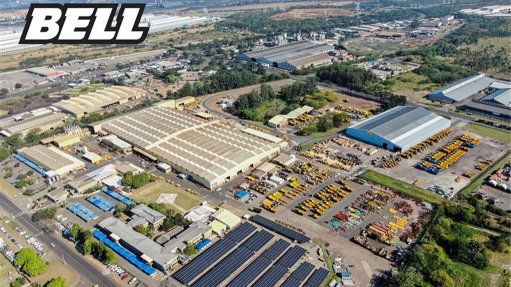
As one of South Africa's leading manufacturers, Bell Equipment distributes and exports its wide range of heavy equipment globally to mining,...
VISIT SHOWROOM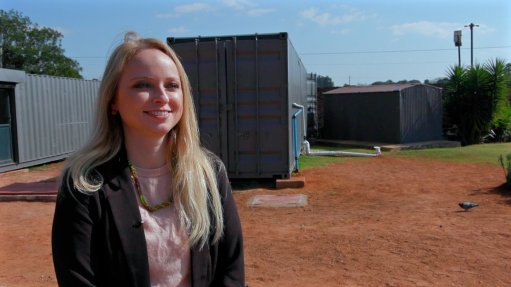

Press Office
Announcements
What's On
Subscribe to improve your user experience...
Option 1 (equivalent of R125 a month):
Receive a weekly copy of Creamer Media's Engineering News & Mining Weekly magazine
(print copy for those in South Africa and e-magazine for those outside of South Africa)
Receive daily email newsletters
Access to full search results
Access archive of magazine back copies
Access to Projects in Progress
Access to ONE Research Report of your choice in PDF format
Option 2 (equivalent of R375 a month):
All benefits from Option 1
PLUS
Access to Creamer Media's Research Channel Africa for ALL Research Reports, in PDF format, on various industrial and mining sectors
including Electricity; Water; Energy Transition; Hydrogen; Roads, Rail and Ports; Coal; Gold; Platinum; Battery Metals; etc.
Already a subscriber?
Forgotten your password?
Receive weekly copy of Creamer Media's Engineering News & Mining Weekly magazine (print copy for those in South Africa and e-magazine for those outside of South Africa)
➕
Recieve daily email newsletters
➕
Access to full search results
➕
Access archive of magazine back copies
➕
Access to Projects in Progress
➕
Access to ONE Research Report of your choice in PDF format
RESEARCH CHANNEL AFRICA
R4500 (equivalent of R375 a month)
SUBSCRIBEAll benefits from Option 1
➕
Access to Creamer Media's Research Channel Africa for ALL Research Reports on various industrial and mining sectors, in PDF format, including on:
Electricity
➕
Water
➕
Energy Transition
➕
Hydrogen
➕
Roads, Rail and Ports
➕
Coal
➕
Gold
➕
Platinum
➕
Battery Metals
➕
etc.
Receive all benefits from Option 1 or Option 2 delivered to numerous people at your company
➕
Multiple User names and Passwords for simultaneous log-ins
➕
Intranet integration access to all in your organisation