Inadequate enforcement limits regulation impact

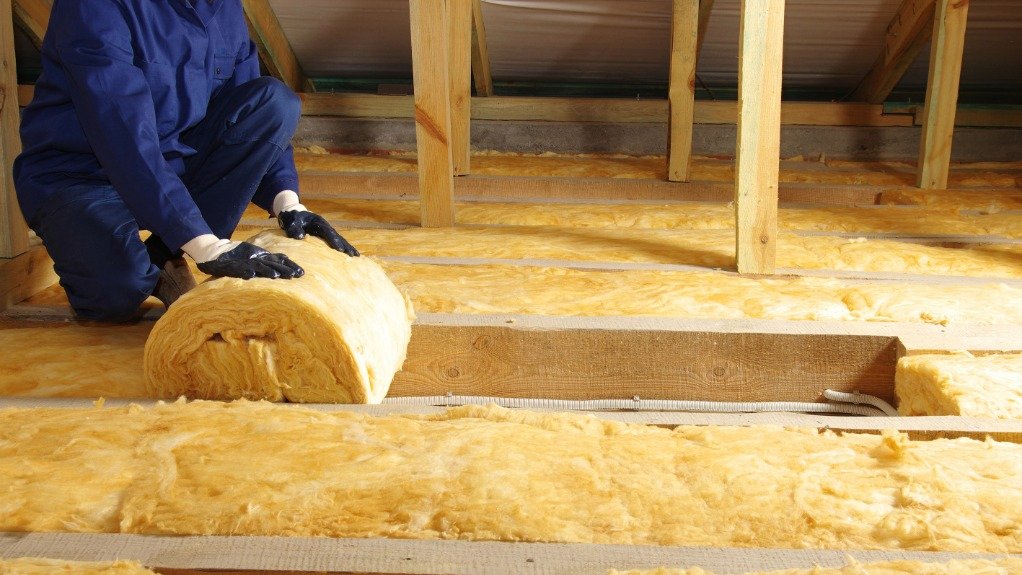
STICK TO THE PLAN Installing insulation that differs approved plans can reduce energy performance, increase heating and cooling demand and, consequently, create condensation and liability risks


While South Africa has appropriate insulation regulatory frameworks in place across thermal performance, fire safety and consumer protection, inadequate enforcement "creates gaps" in their effectiveness, says industry association Thermal Insulation Products and Systems Association South Africa (TIPSASA) executive director Des Schnetler.
Compliance frequently fails when building plans are approved with insufficient or no insulation detail, products are specified without valid test evidence, substitutions occur onsite without professional review and completed installations are rarely inspected for thermal or fire compliance.
To raise the standard of insulation compliance, Schnetler calls for systemic changes, including mandatory insulation specifications on drawings and bills of quantities, as well as the compulsory submission of R-value calculations, which indicate the thermal resistance of insulation.
She also advocates for mandatory South African National Standards (SANS) 53501-1 fire classification reports, strengthened municipal plan reviews and site inspections, as well as meaningful consequences for misrepresentation or noncompliant substitutions.
Additionally, she suggests that clearer labelling requirements, independent product verification, installer training and competency recognition will improve insulation compliance in South Africa, thereby protecting consumers and the built environment.
In the interim, given insulation’s critical role in energy efficiency, occupant comfort and environmental responsibility, TIPSASA encourages building owners, developers, professionals and contractors to specify their insulation requirements correctly, verify documentation and use competent installers.
However, Schnetler warns that while the Consumer Protection Act prohibits false, misleading or deceptive representations regarding goods or services, in practice product labelling and disclosure continue to require improvement.
“Products should clearly disclose thermal resistance, thickness, fire classification, the applicable test standard, intended application, limitations and installation requirements.”
One such example is inflated or misleading R-value claims. Given that R-value is a technical performance metric, its rating must be supported by valid test data, correct product thickness, density and appropriate installation conditions.
“A product should not be accepted merely on marketing claims. The higher the R-value, the better the thermal resistance,” Schnetler asserts.
Prior to specifying or buying insulation, she advises that building owners, contractors and professionals request independent test reports, product data sheets, the declared R-value at the specified thickness, and proof of compliance with the relevant SANS product standard, as well as installation instructions. They should also obtain documentary proof that confirms the tested product matches the product supplied and, where applicable, third-party certification.
Where a product has been misrepresented, a consumer or building owner may request supporting evidence, lodge a complaint with the supplier or the relevant association, approach the National Consumer Commission or pursue contractual or legal remedies where loss has occurred, she advises.
Compliance
Insulation must comply with SANS 10400-XA and SANS 10400-T.
Forming part of the application of the National Building Regulations, SANS 10400-XA sets the minimum requirements for energy use in buildings, ensuring that structures are designed and constructed to operate efficiently and reduce greenhouse-gas emissions.
From an insulation perspective, the key requirement is that the building envelope achieves the prescribed thermal performance for the relevant energy zone. As South Africa is divided into distinct energy zones, the required R-values differ, Schnetler explains.
However, she notes that an area requiring improvement is the level of detail submitted at the planning approval stage.
“Plans frequently state only compliance with ‘SANS 10400-XA or similar or approved’, without specifying the insulation product, thickness, R-value or installation method,” she says, adding that this practice weakens compliance and allows for on-site decisions to be made based on cost rather than performance.
Schnetler warns that installing insulation that differs from the approved plans may result in noncompliance with the National Building Regulations. Deviating from approved plans can also reduce energy performance, increase heating and cooling demand and, consequently, create condensation and liability risks for developers, contractors or owners when the building no longer conforms to the approved design.
Therefore, when applying for building plan approval, the professional team should clearly indicate the chosen route to compliance, differentiating between deemed-to-satisfy, rational design or the reference building route, as required in SANS 10400-A.
Meanwhile, the 2024 update to SANS 10400-T resulted in a major shift in fire compliance for insulation products. Previously, a single fire rating was required, but products must now be classified in accordance with SANS 53501-1 using a three-part rating.
The first part rates combustibility on a scale from A1 – assigned to materials that are non-combustible – to F, which indicates that no fire performance data has been established. The second part addresses smoke production during combustion, graded from s1 for low smoke output to s3 for high smoke output, while the third part addresses the risk of flaming droplets or particles, ranging from d0, where no such droplets are produced, to d2, where persistent flaming dripping presents an additional fire hazard.
TIPSASA maintains that combustible insulation should be used only where the product holds a valid SANS 53501-1 classification and is suitable for the occupancy and application; therefore, Table 5 of SANS 10400-T:2024 Edition 5.1 must be consulted.
The product must also be installed in accordance with the manufacturer's installation specifications, with penetrations and service openings properly fire-stopped and the professional fire design approved by a fire engineer.
Article Enquiry
Email Article
Save Article
Feedback
To advertise email advertising@creamermedia.co.za or click here
Research Reports

Projects


Latest Multimedia


Latest News


Showroom
As one of South Africa's leading manufacturers, Bell Equipment distributes and exports its wide range of heavy equipment globally to mining,...
VISIT SHOWROOM
CMTS is a leading, well-established EC&I contractor with 37+ years of mining and industrial experience. We execute full-scope EC&I projects with...
VISIT SHOWROOM



Announcements
What's On
Subscribe to improve your user experience...
Option 1 (equivalent of R125 a month):
Receive a weekly copy of Creamer Media's Engineering News & Mining Weekly magazine
(print copy for those in South Africa and e-magazine for those outside of South Africa)
Receive daily email newsletters
Access to full search results
Access archive of magazine back copies
Access to Projects in Progress
Access to ONE Research Report of your choice in PDF format
Option 2 (equivalent of R375 a month):
All benefits from Option 1
PLUS
Access to Creamer Media's Research Channel Africa for ALL Research Reports, in PDF format, on various industrial and mining sectors
including Electricity; Water; Energy Transition; Hydrogen; Roads, Rail and Ports; Coal; Gold; Platinum; Battery Metals; etc.
Already a subscriber?
Forgotten your password?
Receive weekly copy of Creamer Media's Engineering News & Mining Weekly magazine (print copy for those in South Africa and e-magazine for those outside of South Africa)
➕
Recieve daily email newsletters
➕
Access to full search results
➕
Access archive of magazine back copies
➕
Access to Projects in Progress
➕
Access to ONE Research Report of your choice in PDF format
RESEARCH CHANNEL AFRICA
R4500 (equivalent of R375 a month)
SUBSCRIBEAll benefits from Option 1
➕
Access to Creamer Media's Research Channel Africa for ALL Research Reports on various industrial and mining sectors, in PDF format, including on:
Electricity
➕
Water
➕
Energy Transition
➕
Hydrogen
➕
Roads, Rail and Ports
➕
Coal
➕
Gold
➕
Platinum
➕
Battery Metals
➕
etc.
Receive all benefits from Option 1 or Option 2 delivered to numerous people at your company
➕
Multiple User names and Passwords for simultaneous log-ins
➕
Intranet integration access to all in your organisation