Creamer Media’s Engineering News Online
Magazine in Store Now!
Advanced Search
 
 
We have detected that the browser you are using is no longer supported. As a result, some content may not display correctly.
We suggest that you upgrade to the latest version of any of the following browsers:
         
close notification
powered by
GOLD 1255.10 $/ozChange: -1.43
PLATINUM 1551.50 $/ozChange: -3.70
R/$ exchange 7.24Change: 0.03
R/€ exchange 9.19Change: 0.04
 
 
ZIM ECONOMY
Zimbabwe needs private sector to help restart economy – Minister
1 COMMENTS  |  
ADD A COMMENT PRINT
 
 
30th March 2009
TEXT SIZE
Text Smaller Disabled Text Bigger
 

South Africa could experience a “commercial boom” if trade with Zimbabwe was increased, Zimbabwean Economic Planning and Development Minister Elton Mangoma said on Monday.

Mangoma urged South African companies to recapitalise and extend some loans to their Zimbabwe affiliates.

Once Zimbabwean companies could access South African products and services more easily, demand for South African-produced goods would rise, boosting the local economy.

Speaking at a conference hosted by international tax and advisory firm KPMG, Mangoma said that the Zimbabwean government had little funds to invest in its own country. It would now be up to the private sector to restart the Zimbabwean economy.

He added that the government’s view on the private sector would have to change, and that tax and operating conditions within Zimbabwe would have to be made more appealing to investors. “As Ministers of the government, we will have to mingle a lot more with businesses, consult them a lot more meaningfully, and make sure that if they have any concerns, that these concerns are dealt with.”

Mangoma noted that less than 10% of Zimbabwe’s manufacturing capacity was currently being used, and if government wanted to increase that to 60% by December, it would need to attract foreign investment.

To do so, government would have to look at issues of electricity availability. “Right now, our generating capacity is less than 40%, and yet for an investment of less than $100-million, we can get our capacity to over 80%. We are taking this issue seriously, and we are in discussions with Eskom and other financiers here to make sure that our generation capacity is restored.”

The Zimbabwean government would also have to look at stabilising the agricultural sector, which was previously the country’s biggest source of income. Mangoma noted that fertiliser manufacturers were currently hard at work to produce enough fertiliser, while efforts were being made to procure enough seed to cover all the rural areas.

“As a minimum, Zimbabwe must be food self sufficient by 2010. This does not mean that we will have surplus for feeds, but we will have enough for human consumption.”

He noted that the country would also be focusing on yield, as opposed to boosting the acreage planted.

Zimbabwean Institute of Chartered Accountants president Nyasha Zhou identified several areas in which foreign investment would be most profitable. These included agriculture, mining, manufacturing, tourism and infrastructure.

In the case of infrastructure development, Mangoma noted that the government was willing to negotiate concessions, and open up previously prohibited areas to the private sector.

Zhou noted that besides concession opportunities, Zimbabwe was also ripe for equity and debt transactions, joint ventures, franchising, and partnerships. He added that the country had several benefits, which should draw foreign direct investments, including the country’s operational business structures, strategic geographical position, and strong work ethics.

The changing political climate would also offer a more stable environment for investing.

Edited by: Mariaan Webb


Hide Comments  
 
Readers Comments
 
image image
AFTER EIGHT YEARS OF ILLEGAL ( ZIM LAW IS STILL THERE BUT , HAS BEEN OUTLAWED BY ZIM GOVERMENT. IT IS A LAWLESS SOCIETY) TRASHING SA NATIONALS PROPERTY & OTHER NATIONALS PROTECTED BY INVESTMENT AGREEMENTS PROPERTY, THE SOUTH AFRICAN GOVERMENT HAS NOT COME FORWARD WITH ANY HELP TO THE SA NATIONALS & COMPANIES OWNED BY SA NATIONALS.LET ZIMBABWE 1st SOLVE THIER OWN ISSUES 1st THEN PROTECT IT BY LAW ENFORCEMENT.
image image 
image
User not found. on 31 Mar 09
 
 
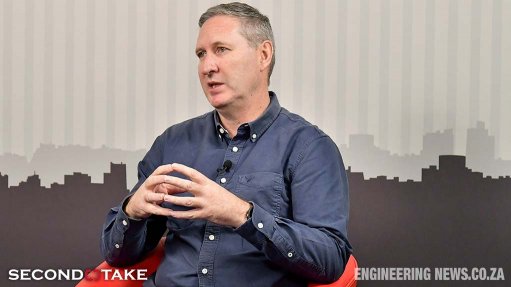
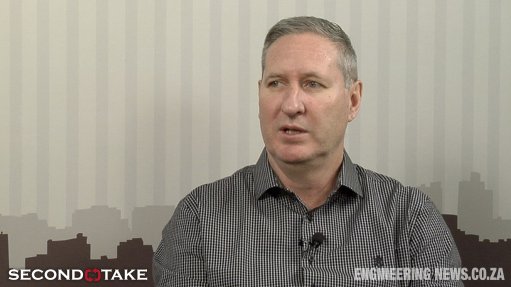
Zimbabwean economic planning and development Minister Elton Mangoma speaks on the country's economic upliftment plan Cameraperson: Danie de Beer Editing: Darlene Creamer
This video is licensed under a Creative Commons License