Creamer Media’s Engineering News Online
Advanced Search


We have detected that the browser you are using is no longer supported. As a result, some content may not display correctly.
We suggest that you upgrade to the latest version of any of the following browsers:
         
close notification
powered by
GOLD 1720.86 $/ozChange: -2.51
PLATINUM 1623.20 $/ozChange: 2.68
R/$ exchange 7.57Change: -0.02
R/€ exchange 9.91Change: 0.00
 
FIFA WORLD CUP
World Cup's solar sponsor backs African training-centre roll-out
 
30th June 2010
TEXT SIZE
Text Smaller Disabled Text Bigger
 

Official sponsor of the 2010 FIFA World Cup, Yingli Solar, has teamed up with FIFA on the organisation's $16-million "Football for Hope" corporate social responsibility project, which would see 20 solar-powered training centres set up throughout Africa in 2010.

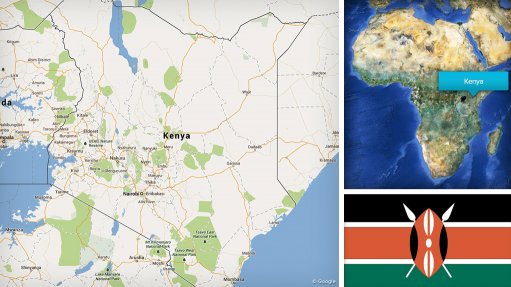
Construction has already started on some of the centres, five of which were in South Africa, with others located in Namibia, Mali, Rwanda, Ghana, Lesotho and Kenya.

The first centre, which was opened in December 2009, and run in conjunction with local nongovernmental organisation, Grassroots Soccer, was established in Khayelitsha, in the Western Cape. It activities had a strong focus on HIV/Aids education for youth, through football-based programmes.

The Yingli Solar off-grid solar installations would provide solar power for the training centres across Africa, which, in turn, would provide lighting for pitches, as well as electricity for computers or study rooms, or fridges to refrigerate vaccines and medicines, or even to pump water to storage tanks.

The construction of another centre in Mokopane, South Africa, run by the Red Cross had also started, as had a centre in Baguinéda, in Mali, run by the Association for Young Women and Girls. Another centre would be built in Nairobi, Kenya, and would be run by the Mathare Youth Sports Association, while the Southern African centre in Windhoek, Namibia, would be managed by Special Olympics Namibia.

FIFA corporate social responsibility head Federico Addiechi explained that the $16-million would be spent on infrastructure at the training centres, preparing for construction of the facilities, as well as contributing toward training for management staff at the centres.

Addiechi added that FIFA would support the centres for three years, and has ensured that it has partnered with local organisations, which understood the needs of the local communities, and could ensure the sustainability of the projects.

Yingli Green Energy Europe MD Stuart Brannigan emphasised that solar power was ideal for rural areas as it could provide safe light and heat or cooling in areas where potentially dangerous fuels such as paraffin were often used for these activities. It has enabled out of reach areas, unconnected by the national grid in many cases, to benefit from electricity.

Yingli also raised €24 000 from the company's clients at a function held at the InterSolar conference held in Munich, Germany, earlier in June, which it donated to the Football for Hope programme.

"The FIFA World Cup offers an ideal opportunity for Yingli Solar to be involved with Football for Hope and to support the '20 Centres for 2010' project with highly desired solar power. Social responsibility is an important pillar of Yingli Green Energy's core values. We are engaged in a variety of community-focused projects around the world - aiming to make solar power a sustainable and cost-effective energy for the world," said Yingli CEO Liansheng Miao.

Addiechi said that the involvement with Yingli had already showed concrete deliverable results, and added that FIFA hoped to develop a long-term relationship with the company to support development projects.

Yingli Green Energy was the first Chinese company to be an official sponsor for the soccer tournament, as well as being the first renewable energy sponsor for the games.

The company was established in 1998, and currently produces about four-million solar photovoltaic modules a year. The panels are exported to markets in Germany, Spain, Italy, Greece, France, South Korea, China and the US.

Brannigan noted that the solar market in South Africa was not very large, however, the company envisaged it growing stronger in the next two to three years, when it would become a more important area in solar for Africa.

Yingli representative Bryan Li added that the African continent, because of its strong solar irradiation, was viewed as one of the key markets to develop solar power.


Edited by: Terence Creamer
FULL Access to Mining Weekly and Engineering News - Subscribe Now!
Subscribe Now Login


Hide Comments  
 
This article contains no Comments


All comments must be approved by our editors, click here to read the editorial guidelines for comments. Please allow some time for our editors to approve your comment after posting.
 * Required Fields

image
image
 *


image
image
 *
 

image
image
 

Verification Image

image
image
 * Please enter the text you see in the above image.