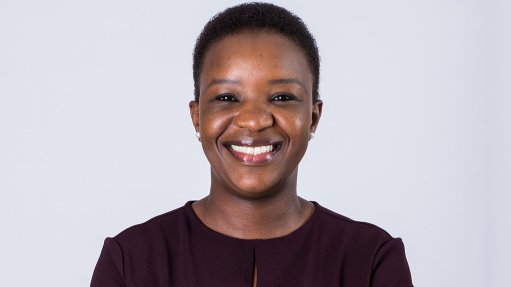
CEO Nonkululeko Nyembezi-Heita said on Wednesday that it was still targeting 2011 for the commissioning of the projects, and told Engineering News Online that this would require construction work to begin on site during the course of 2009.
The group would be placing enquiries in the market soon for the main project components and the environmental impact assessment was already under way.
However, Nyembezi-Heita would not be drawn on the final capital estimate, stressing that this could only be determined once the technical configuration had been selected. It was also only then that the group's board, which had approved the principle of expanding long-product output at Newcastle, would be in a position to offer its final sanction.
The JSE-listed company was expecting to spend R5-billion between 2008 and 2011 on increasing capacity across its operations to a targeted level of ten-million tons a year, from a current nameplate of about 8-million tons a year.
It was anticipated that the bulk of this money would be directed toward the Newcastle expansion, which would include the development of a sixth blast furnace, as well as a new section mill and billet caster.
INFRASTRUCTURE UNDERPIN
The group's stated objective was to raising long-product volumes in line with anticipated demand growth for such steel arising on the back of what is expected to be a material and sustained infrastructure push across sub-Saharan Africa (SSA).
Indeed, Nyembezi-Heita noted that the company expected SSA demand to rise from 12,7-million tons a year currently to 18,2-million tons a year by 2014 and said that ArcelorMittal South Africa would also seek to raise it share of that enlarged market from 42% to 46% by 2014.
Given that infrastructure projects were long-product intensive the company would continue to pursue its stated strategy of expanding long output, while adding value to its flat steel. In fact, it was expecting to spend about R3,6-billion between 2008 and 2011 on what it described as downstream value-adding projects.
COGEN PUSH
But while the final Newcastle expansion plan was still to emerge, it was increasingly certain that the expansion would be coupled with a 130-MW cogeneration plant.
Nyembezi-Heita said that it had a technical team working on the power plan, which would not only make it more energy self-sufficient, but could also support its carbon dioxide emission-reduction plans.
She revealed that it was engaging with State power utility Eskom under its Medium Term Power Purchase Programme (MTPPP), which offers a potentially lucrative initial price of 65c/kWh for any project able to reach commercial operation by 2012. In fact, the utility was hopeful of facilitating the introduction of about 3 000 MW of cogeneration power plants between now and 2012.
However, Nyembezi-Heita noted that the engagement was still at an early stage and that there were many details still to clarify.
She also stressed that there would probably be a lag between the start-up of the new Newcastle blast furnace and the commissioning of the power plant, which meant that it was having to consider a range of options to fill the gap that would exist both during construction and start-up.
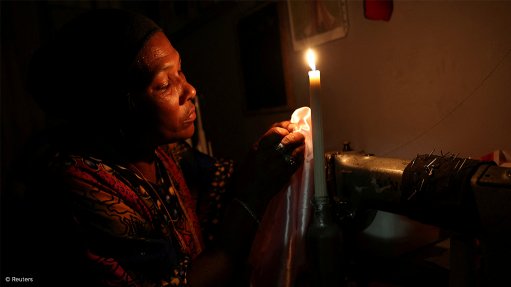
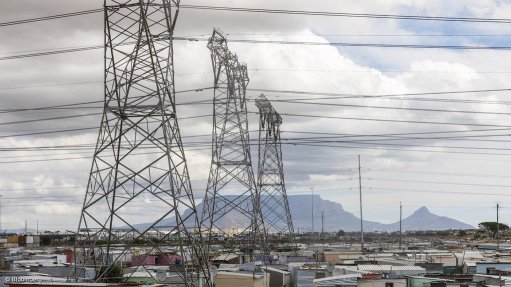
The group, as one of South Africa's 138 largest electricity consumers was still subject to a 90% ration from Eskom, which was likely to be made mandatory once the power conservation programme was introduced later this year.
Already, it had sacrificed 120 000 t in the first half of 2008 as a result of the rationing. This was likely to increase to 180 000 t in the second half of the year, owing mainly to the fact that its power demands would increase as it completed it various reline projects.
Company president Luc Bonte, thus, confirmed that the full year losses as a result of electricity shortages would be in line with its earlier guidance of 300 000 t.
The Newcastle co-generation project did not as yet form part of the company's R13,1-billion rolling capex plans for 2008 through to 2011.
To subscribe to Engineering News's print magazine email subscriptions@creamermedia.co.za or buy now.