Creamer Media’s Engineering News Online
Advanced Search


We have detected that the browser you are using is no longer supported. As a result, some content may not display correctly.
We suggest that you upgrade to the latest version of any of the following browsers:
         
close notification
powered by
GOLD 1773.73 $/ozChange: 16.83
PLATINUM 1720.00 $/ozChange: 1.00
R/$ exchange 7.74Change: -0.01
R/€ exchange 10.26Change: -0.01
 
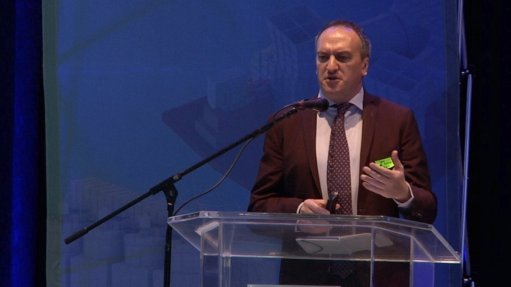
Dr Kemm is a nuclear physicist and is the CEO of Stratek Business Strategy Consultants. He also sits on the board of advisers of the Committee for A Constructive Tomorrow, based in Washington DC - stratek@pixie.co.za
 
Wind power truly in the realm of mysticism
 
25th November 2011
TEXT SIZE
Text Smaller Disabled Text Bigger
 

Wind power paranoia has bypassed science logic and is well and truly in the realm of mysticism.

Let me state categorically that, as a physicist, I am in favour of wind power that is genuinely economically viable. The problem is that large-scale wind power fed into a national grid is just not viable – either economically or practically – from an engineering stand point.

The dream of some enthusiasts that there is some major technological leap just waiting in the wings that will make wind power viable is extremely unlikely to take place. The total energy in any wind stream is measurable, and there is no known quantum leap waiting for a solution that could produce considerably more wind energy than at present.

The extreme language and wild claims concerning the potential glories of wind power are becoming more and more exotic and are rapidly being blown further away from reality by the wind of reason. We really need a wind of change to blow now to bring debate back to sound logical discourse on the real strengths and weaknesses of wind power.

I have been reading documents on wind energy from a variety of sources and one sees a spectrum of highly optimistic statements, such as the one here in South Africa from the wind lobby, which says it is striving for 20% of national demand to be met by wind power by 2025. Okay, there is nothing wrong in an optimistic dream.

However, in referring to the intro- duction of more wind power, the statement goes on to say: “It will involve close interaction between the private and public sectors to ensure technical parameters and electricity grid designs are appropriate to facilitate it.”

What this statement actually says is: there are severe technical problems in integrating a highly variable energy source into the grid and somebody will have to overcome these problems that we know exist, but we do not want to mention them.

A spokesperson of the South African Wind Energy Association was quoted in the media as saying: “Contrary to what most believe, a 30 000 MW wind energy plant would have an average daily minimum power output of 7 000 MW and would displace 6 000 MW of conventional coal or nuclear power baseload.”

This statement is significant for a few reasons. Firstly, it is irresponsible fantasy. Secondly, it does admit that a ‘plant’ of 30 000 MW does not produce 30 000 MW but only an ‘average’ of 7 000 MW. Take careful note of the word ‘average’. This word means that, in practice, the ‘plant’ could produce any output from zero to 30 000 MW, depending on if and when the wind blows. On ‘average’, they say, one should get 7 000 MW ‘daily’.

But what does that mean? How can one use the terms ‘average’ and ‘daily’ together. Think about it. The most common error committed unknowingly by the media, and knowingly by the wind proponents, is that a quoted figure for installed capacity for wind power is not the amount you get. Wind power systems are fundamentally designed to produce about 25% of their installed capacity, so one designs to get about 7 000 MW out of 30 000 MW of installed capacity. Frequently, the operating wind systems do not even deliver the designed 25% – at times half of this or less. In contrast, with nuclear power, one would get more than 25 000 MW out of an installed capacity of 30 000 MW and one would get it all the time, not only ‘on average’ when the wind blows.

Further, to refer to ‘a plant’ of 30 000 MW as if such a huge capacity would be built in one ‘plant’ is just crazy. Actually, it is irresponsible to use such language.

A capacity figure of 30 000 MW would be arrived at by adding together many wind farms which would be placed very far apart. So, the wind patterns would be very different. The so-called ‘average’ wind output of 7 000 MW could actually appear anywhere over a very wide area, hundreds or, perhaps, thousands of kilometres apart. This is the type of situation that gives rise to technical problems in the grid. You cannot just push significant pulses of electricity into the grid at widely divergent places at widely differing times – depending on when and where the wind blows. Something will blow (pun intended).

To say that this claimed 7 000 MW would replace 6 000 MW of nuclear or coal power is just foolish.
I recently received a comprehensive wind power report from the UK. This report contains the real results of UK wind power facilities. It is very revealing. For example, it quotes, in detail, the significant number of days during the past year when the entire system produced essentially no output at all. What this tells one is that the entire installed wind capacity needs a backup consisting of some really reliable source like coal or nuclear.

What then is the point of large-scale wind power if one needs a second source in reserve? I am not aware of any place in the world where the installation of large-scale wind energy has actually resulted in the decommissioning of other significant power sources.

It is time that the fantasy of producing large-scale economic wind energy reliably was put aside and a sensible realism emerged. Such a realism would examine deploying existing wind technology in isolated standalone systems, which are genuinely economic and which use the intermittent nature of the wind as a strength, and do not hide this inherent weakness with smoke and mirrors. There are thousands of places on the planet that really need such standalone energy systems.

Edited by: Martin Zhuwakinyu
FULL Access to Mining Weekly and Engineering News - Subscribe Now!
Subscribe Now Login


Hide Comments  
 
Readers Comments
 
image image
Seems to me, anti-wind posturing has become the religion, very often in the guise of "I'm a physicist and I should know". You want to blind with science, then produce the facts. There are physicists on both sides of this fence. Now here is an invonvenient fact: Spain has a current annual average of over 17% wind penetration, soon to surpass 20%. It is also an electricity island so all balancing is done internally. And the lights STAY ON. At the same time, Deloitte has detailed how its micro-economic benefits far exceed the so-called production incentives paid (it brings local business taxes, creates jobs, offsets imported fuels and CO2 rights, produces exports and a long etc). There. Nothing mystic about that, is there?
image image 
image
Mike McGovern on 09 Dec 11
image image
Good analysis. The case against wind does not depend on the issue of global cliamate change. It is not and won;t economically viable.
image image 
image
Anonymous on 05 Dec 11
image image
Dr. Kemm didn't mention an important point. There is no such thing as a 30,000 MW "wind plant". That's ridiculous. Most wind turbines are rated at 1.5 MW (full output), so we would need 20,000 wind turbines. Now imagine how many hundreds of square miles that would take to place them on. That might literally be billions of tons of concrete and steel. Very good article, but it only scratches as how ridiculous wind energy is.
image image 
image
Anonymous on 02 Dec 11
image image
Dr Kemm is correct in his assertions. Wind turbines have become a religion. Many well-meaning people accept what the wind energy lobbyists and developers claim on good faith. Little of what they claim is true. Trillions of dollars are being wasted on a technology that does nothing to help solve the problem of climate change. In fact the reverse is true. In many places where a lot of wind farms are running, carbon emiisions have increased since installing wind farms. To quote another expert, "“Because wind blows intermittently, electric utilities must either keep their conventional power plants running all the time to make sure the lights don’t go dark, or continually ramp up and down the output from conventional coal-or gas-fired generators (called “cycling”). But coal-fired and gas-fired generators are designed to run continuously, and if they don’t, fuel consumption and emissions generally increase.” This is happening in places like Colorado and Texas where CO2 and power plant pollution have increased since they installed wind farms. Here are four examples: http://www.denverpost.com/headlines/ci_15081808 http://www.clepair.net/IerlandUdo.html http://news.heartland.org/newspaper-article/2010/07/13/study-wind-power-raises-co2-emissions http://www.theregister.co.uk/2008/07/03/wind_power_needs_dirty_pricey_gas_backup_report/
image image 
image
billslycat on 02 Dec 11
image image
Dr Kemm is an avowed climate change denialist and a nuke and coal supporter. He never offers anything but the standard "why it won't/can't work" mantra whilst overtly implying that renewables are not going to work, there is not a climate change crisis and that coal and nuke are the way forward for our energy mix. A true carbon warrior as COP 17 with its irrefutable climate change experts convene in Durban!!
image image 
image
Anonymous on 28 Nov 11
image image
It is so good to hear a voice of realism in a market flooded with deceitful statements that defy logic and simple mathematics. The general lack of understanding of the systems impact of renewable energy and its realistic potential seems to be vast. Dr Kemm focused on wind power, but fallacies are created from geyser power saving schemes thru all forms of alternative energy. No one argues that we simply have to adopt alternative energy, but claiming wonders will create an assembly of disillusioned investors that will become the biggest thread to the implementation of alternative energy.
image image 
image
Marius Fourie on 25 Nov 11