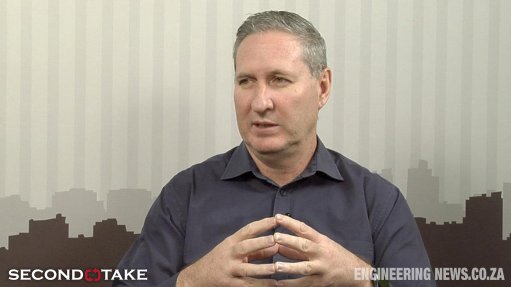
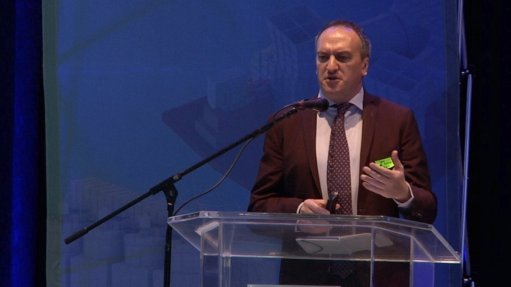
Wilson Bayly Holmes Ovcon (WBHO) earned around 60% of its 2012 financial year revenue outside South Africa, said CEO Louwtjie Nel on Monday, up from 52% in the previous financial year, which was the first time in the 41-year history of the construction group that the majority of its revenue was generated outside the country.
WBHO revenue for the year ended June 30 increased by 21.2%, from R14.8-billion in the previous year to R17.9-billion. Profit for the year dropped 9.6%, to R713-million. Operating margin declined from 7.4% to 5.5%.
Nel regarded the revenue growth outside South Africa as “disappointing, as this is home, and this is where we want to be, but we have to go where the work is”.
He added that the company’s future South African earnings “won’t be going much lower. We are pretty much in good balance now”.
However, Nel also noted that WBHO did not have a strategy to earn a certain percentage of its revenue in a certain geographic area – “our strategy is to find the best work we can”.
The current WBHO order book comprised 67% of foreign projects, with the balance of work located in South Africa. The order book for the group at July 1, 2012, was R20.9-billion, compared with R16.2-billion at July 1, 2011 – an increase of R4.6-billion.
“There is a big order book in Australia at the moment,” said Nel.
The negative effect of doing so much business in Australia, however, was that margins were tight there. Nel was hopeful of some improvement going forward.
With big mining groups also cutting down on capital expenditure as global financial jitters continued to spread, Nel admitted that WBHO’s exposure to Australia was “a risk” for the company.
He pointed out, though, that the group was only “a small player” in Australia’s mining industry, involved largely in upgrade and maintenance projects.
“We just upgraded from our bakkie. We have a lot of potential. We are not an engineering, procurement and construction contractor in that field.”
Nel said he could imagine the Australian resources boom potentially cooling down, but that WBHO was confident of a “reasonable run” as it could still secure some market share from the “big guys”.
As for the local market, Nel believed that some segments had bottomed out, with a slight improvement in margins, but noted that it would “take a long time to really come back. In the short term, we don’t expect it to improve much”.
WBHO would “do well to stay in the 5% to 6% [margin] bracket”, he added, especially as Australia had traditionally been “below 3%.”
Nel said the local construction industry was probably somewhat “spoilt” by the boom in the run-up to the 2010 World Cup, with contractor margins after tax before this “always” between 3% and 4% – a level the market was again closing in on.
“There is potential in South Africa. We can see the work coming in from the private sector and a little bit on the South African National Roads Agency Limited (Sanral) and Transnet side.”
He added that the private sector was “keeping most of the contractors alive at the moment”, with the industry still in a bit “of a survivalist mode”.
However, Nel noted that WBHO was also a bit “more bullish” on government spend than a year ago.
“We see two, three new tenders floating through our offices each week for roads, either provincial or for Sanral. We have a lot of pipeline work on the go. If these renewable energy projects go, it will make a huge difference.”
He said the potential work from Transnet also seemed promising, but that this was still “a year away”.
Nel said he was hopeful of enough public sector work coming to market so that “everyone could get a fair share”.
“I think we have to be patient and, in about a year to 18 months, we we will hopefully really see the work flow through and then we can get going again.”
Competition Commission Provision, Free State Roads Update
One problem area for WBHO in the past financial year had been nonpayment on a Free State government roads project, which had seen work suspended in October 2011.
However, Nel said on Monday that WBHO had reached a settlement with the provincial government and that work on the project would restart once payment was received.
He said the company had reached a payment agreement “in writing” in a settlement process which had also involved National Treasury. WBHO had received “a small portion” of the payment owing to the company at the beginning of August.
Nel did not want to release the quantum of money WBHO was to be paid, saying only that he was confident it would get 100% of the “finally negotiated sum”.
“We think we got a fair deal.”
As for another thorny issue, namely the South African Competition Commission’s investigation into collusion in the local construction industry, Nel said WBHO had provided for possible penalties in this long-running process, unlike last year, as it now “had a better idea what that provision should be”.
Nel said the group hoped for finality on the issue in the “next two to three months”.
He did not want to quantify the value of the provision as WBHO had not yet agreed on this with the Competition Commission, saying only that the group had provided for its “best estimate” of the settlement amount.
To subscribe to Engineering News's print magazine email subscriptions@creamermedia.co.za or buy now.


lr1_2.gif)