Creamer Media’s Engineering News Online
Advanced Search


We have detected that the browser you are using is no longer supported. As a result, some content may not display correctly.
We suggest that you upgrade to the latest version of any of the following browsers:
         
close notification
powered by
GOLD 1380.26 $/ozChange: 5.17
PLATINUM 1453.50 $/ozChange: -19.00
R/$ exchange 9.57Change: -0.02
R/€ exchange 12.36Change: -0.02
 
PRIVATE EQUITY
 
Venture capital picking up steam in SA – survey
 
25th September 2012
TEXT SIZE
Text Smaller Disabled Text Bigger
 

Gauteng is South Africa’s largest base for venture capital transactions, but Cape Town received more venture capital funds than either Johannesburg or Pretoria, with R830-million invested in the venture assets capital class, the Southern African Venture Capital Association (Savca) reported on Tuesday.

In its ‘Venture Capital Survey’ report, which surveyed 11 fund managers recording 103 venture capital transactions between 2009 and July 2012, Savca stated that venture capital in South Africa was an active, albeit emergent, asset class.

Data from the survey also showed that the asset class was picking up steam, both in the number of transactions and in the number of fund managers. South Africa's high-growth entrepreneurial system is also producing notable exits.

“With only R830-million invested in venture capital, however, the asset class is substantially smaller in size compared with the funds under management by the South African private equity industry which is in excess of R100-billion, or in comparison to the market capitalisation of the JSE,” the report stated.

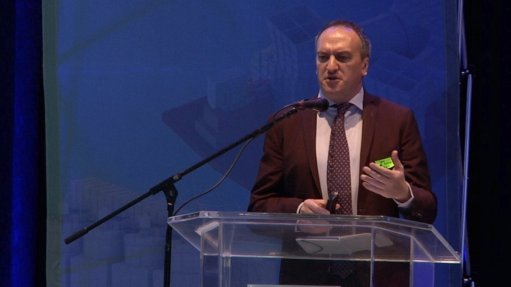
Savca executive consultant Malcolm Segal said that this raised questions about the role and impact of venture capital in stimulating the growth and development of the South African economy. "But the real figure may be as much as double the stated one because we know that there are numerous investors in the local venture capital asset class that did not participate in the survey as a result of our strict parameters, including angel investors, corporate investors, enterprise development initiatives and well-known entities such as business partners," he noted.

Meanwhile, the report stated that the largest portion of transactions concluded in the period was in the early stage of investments. Both start-up and growth capital attacked 37% each of the available funding while development capital accounted for 22% of investments by value and seed capital only 4%.

This showed a healthy appetite amongst investors in early stage and start-up transactions, despite a substantial decrease in the number of transactions by the public sector (normally executing early stage seed and start-up transactions) compared to the 2010 survey.

The biggest recipient of venture capital money has been information and communications technology, which attracted 35% of investment, followed by life sciences (health, pharmaceutical and medical devices) attracting 25% of investment over the period under review.

"Energy has not previously been a significant venture capital attracter because of its substantial capital requirements but over the research period the sector attracted 15% of total investment, making it the second-largest single sector recipient of venture capital funding," added Segal.

Over the survey period, 12 full exits and four partial exits were recorded. While fund managers were still reluctant to report exit information publically, each of the major venture capital fund managers surveyed reported having concluded exits during the survey period.

Segal noted that corporate merger and acquisition activity was mostly not reported publicly. “A notable public exit during the period was credit firm Visa's acquisition of Fundamo - a $110-million transaction."

CONSTRAINTS

The report noted that a lack of skilled entrepreneurs, lack of suitable management for venture capital invested businesses and a lack of exit mechanisms were seen as the greatest inhibitor to the success of venture capital funds.

In addition, fund raising, especially from institutional sources was reported as an “extremely difficult” process although some fund managers claimed to have received unsolicited interest from European venture capital family offices seeking investment opportunities in emerging markets.

"At Savca we intend that this survey would stimulate more in-depth analysis to create a clearly defined strategy for the development of the venture capital asset class in the country," Segal said.
 

Edited by: Mariaan Webb


To subscribe to Engineering News's print magazine email subscriptions@creamermedia.co.za or buy now.

FULL Access to Mining Weekly and Engineering News - Subscribe Now!
Subscribe Now Login


Picture by: Bloomberg