Creamer Media’s Engineering News Online
Magazine in Store Now!
Advanced Search
 
 
We have detected that the browser you are using is no longer supported. As a result, some content may not display correctly.
We suggest that you upgrade to the latest version of any of the following browsers:
         
close notification
powered by
GOLD 1255.43 $/ozChange: -1.10
PLATINUM 1553.00 $/ozChange: -2.20
R/$ exchange 7.23Change: 0.04
R/€ exchange 9.17Change: 0.06
 
 
AUTO INDUSTRY & BUDGET
Vehicle makers warn carbon tax will impact sales and prices
6 COMMENTS  |  
ADD A COMMENT PRINT
 
 
18th February 2010
TEXT SIZE
Text Smaller Disabled Text Bigger
 

The National Association of Automobile Manufacturers of South Africa (Naamsa) accepts, in principle, the introduction of an environmental tax on new cars sold in South Africa from September 1, says Naamsa president David Powels.

However, he notes that the measure will push vehicle prices up by about 2%, and that this additional tax burden amounts to about R1,2-billion a year, based on 2010 projected new car sales. 

Powels says “there is no doubt” a price increase of “at least 2% will depress sales volumes and could have negative implications on [automotive] industry employment levels”.

Finance Minister Pravin Gordhan announced in his maiden budget speech on Wednesday that new passenger vehicles will be taxed based on their certified carbon dioxide (CO2) emissions at R75 per g/km for each g/km above 120 g/km.

The new tax regime favours the use of more fuel-efficient vehicles (often this equates to vehicles with smaller engines) that emit less CO2.

Powels says Naamsa would have preferred to have seen more emphasis on the socio-economic impact of the new emissions tax, and a quantification of the expected impact of the tax regime on sales volumes and on the structure of the new car and used car markets in South Africa, as well as on inflation and employment.  

“The timing of the introduction of the tax is also questionable, given the current fragile state of the industry, which is at the initial stage of emerging from an extremely severe recession in domestic new vehicle sales over the past three years, compounded by the negative impact on export sales as a result of the global economic crisis,” says Powels.

“The impending higher taxes will do little to assist and support the much needed recovery in domestic sales.”

To be effective in influencing consumer purchasing decisions, it is essential that the tax should be applied at the point of sale to ensure visibility to the end customer, he adds.

He also says that a number of technical, administrative and legal issues need to be addressed to facilitate the introduction of the tax regime, and that a team of industry experts will assist the National Treasury and the South African Revenue Service in this regard. 

Cleaner Fuel will make big CO2 Difference

Powels says Naamsa has advocated the need for an integrated approach within government to CO2 emission reduction initiatives. 

In this context, it is “imperative that government should legislate and incentivise the introduction of Euro IV enabling 'green' fuel in South Africa”.

The current general fuel production standard in South Africa matches Euro II engines. The higher the number, the less the engine emissions.

By not having cleaner fuel available, the local automotive industry can not introduce the latest technology, cleaner-burning engines.

“This [cleaner fuel] will provide a quantum leap benefit in the reduction of CO2 emissions of new cars sold,” says Powels.

“Specifically, correct fuel quality could reduce new car emissions by over 20%.

“Moreover, improved quality fuel contains fewer harmful pollutants, notably benzene and sulphur, which will contribute to improved air quality regardless of the age or type of the vehicle.”

Powels also says that a further requirement to improve urban air quality and reduce the health costs of air pollution in South Africa is the need for measures to replace older, high-pollution vehicles with more fuel efficient, lower carbon-emitting products. 

Recent measures in some developed countries to stimulate vehicle sales during the recession included government-driven cash incentives for consumers to bring in their older vehicles, and to buy new, more fuel-efficient models.

DTI Support Welcomed
Powels says that the budget proposals represent “an appropriate and pragmatic strategic response” aimed at promoting higher levels of economic growth and employment creation in South Africa, seen against the background of a challenging international and domestic economic environment, and uncertainty about the sustainability of the global recovery.

He adds that Naamsa welcomes the allocation of an additional R3,6-billion to the Department of Trade and Industry (dti) for industrial policy interventions, with the bulk of the funding earmarked to support investment, growth and development in the vehicle and component manufacturing industries, as well as the clothing and textile sectors.

Edited by: Creamer Media Reporter
 
 
Topics in this article


Hide Comments  
 
Readers Comments
 
image image
this is the best way of getting information
image image 
image
brian kemp on 18 Feb 10
image image
Car industry price are too high in the first place, so another 2% will not impact anyone. Car prices is a arm and leg now days
image image 
image
car on 18 Feb 10
image image
Amazing how no one asks how the money is to be used. Like the plastic bag tax that still waits to be used for the purpose of plastic recycling. This carbon tax is a stealth tax that will be used to boost the fiscas. Why do most of us accept these lies put out by the governemnt and the cave in by the motor industry? To my mind there has been a quite backroom trade off. Carbon tax or no motor industry funding. Equally the irony is the governments carbon TAX is a car buyer tax, but they throwing money at the same carbon generating industry. B/S baffles brains.
image image 
image
Xen on 19 Feb 10
image image
Taxing carbon emissions is likely to achieve two things. First, it will give the politicians more toys to play with (expect a bulk order for Rolls Royces). Second, it will make some people feel better that they have done something to cut down consumption (as they walk,they can admire the blue light brigade flashing past - be careful what you do with your fingers) . What it will NOT achieve is any measurable impact on a changing climate.
image image 
image
The Iceman Cometh on 19 Feb 10
image image
Carbon tax is as fraudulent as the US derivatives and sub-prime loans are. More taxing, and global monetary control by the IMF, WTO, UN, under the guise of doing our bit for the environment. Please wake up people, carbon emissions is a lie. Don't associate it with environmentalism. World bodies have done this in their own best interest, that is profit, greed and control. Independent government's need to push for auditing the US Federal Reserve first, as no country can simply print money out of thin air and get away with it countless of times over. We can thank our South African government later for NOT resisting to this first world treachery. This simply strengthens the new world order agenda, and South Africa is prime 'democratic' and 'secular' entry point into Africa. Good luck SA car owners.
image image 
image
Al Gore on 05 Aug 10
image image
Let say in short. The revenue raised through the Carbon tax will fund the transition to cleaner Fuel,Cleaner Fuel= Cleaner cars avaliable, hence less carbon tax in the Future. Lets hope Government spends the CONSUMERS $$$ with this insight!
image image 
image
Asad on 24 Aug 10
 
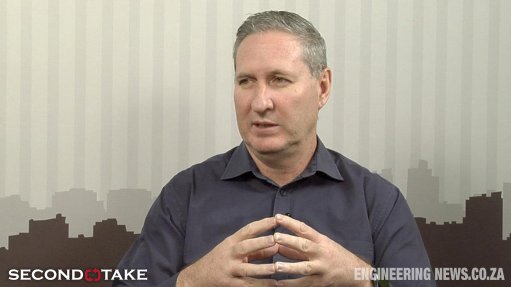
Naamsa president David Powels
 
Naamsa president David Powels