Creamer Media’s Engineering News Online
Advanced Search


We have detected that the browser you are using is no longer supported. As a result, some content may not display correctly.
We suggest that you upgrade to the latest version of any of the following browsers:
         
close notification
powered by
GOLD 1773.83 $/ozChange: 16.93
PLATINUM 1717.50 $/ozChange: -1.50
R/$ exchange 7.73Change: 0.00
R/€ exchange 10.25Change: 0.00
 
GREEN JOBS
Upscaling renewables beyond IRP allocations will drive green jobs - report
 
25th November 2011
TEXT SIZE
Text Smaller Disabled Text Bigger
 

A new ‘Green Jobs’ report estimates that some 130 023 direct jobs could be created by South Africa’s renewable energy sector by 2025, but only if the renewables allocation outlined in the current Integrated Resource Plan (IRP) 2010-2030 is materially expanded.

The IRP for electricity, which was released earlier this year, envisages that independent power producers (IPPs) and State utility Eskom will build a combined renewables base of 17 800 MW by 2030, or about 42% of the new generation capacity to be added by that date.

But a new report, produced jointly by the Industrial Development Corporation (IDC) and the Development Bank of Southern Africa (DBSA), argues that the potential for concentrated solar power (CSP) is larger than that envisaged in the current version of the IRP, as is the case for a number of other technologies not currently covered by the generation plan.

The 170-page document, released in Johannesburg at a function presided over by Economic Development Minister Ebrahim Patel, premises its jobs calculations on a renewables deployment that is 8 720 MW larger than the one proposed in the IRP.

Co-authors, Jorge Maia of the IDC and David Jarvis of the DBSA, stress, however, that the expansion path outlined in the Green Jobs report does not address the costs issues related to such an upscaling. Instead, the outcomes are premised on the assumption that the costs of renewables will fall, while the reliability of less mature technologies, such as CSP, will rise.

Patel says the only firm renewables planning relates to the procurement of the first 3 725 MW of capacity from IPPs, as well as Eskom’s plan to build a 100 MW wind farm in the Western Cape and a further 100 MW CSP facility, near Upington, in the Northern Cape.

But he stresses that the IRP will be revised from time to time and future versions will take account of changes in technologies and costs.

The report argues that wind and cogeneration are the dominant short-term solutions, but that in the longer term solar technologies, including photovoltaic solutions, could play a more significant role, owing to South Africa’s significant solar resources.

The potential for direct manufacturing jobs related the renewables programmes in South Africa and the region is also considered to be large at around 22 566.

But these benefits will only flow from policies that insist on local content, as well as from the development of a relevant skills base and the creation of a market with the economies of scale necessary to foster the development of industries able to produce systems and components for the renewables sector.

Overall, the report, which interrogated 26 green technologies or areas, says there is an opportunity to create 98 000 new direct jobs in the short term and around 462 000 employment opportunities in the formal economy by 2025 by pursuing efforts to green the South African economy.

The bulk of these prospects are said to reside in the area of natural resource management, where some 232 926 jobs, or 50.4% of the total, could be created through employing people to conserve and restore ecosystems, such as grasslands and wetlands, or to improve soil and land management.

New direct employment opportunities in energy and resource efficiency activities are expected to contribute almost 68 000, or just under 15% of the total, while activities associated with emissions and pollution mitigation are anticipated to result in about 32 000 in the long term.

Patel argues that in the context of the problems associated with climate change and the prevailing economic uncertainties, new models for economic development are required and new sources of jobs growth have to be generated.
An analysis of green-economy experiences elsewhere “points towards an extraordinary opportunity for South Africa” to pursue a “job-rich new growth path.”

He also cautions that the transition will be key to South Africa’s future competitiveness, particularly as consumers begin to demand that products and services they buy are less damaging to the environment.

As a relatively large carbon emitter, South Africa, therefore, should seek to foster a “green value proposition” to sustain the competitiveness of its exports.
 

Edited by: Creamer Media Reporter
FULL Access to Mining Weekly and Engineering News - Subscribe Now!
Subscribe Now Login


Hide Comments  
 
Readers Comments
 
image image
We would like to think that job creation would be pushed by the need for any Alternative and renewable energy projects to initiate in full steem, instead of only the mere mention thereof. The Engineering industry has been persistant and confident of the new prospectives and are keen to start these as soon as humanly possible. All we need now is the go ahead and an end to the "never ending - dragging of the feet" in this sector.
image image 
image
M De Ponte on 28 Nov 11
image image
As usual, there are promises and projects and 170 page reports that aren't read. What we need is very simple: 1) Reverse Feed to be legalised; 2) Net Metering to be legalised; 3) Time of Use Tariffs to be legalised for anyone with no service charges (this will incentivise people to buy or produce energy in cheap periods (23 cents per kwh) and sell it at peak or expensive periods (R2.30 or R4.00) per kwh. We don't need any special job creation plans. We just need good old fashioned deregulation and leveling the playing fields so that everyone including people in townships and compete on a level playing field. If government wants to give incentives, then here is a plan: 1) private homeowners can invest in RE before tax and before VAT, like businesses. This will save homeowners in the 40% tax bracket 50% of their investment cost; 2) RE Capex for businesses to be fully tax deductible (depreciated and capital allowance) in the first year; 3) R&D (amortisation) costs in RE to be fully tax deductable in the first year; 4) Government can pay 30% of the capex costs of RE systems. If government does all this, jobs will be created automatically. Note that China will create 11 million jobs in the Green Industry in the next 5 years. South Africa can only compete with this if it is clever, ie by doing things to allow non-Eskom IPPs (including homeowners and businesses) access to the electrical grid which will help to dramatically grow the country and automatically create jobs at low cost.
image image 
image
David Lipschitz on 26 Nov 11
image image
Again the possibility of 50,000 direct and indirect jobs that could be created in the short term with the introduction and implimentation of urban and rural rain water harvesting is ignored in favour of the central and local government cash stream.
image image 
image
Xen on 26 Nov 11
image image
I don't know why the renewables sector keeps pushing jobs. There is no evidence that they produce more jobs than, for example, the equivalent amount of power from a coal-fired power station. In fact, because the power produced by renewables generally costs more than other sources of power, then they actually destroy jobs by moving workers away from more productive jobs. And this present tale is worse - it is quite clear the market in SA is small and will remain small for some years to come, so the demand for people will only grow slowly. The cry for a larger share, when they haven't even started, is just plain irresponsible.
image image 
image
The Iceman Cometh on 25 Nov 11
 
 
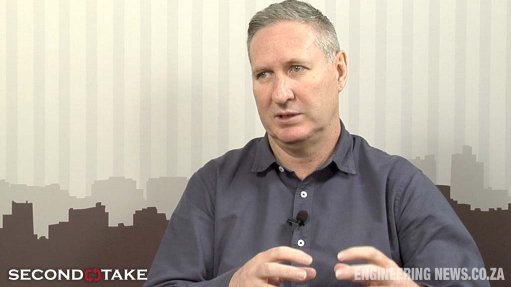
Economic Development Minister Ebrahim Patel frames South Africa's green-economy push at the launch of the Green Jobs report in Johannesburg. Camera Work: Nicholas Boyd. Editing: Darlene Creamer.
This video is licensed under a Creative Commons License
GET SELECTED VIDEO
Embed
Selected Video Download (6.38mb)
 
Economic Development Minister Ebrahim Patel
 
Picture by: Duane Daws
Economic Development Minister Ebrahim Patel
DBSA's David Jarvis
 
Picture by: Duane Daws
DBSA's David Jarvis
IDC's Jorge Maia
 
Picture by: Duane Daws
IDC's Jorge Maia
 
Previous Play Next