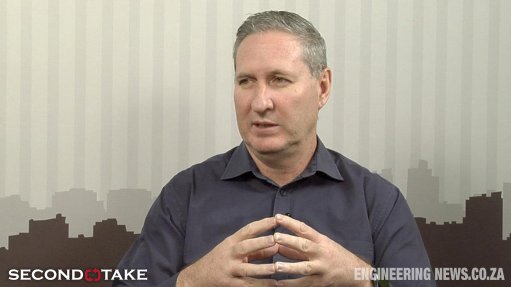
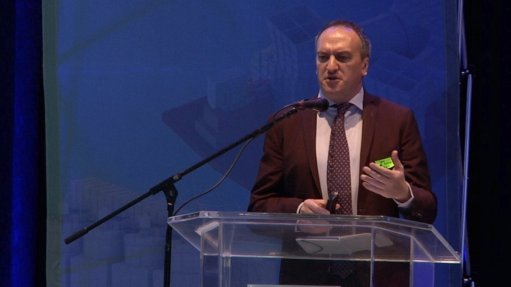
Despite being framed as a ‘development round’, in reality, progress would only be achieved at the current World Trade Organisation (WTO) talks if all “blocs felt that they had secured some new market access”, the UK’s Permanent Under-Secretary of State for Trade, Gareth Thomas, said in Johannesburg on Monday.
Speaking at a briefing organised by the South African Institute of International Affairs, Thomas said that the key to unblocking the impasse lay in compromises from both developed and developing countries.
He said developed countries, particularly the US, needed to show flexibility on improving both agricultural market access as well as dealing with trade distorting subsidies.
But he added that the so-called Nama 11, which included powerful developing countries, such as South Africa, Brazil and India, would also need to show movement on liberalisation regarding non-agricultural market access (Nama).
The Nama 11 group had hitherto opposed what they saw as ambitious cuts in industrial tariffs for what they described as modest and uncertain agriculture reforms in the highly protected agriculture market of the US, European Union and Japan.
Thomas concurred with the conventional wisdom that argued that failure to end the logjam at the July 21 ministerial meeting, scheduled for Geneva, would be a serious setback. In fact, he warned that the talks would only be able to resume again in "18 months to two years, if at all”, given upcoming elections in the US and India, as well as the fact that there would be changes in the composition of the European Commission.
“We risk losing the important progress that has been made on market access and trade distorting agriculture subsidies,” Thomas said, arguing that “we are at a pivotal moment”.
Last week, WTO Director-General Pascal Lamy described July as "the moment of truth" for a long-sought global trade pact, with Reuters quoting him as warning that a failure would erode economic growth, sour diplomatic ties and hurt poor countries.
"The coming weeks represent the moment of truth for the Doha round," Lamy, a former EU trade commissioner, said in a memorandum to Ministers, published in the International Herald Tribune.
"A deal in agriculture and industrial goods would generate an unstoppable momentum and bring quick resolution to the round ... Agreement is within our reach but all of us will have to stretch a bit to get there," he added.
Earlier, South African Department of Trade and Industry (DTI) deputy director-general for international trade and economic development Xavier Carim told Engineering News that "we have a window of opportunity now and it needs to be taken – if we don’t take it, we won’t see any significant progress for the rest of the year".
“If we get the frameworks in place, and get the big numbers agreed by June or July, then a lot of the other work will just fall into place," Carim asserted.
It was now common cause, therefore, that the two key issues in Geneva would be progress on agriculture reform, as well as access to industrial markets – developing countries had fought hard to keep the latter from overwhelming the agenda.
But Thomas conceded that any flexibility shown by the Nama 11 should be balanced by the developmental agenda. "But, there will need to be some flexibility from the Nama 11. As to how much flexibility would be up for discussion," he said.
For its part, South Africa had consistently warned that great vigilance was required to safeguard the country's policy flexibility, particularly in the area of industrial products, particularly given the growing pressure on developing countries to make ‘onerous’ concessions.
Sticking to the UK government’s consistent position that trade liberalisation was linked to both growth and development, Thomas said that the poorest in sub-Saharan Africa would be hardest hit by a failure of the Doha development agenda.
Earlier in the day, Thomas had met trade officials from South Africa to discuss both Doha as well as the “provocative” issue of the economic partnership agreement (EPA) with the South African Development Community.
These EPA talks had split the region and the Southern African Customs Union, with some countries signing up and others, such as South Africa and Namibia, refusing to do so.
Thomas indicated that the UK government had sympathy for the positions taken by South Africa and Namibia, and had urged the European Commission to be more “flexible” in the second-phase of EPA discussions that were now resuming.
He stressed though that it supported the need for WTO compatibility and for a deal that encouraged greater regional integration. But unlike the European Commission, which had pushed for the so-called ‘new trade’ issues on services and government procurement, Thomas indicated that African countries should be allowed to “set the pace of travel”. That said, the UK still felt a deal was achievable and should be concluded as soon as possible.
On leaving South Africa after the bilateral forum on Tuesday, Thomas would be visiting his trade counterparts in Botswana and Namibia to canvass their views on the future of the EPA.
To subscribe to Engineering News's print magazine email subscriptions@creamermedia.co.za or buy now.


lr1.gif)


lr1.gif)