Creamer Media’s Engineering News Online
Advanced Search


We have detected that the browser you are using is no longer supported. As a result, some content may not display correctly.
We suggest that you upgrade to the latest version of any of the following browsers:
         
close notification
powered by
GOLD 1314.96 $/ozChange: -59.56
PLATINUM 1408.00 $/ozChange: -18.50
R/$ exchange 10.30Change: -0.29
R/€ exchange 13.61Change: -0.21
 
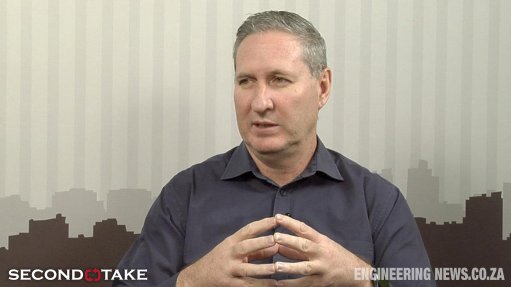
Dr Kemm is a nuclear physicist and is the CEO of Stratek Business Strategy Consultants. He also sits on the board of advisers of the Committee for A Constructive Tomorrow, based in Washington DC - stratek@pixie.co.za
 
 
The downside of technological advances
 
25th May 2012
TEXT SIZE
Text Smaller Disabled Text Bigger
 

The advance of technology is generally good and beneficial, but all technology advances have social consequences.

At times, a technological advance could be confined to a single factory and the impact, generally, may only be on the people in that particular manufacturing plant. However, at other times, technological advances can have a much wider impact on the population.

Take the advances in the news media as an example. Today, news collection for TV and radio, as well as for the print media, is so good that it has a significant impact on the population. Most people do not even realise what is actually happening to society. Consider TV. I make videos on industrial and technological topics. These range from corporate marketing videos and training videos to general- interest videos for TV. I got into this business when I used to see videos on TV about technology subjects in which the script had been poorly written because, clearly, the scriptwriter did not understand the science of the topic.

I met up with a film-maker and we started to make films together. I wrote the scripts and arranged the technology issues to be filmed, and he did the rest. At one point, we had our own weekly TV show for a year and a half. In those days, the camera was a film camera, and it was large. The cameraperson always used to say that the downside of the job was carrying the bulky camera. At times, the cameraperson would have to climb a ladder or a sandy mine dump with that heavy and bulky camera. Alternatively, we would want to film in some small, confined space. It was almost impossible for the cameraperson to run with the camera on his shoulder and film at the same time.

After we had filmed for a day or two, we had to wait a couple of days for the film to be processed at a laboratory so that we could see what we had ‘in the can’.

We now have digital cameras, with no film, so one can now see immediately if the shots are correct, and if they are not right, one just does it again – immediately! There is no waiting for lab processing. Further, the cameras are now tiny by comparison. It is easy to hold a broadcast-quality camera in one hand. It is easy to run with a camera.

This means that a cameraperson can run with a camera rolling to ‘get the action’ and can also crawl into almost any space with a camera. These modern developments make it possible to film all these TV reality shows in which a cameraperson has to follow people around on a remote island or travel with an army unit inside an army tank, filming all the time.

Thanks to the digital nature of the recording and because of modern telecommunications, a news cameraperson in the front line of a battle can have the images transmitted back to the TV studio to be broadcast on the same evening’s news bulletin. At times, a live feed can be rigged up so that the public watch in real time.

This means that the public can see, for example, what is going on at about the same time as the President or Prime Minister of a country. So, the public develops an opinion on the matter by the next morning, well before a President can call a Cabinet meeting to decide how to present the story to the public.

The situation has moved ahead even further – TV channels now invite any members of the public to take pictures or video clips with their cellphones, and then to email them to the TV studio from anywhere in the world. You can put a cellphone in your pocket, which means that people can get into places that a cameraperson of the past, with a film camera, could not even have dreamt of. Radio and print media can also now get news from almost anywhere in the world almost instantly.

There is a good side to all this – the public is informed. But the bad side is that, if the public is given a slant that is not totally accurate, then public opinion is shaped and starts to influence government reaction and policy. These resulting reactions and policy inclinations could be wrong.

So, considering the general broad front of technology advance, as technology advances, there is more and more of an onus on the technology people who invent and develop it to consider the potential public consequences, both good and bad, of what they are doing. Scientists and engineers have to consider the potential social consequences of their work; they can no longer work in an ivory tower and leave the social consequences of technological advances to others to worry about.

Edited by: Martin Zhuwakinyu


To subscribe to Engineering News's print magazine email subscriptions@creamermedia.co.za or buy now.

FULL Access to Mining Weekly and Engineering News - Subscribe Now!
Subscribe Now Login