Creamer Media’s Engineering News Online
Advanced Search


We have detected that the browser you are using is no longer supported. As a result, some content may not display correctly.
We suggest that you upgrade to the latest version of any of the following browsers:
         
close notification
powered by
GOLD 1345.79 $/ozChange: -20.03
PLATINUM 1446.50 $/ozChange: -15.20
R/$ exchange 9.40Change: -0.08
R/€ exchange 12.07Change: -0.07


Strong rand restrains profit margins
 
22nd October 2010
TEXT SIZE
Text Smaller Disabled Text Bigger
 

The strong rand is restraining local synthetic fuels (synfuels) and chemicals producer Sasol’s ability to realise potential profit margins, chief financial officer Christine Ramon reports.

However, despite the strong performance of the local currency and global markets still being volatile, following the economic crisis, the company posted solid financial results for the 2009/10 financial year ended June 30, with all its business clusters returning to profit.

Ramon, the youngest member of Sasol’s executive council, says that the 16% stronger rand outweighed the benefit of improved commodity prices and improved production volumes, impacting on the company’s turn- over and operating profit negatively.

However, the strong rand also benefits the company, owing to reduced cash fixed costs brought about by lower inflationary trends. “We do, however, remain sensitive to economic variables on the global market,” she says.

The company reports that, for every change of one dollar in the average crude oil price, its operating profit is impacted on by about R615-million and a similar situation is seen in every 10c change in the rand:dollar exchange rate.

She says that, although there has been a gradual strengthening of the oil price over the past year, it is still 5% down on the price for the corresponding period last year.

Sasol’s local energy business is the primary contributor to the company’s profitability, although hampered by the strong rand. The chemicals cluster contributed 23% to the group’s profit, which is proportionately larger than its 2008 ‘record year’ performance.

“Despite these negative impacts, we have delivered on an improved operational performance, reflected in the company’s healthy operational margins of about 20%. Management’s continued focus on operational performance and cost discipline has boosted the bottom line,” Ramon reports.
An improvement in production volumes contributed R1,9-billion to the operating profit. The company says that the profit was not affected by the one-off administrative penalties implemented by the Competition Commission, remeasurements and Sasol Inzalo interest charges.

The company also benefited from a lucrative oil hedge last year, which was not repeated this year. Ramon says that no decision has been made on an oil hedge for 2011.

Further, Sasol has managed to reduce its absolute cash fixed costs on a sustainable basis, by about R800-million, compared with figures for last year.

Meanwhile, offshore investments have shown growth within both the energy and the chemicals businesses. Ramon reports that the company’s strategy of geographical diversification has enhanced the robustness of the business.

In Qatar, the Oryx gas-to-liquids plant has made a noteworthy contribution to current results and has the potential to contribute even more in the coming year. “Oryx continues to perform well at 90% capacity, despite a maintenance shutdown, as well as an unforeseen technical shutdown. During 2011, we plan to realise planned operating rates,” Ramon adds.

With regard to the electricity tariff increases being implemented by State-owned utility Eskom, and labour costs rising above the consumer price index, the company reports that it has had a good cost performance. “We aim to contain rising costs within the inflation range,” she notes.

Sasol currently generates about one-half of the electricity it uses. The company reports that it plans to increase its own-generation capacity to about 60% by 2012.

Further, Ramon reports that a power purchase agreement with Eskom, effective July 1, will mitigate further electricity cost increases in future.

During 2011, Ramon expects synfuels production to maintain the 7,3-million-ton baseline production, taking into account a one-in-eight-year full factory outage.

Further, Sasol reports that it expects its total capital expenditure (capex) to rise steadily during the next two years. The company plans to spend about R19-billion on capex during 2011, and a further R22-billion during 2012.

“Our strong financial position and cash flow gives us a competitive advantage in the current environment to respond quickly and effectively to new opportunities,” Ramon concludes.

Edited by: Brindaveni Naidoo


To subscribe to Engineering News's print magazine email subscriptions@creamermedia.co.za or buy now.

FULL Access to Mining Weekly and Engineering News - Subscribe Now!
Subscribe Now Login


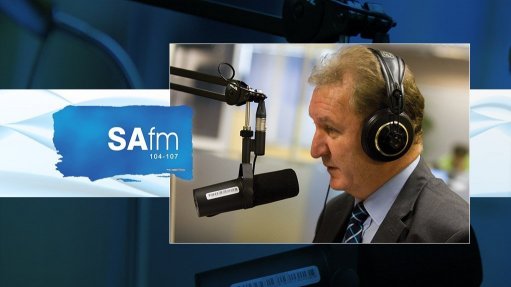
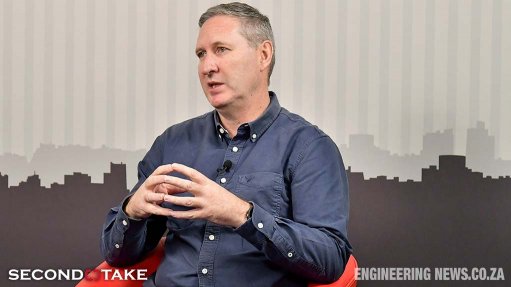
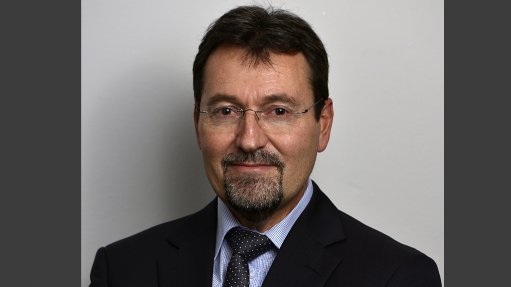
Sasol chief financial officer Christine Ramon discussing the company's strong financial results.
GET SELECTED AUDIOCLIP
Embed
This article's audio Download (869.71kb)