Creamer Media’s Engineering News Online
Advanced Search


We have detected that the browser you are using is no longer supported. As a result, some content may not display correctly.
We suggest that you upgrade to the latest version of any of the following browsers:
         
close notification
powered by
GOLD 1370.28 $/ozChange: -15.65
PLATINUM 1454.00 $/ozChange: -32.50
R/$ exchange 9.57Change: -0.16
R/€ exchange 12.32Change: -0.24
 
 
Steel industry performance to sustain and grow steel price
 
11th July 2008
TEXT SIZE
Text Smaller Disabled Text Bigger
 

The current performance of the steel industry, locally and internationally, is expected to sustain the price of steel and may even grow steel prices should steel demand increase, reports the continent’s biggest steel producer, ArcelorMittal South Africa.

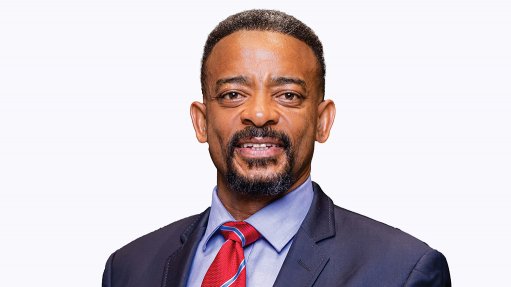
ArcelorMittal South Africa CEO Nonkululeko Nyembezi-Heita says that the price of steel has been a contentious issue since the begining of 2008. “The pricing structure that Arcelor-Mittal South Africa uses is dependent on two main factors, the first of which is the price of steel in the international markets that ArcelorMittal monitors, these being the Commonwealth of Independent States, China, Germany, and the US. Depending on the performance of the price of steel in these countries, ArcelorMittal’s steel prices will either increase or decrease. Obviously, the demand from these international markets will determine the price of steel in those markets and increased demand will push up prices,” says Nyembezi-Heita.

Meanwhile, research conducted by the International Iron and Steel Institute estimates that, Chinese steel consumption will grow by 11,5% in 2008 and a further 10% in 2009, accounting for 35% of the world total in 2008. Chinese steel consumption is expected to reach 36,7% of the world total by 2009.

In the local steel industry, KPMG industrial, automotive and petrochemicals, and industrial markets partner Gavin Maile says that South Africa’s infrastructure roll-out programme is the main driver of the steel industry, and expects 2008 to be another good year for the steel industry.

ommenting on the possible future of the programme, Maile says that South Africa has a significant backlog of infrastructural reinvestment that needs to be looked at. Because of this, sustainability of the Infrastructure Roll-Out Programme should last beyond 2010. Because of this, Nyembezi-Heita says that ArcelorMittal South Africa is not looking at 2010 as a point in the industry where the future of the infrastructure roll-out programme will be in doubt.

Meanwhile, Nyembezi-Heita comments that there is a measure of confusion surrounding the international basket pricing structure. “What steel-using companies in South Africa need to realise is that ArcelorMittal South Africa bases its prices in the domestic market on the international markets ArcelorMittal South Africa follows, not on the export price. If the steel users want to actively pursue importing steel from any of the markets ArcelorMittal South Africa follows, the company will have to pay the export price for the steel plus the ancillary costs of transporting the steel to South Africa.”

The second significant factor that ArcelorMittal South Africa uses to determine its steel price is the performance of the rand against US dollar. “ArcelorMittal South Africa has just announced that on July 1, 2008, the price of flat and long products is to increase by R450/t. And this was calculated at an exchange rate of R7,60 to the US dollar. This exchange rate has changed significantly since then, so, once again, ArcelorMittal South Africa’s prices are significantly cheaper than the price of steel in the international markers that the company follows,” she says.

Furnace Reline Programme

Reports carried out by the South- ern African Iron and Steel Institute (Saisi) indicate that crude steel production during the first quarter of 2008 has dropped by 50 156 t, compared to crude steel production during the first quarter of 2007. Saisi secretary-general Pieter Dieterich says that this is attributable to lost production during ArcelorMittal South Africa’s furnace relining programme across all its production facilities.

At the beginning of 2008, ArcelorMittal South Africa went though an extensive relining programme of its furnaces at the companies main production facilities in Vanderbijlpark and Vereeniging, in Gauteng, Saldanha Bay, in the Western Cape, and Newcastle, in KwaZulu-Natal.

Nyembezi-Heita reports that three out of the four production facilities are on line and are operating at full production following the reline programme.

ArcelorMittal South Africa’s flagship production facility in Vanderbijlpark came back online towards the end of last year following two months of relining. After the reline production, problems were experienced which were only resolved during the first quarter of 2008. Nyembezi-Heita says that the company is happy with the fact that the production, problems have been resolved and that blast furnace D achieved record production in April.

“The Midrex and Corex plants, at Saldanha Bay, went off-line in February and were back on-line by April 22. The company is happy with the fact that the reline was completed without any time lost due to injuries,” says Nyembezi-Heita.

The only facility that is not yet operating at full capacity is the Newcastle production facility. The Newcastle production facility went off-line for a mini reline on May 12, and is on track, with the completion date set for the beginning of July.

Nyembezi-Heita adds that the estimated cost of the reline programme to ArcelorMittal South Africa is R1,2-billion. The cost is an estimation owing to the fact that the mini reline of the furnace at the Newcastle plant is yet to be completed. However, Nyembezi-Heita is confident that the mini reline at Newcastle will come in within budget.

Energy Crisis Concerns

Although the reline programme came at a time when South Africa was feeling the worst effects of the current energy crisis, Nyembezi-Heita says that the company would have gone ahead with the programme regardless of the fact that the programme coincided with power utility Eskom’s load-shedding programme was coincidental.

“The company needed to carry out the programme regardless of Eskom’s capacity as furnaces have only got a ten-year lifespan. Some of the company’s furnaces have been operating long after that with no reline work being done. When Eskom instructed industry to reduce its electricity consumption by 10%, the reline work at Vanderbijlpark took the required strain off Sal-danha, and Vereeniging,” says Nyembezi-Heita.

She adds that the effect of the energy crisis on the company has been significant. Initial estimations indicate that the company could lose 300 000 t by the end of 2008 provided that Eskom does not reinitiate its load-shedding programme during the winter months. Should this be the case, Nyembezi-Heita says that the company will loose more than 300 000 t.

African Footprint

In June this year, ArcelorMittal South Africa opened its Maputo production plant in neighboring Mozambique. This is a significant step for the company as it is the company’s first expansion into Africa. “ArcelorMittal South Africa has, in the past, sold steel into East African countries such as Kenya and Tanzania. Because of the knowledge that the company has of those markets, and Mozambique’s strategic position on the East African seaboard, it made sense to open up operations in that country.

Looking at further expansion possibilities, ArcelorMittal South Africa will initially probably limit it to Southern Africa for the time being. West Africa would have been an interesting prospect, but the ArcelorMittal group has identified a potential growth market in Nigeria, so there will be a group presence in West Africa,” concludes Nyembezi-Heita.

Edited by: Laura Tyrer


To subscribe to Engineering News's print magazine email subscriptions@creamermedia.co.za or buy now.

FULL Access to Mining Weekly and Engineering News - Subscribe Now!
Subscribe Now Login


ArcelorMittal South Africa CEO Nonkululeko Nyembezi-Heita discusses the furnace relining programme, production status across operations and the effect of the energy crises on the company. (11.07.08) Cameraperson: Danie de Beer. Editing: Darlene Creamer
This video is licensed under a Creative Commons License
GET SELECTED VIDEO
Embed
Selected Video Download (7.9mb)


Pullout Quote
What steel-using companies in South Africa need to realise is that ArcelorMittal South Africa bases its prices in the domestic market on the international markets ArcelorMittal South Africa follows, not on the export price – Nonkululeko Nyembezi-Heita