Creamer Media’s Engineering News Online
Advanced Search


We have detected that the browser you are using is no longer supported. As a result, some content may not display correctly.
We suggest that you upgrade to the latest version of any of the following browsers:
         
close notification
powered by
GOLD 1355.82 $/ozChange: -10.00
PLATINUM 1448.50 $/ozChange: -13.20
R/$ exchange 9.45Change: -0.14
R/€ exchange 12.16Change: -0.16
 
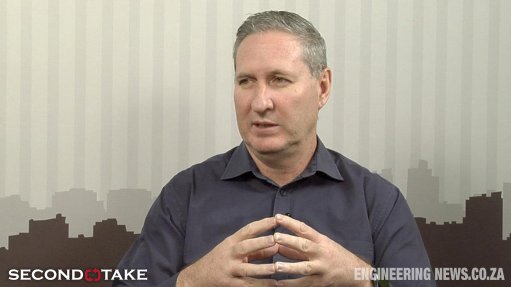
Campbell is a senior contributing editor at Creamer Media. He
holds a master's degree in international relations from the University of
the Witwatersrand – keith@engineeringnews.co.za
 
Wheels within wheels
 
SA’s economic leadership of Africa slipping away
 
6th July 2012
TEXT SIZE
Text Smaller Disabled Text Bigger
 

Iwas reading a column last week in one of our leading daily newspapers when I came across a reference to the African National Congress (ANC) government’s “unpopular neoliberal economic and fiscal policies”. To be fair, the column was about constitutional and political issues, and written by a distinguished lawyer. But still, it was shocking to see a highly educated man display such ignorance of broad economic philosophies – philosophies that should be part of the general knowledge of all educated people.

It is true that all three ANC administrations – those of Presidents Nelson Mandela, Thabo Mbeki and Jacob Zuma – have followed a policy of fiscal discipline. But fiscal discipline is not a specifically ‘neoliberal’ policy. One can easily find examples of Roman emperors (who had no conception of a free market) maintaining fiscal discipline.

As for economic policy, if South Africa had followed a neoliberal one there would, today, be no Minister or Ministry of Public Enterprises and no State-owned monopolies dominating key sectors of the economy. Probably, the only State-owned companies left would be defence industrial group Denel (for military strategic reasons) and the passenger railways.
To reiterate: South Africa does not have, and has never had, a neoliberal economic policy.

As I have pointed out in a previous column, the South African government loves to associate with the Bric quartet of Brazil, Russia, India and China but steadfastly refuses to implement the kind of policies they undertook – the very policies that made them Brics.
This is odd, given the enthusiasm with which many in the South African government, the ANC and wider society have greeted the rise of these and other emerging powers.

Perhaps odder still is the widespread failure in South Africa to grasp that this country is not one of the rising powers at all. On the contrary, in relative terms, South Africa is one of the declining powers of the world. True, in absolute terms, South Africa continues to grow and is currently growing more strongly than the established ‘developed’ economies. But most of them are growing, too, albeit slowly, so their decline is also relative, not absolute. In comparison to many other emerging economies, South Africa is doing poorly and is falling behind.

Most seriously, the country is badly lagging behind many other African states. According to AfricanEconomicOutlook.org, in 2011, 38 African countries had higher rates of growth than South Africa. Now, of course, many of these are small economies coming off low bases. Some are rocketing upwards on the back of the global commodities boom. But not all are.

As The Economist pointed out at the end of last year (December 3, 2011), commodities account for only some 33% of Africa’s recent growth. The fastest-growing region of the conti- nent is actually East Africa, which has little oil and few minerals. AfricaEconomicOutlook.org estimates South Africa’s growth rate last year at 3.1%; its estimate for Ethiopia is 10.7%, Kenya 4.5%, Tanzania 6.4% and Uganda 4.1%.

More importantly for South Africa are the performance of the other two big economies in Africa – Nigeria and Egypt. Nigeria, benefiting from oil, is powering ahead. AfricaEconomicOutlook.org reports that the West African giant grew by 7% in 2009, 7.8% in 2010, an estimated 6.7% last year and is forecast to grow by 6.9% this year. The figures for South Africa are: 2009, – 1.5%; 2010, 2.9%; 2011, 3.1% and 2012, 2.8%.

Of course, South Africa has a bigger and more diversified economy. But, in 2009, in purchasing power parity (PPP) terms, South Africa’s gross domestic product (GDP) ranked twenty-fifth in the world, with a value of $507- billion, whereas Nigerian GDP ranked thirty-fourth at $341-billion. (These figures are from The Economist Pocket World in Figures 2012.) To put it differently, the Nigerian economy was already 67% the size of the South African economy. And it is closing fast.

Then there is Egypt. This economy is significantly larger and more diversified than Nigeria’s. In 2009, manufacturing accounted for 16% of the Egyptian GDP; the proportion for South Africa was 15%. (Services provided 47% of the Egyptian GDP and 66% of the South African GDP.) In 2009, Egypt’s PPP GDP was $471-billion, meaning it was almost 93% of the size of the South African economy.

True, Egyptian economic growth has been hit hard by the revolution. It stood at 4.7% in 2009, rising to 5.1% in 2010, only to plunge to an estimated 1.8% last year and is forecast to reach only 0.8% this year. But these upheavals will be temporary and the country may already, with the election of a new President, Mohammed Mursi, from the previ- ously opposition Muslim Brotherhood, have started the move from political turmoil to stability.

President Mursi’s priorities are reported to be political stability, a new Constitution – and the economy. And what economic philosophy does President Mursi and his party support? The free market. Or, if you prefer, neoliberalism.

If the incoming administration gets the economy growing fast again then, within a handful of years, Egypt will resume its traditional place as Africa’s biggest economy. That will have all sorts of serious political and diplomatic consequences for South Africa. Pretoria needs to get real about beneficial economic reform.

Edited by: Martin Zhuwakinyu


To subscribe to Engineering News's print magazine email subscriptions@creamermedia.co.za or buy now.

FULL Access to Mining Weekly and Engineering News - Subscribe Now!
Subscribe Now Login