Creamer Media’s Engineering News Online
Advanced Search


We have detected that the browser you are using is no longer supported. As a result, some content may not display correctly.
We suggest that you upgrade to the latest version of any of the following browsers:
         
close notification
powered by
GOLD 1745.65 $/ozChange: 8.88
PLATINUM 1651.04 $/ozChange: 5.04
R/$ exchange 7.57Change: -0.02
R/€ exchange 10.04Change: -0.13
 
POWER SYSTEM
Social, enviro costs must be included when making power choices
 
23rd February 2010
TEXT SIZE
Text Smaller Disabled Text Bigger
 

South Africa should seek to calculate and recover the total costs - social, environmental and economic costs - of its electricity choices when planning for its future generation mix and industry structure, a European power-systems economic specialist told a South Africa audience on Tuesday.

Speaking at the 2010 French Energy Forum, strategy and development head at EDF's insular power systems unit Vincent Baslé said that it was insufficient to focus solely on the economic costs, particularly in a country such as South Africa, which had a persistently high rate of joblessness.

The social considerations associated with the eventual power choices had to be incorporated, as should methods of recovering costs associated with any possible subsidy to citizens who rely on power, but who might not be able to afford the rising tariffs.

Increasingly, environmental considerations would also need to feature; with the advent of carbon taxes now no longer being an "if, but a when".

Baslé said that from 2012 onwards, European emitters of carbon dioxide (CO2) would face a charge of about €20/t, which could rise to between €30/t and €40/t by 2020. Further, South Africa had already introduced a 2c/kWh tax on its CO2 emitting production and was considering the introduction of other carbon taxes.

That said, he cautioned that, while renewable sources were desirable, they were unlikely be technically or economically robust enough to provide the bulk of the world's energy.

Technically, the variability of wind, or solar production, posed a challenge for system operators, while developing countries were unlikely to be able to fully offset the social and economic costs of renewables against the environmental benefits.

IPP PROS AND CONS

South Africa would also have to weigh up its choices regarding the introduction of independent power producers (IPPs), which had both potential benefits and costs for the electricity market.

IPPs, Baslé said, could lessen the burden on the public purse, encourage the introduction of new technologies and expertise and introduce a degree of competitive pressure. But they would raise prices, as it effectively meant buying on credit rather than with cash, and could require the creation of incentives that conflicted with national interests.

However, on balance, the introduction of IPPs should also stimulate a more stable and transparent regulatory framework, owing to the fact that this was a prerequisite for investment by risk-averse private entities.

Baslé also stressed the need for a clear "separation of powers" between the State, the systems operator, which could be the national utility or an independent systems operator (ISO), and the regulators.

Government should set the social criteria and the global policy; the systems operator, or ISO, would ensure that it contracted only with technically feasible entities able to meet that criteria; while the regulator would play the role of "referee", while ensuring that the tariff structure was fair and viable.

South Africa was in the process of developing a 20-year generation framework, known as the integrated resource plan (IRP), and had indicated that it would be seeking to introduce an ISO. Its regulator, the National Energy Regulator of South Africa, meanwhile, was beginning to find its niche within the power milieu.

"There are many choices and many tools available," Baslé averred, noting that there would never be a perfect market for power, which made regulation vital.

"But what is not negotiable, is that the full cost of those choices and tools always has to be recovered," he concluded.


Edited by: Creamer Media Reporter
FULL Access to Mining Weekly and Engineering News - Subscribe Now!
Subscribe Now Login


Hide Comments  
 
This article contains no Comments


All comments must be approved by our editors, click here to read the editorial guidelines for comments. Please allow some time for our editors to approve your comment after posting.
 * Required Fields

image
image
 *


image
image
 *
 

image
image
 

Verification Image

image
image
 * Please enter the text you see in the above image.


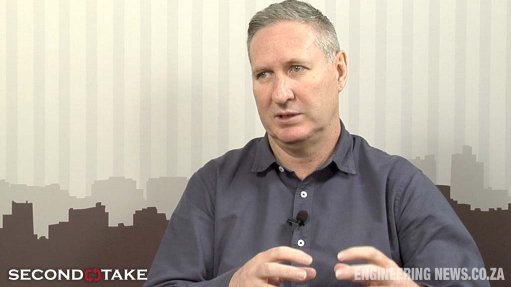
EDF's insular power systems unit Vincent Baslé on the minimum ingredients for a successful power system. Cameraperson: Nicholas Boyd. Editing: Darlene Creamer.
This video is licensed under a Creative Commons License
GET SELECTED VIDEO
Embed
Selected Video Download (10.76mb)