SewTreat to Provide Eco-Friendly Innovations in Onsite Wastewater Treatment



This article has been supplied.
By making use of the latest advancements in sustainable wastewater treatment combined with the creation of their own bacterial strains developed in-house, SewTreat are able to answer the needs of industrial, construction and mining operations with efficient, affordable and eco-friendly waste water treatment solutions.
SewTreat is a proudly South African company offering specialized, modular biological waste water treatment plant designs tailor-made for the South African and African market. Their approach is based on return activated sludge technology incorporating submersed aeration media. This enhanced bacterial action ensures a highly effective treatment process boasting a very low carbon footprint, minimal capital input and low maintenance requirements.
Understanding the Needs of the Market
“Our approach is to treat nature with nature through sustainable engineering solutions that are evident in our superior proprietary biological technology. The modular design of our treatment plants makes us a leader in providing waste water treatment solutions for the African continent,” says SewTreat Managing Director and spokesman, Theunis Coetzer.
Although the company is newly formed, SewTreat has already become an established name synonymous with international expertise in providing quality products and services to all sectors throughout Sub-Saharan Africa and especially in the SADC region. The SewTreat team consists of process and civil and process engineers, microbiologists, project planners and a network of distributors with over 35 years of experience in the field.
“We have developed our products and services to embrace our customers’ operating environments and the ongoing demand for environmental, social and financial sustainable solutions,” Coetzer explains. “The team at SewTreat has extensive expertise throughout various disciplines and so we are able to offer turnkey services which incorporate consultation, design, manufacturing, installation, construction and operational support to our clients that meet all legal and industry related compliance.”
Product Offering
SewTreat offers several modular waste water treatment plants tailored to meet the needs of industrial sized, mining and construction operations.
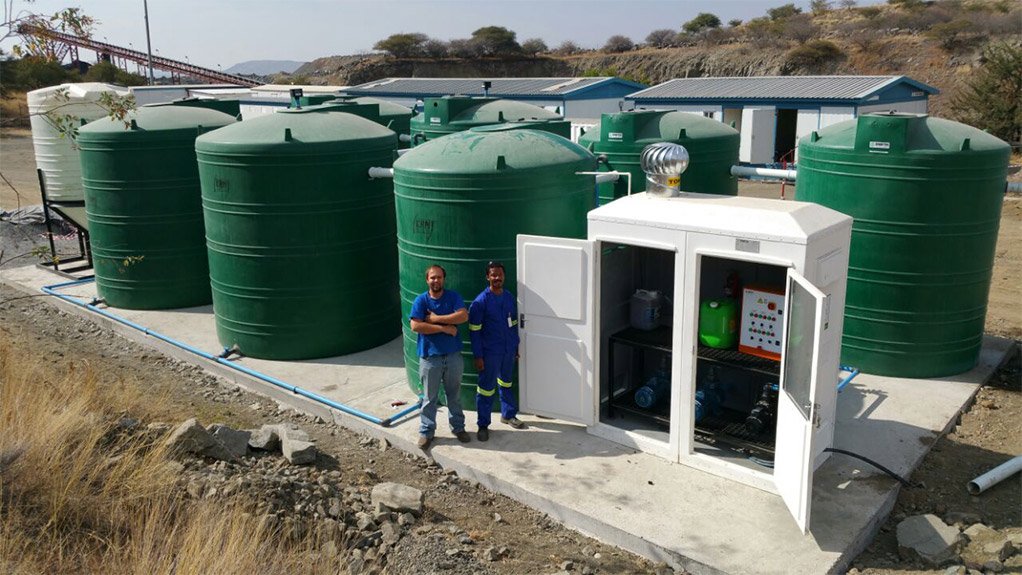
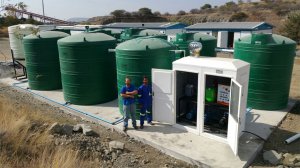
Plastic HDPE Tank Waste water treatment plant
The plastic range makes use of plastic ‘Jo-Jo’ type tanks that are connected in series or parallel depending on site space requirements or layout. The plant is wholly constructed and cold commissioned before delivery to client premises. The installation time required onsite is minimal – a 50kl per day plant can be assembled on site in less than five days.
A guarantee of up to 20 years is offered on the tanks depending on the type of tanks used in the plant. “We developed this range based on a need we saw in the market for a more cost effective solution for sewage treatment.,” Coetzer explains, although he notes that while the plastic plants are cost effective in term if capital expenditure, the do carry very high shipping costs and so he does not recommend them for installations outside of South Africa.
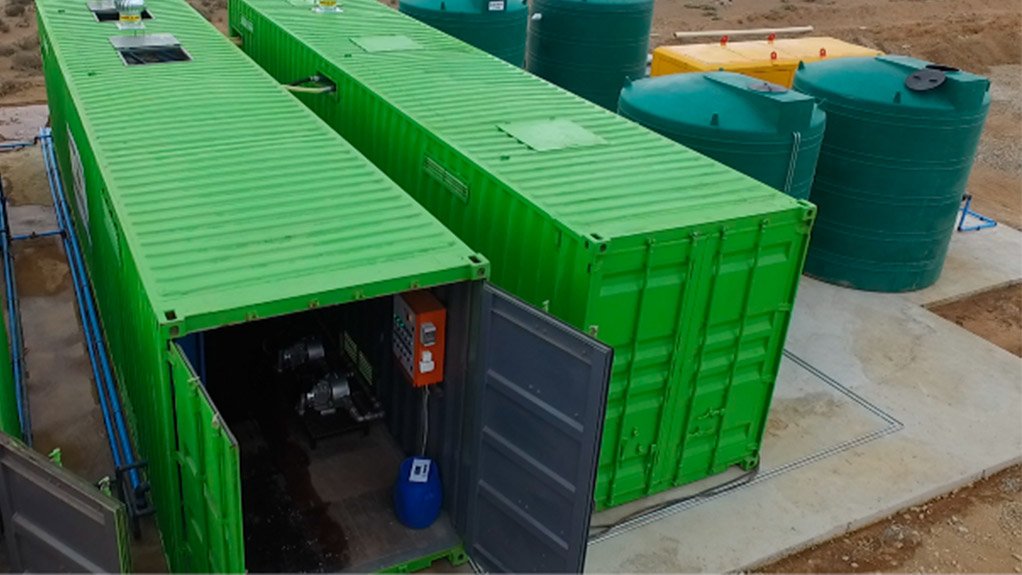
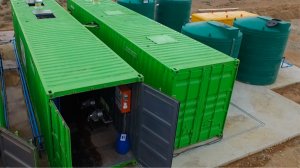
Containerized Waste water treatment plant
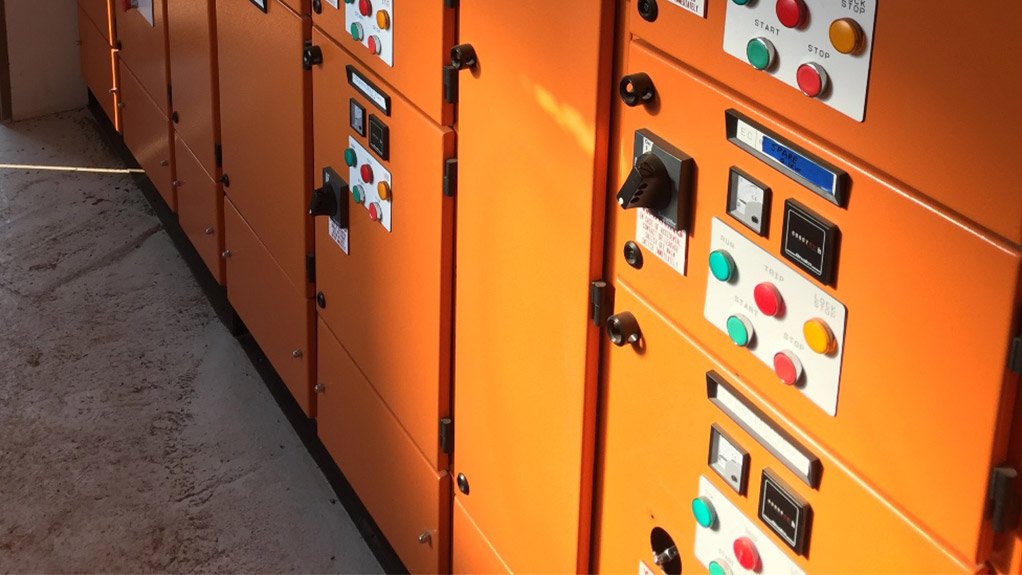
The containerized plant is well suited to rugged African conditions. The concept is based on a ‘plug and play’ design, Coetzer explains, saying that they are designed for ease of transport, security and modularity, taking into consideration that the plant may be moved to various locations. “The complete WWTP is built into ISO High Cube Containers. The plants are can be easily moved from site to site, can be easily expanded and have a once off cost to the client as they can be moved from site to site as needed,” says Coetzer.
“Our recent upgrade of our design makes this a very competitive option for onsite waste water treatment. The plant is wholly constructed and tested at our 5000m² under-roof facilities which ensures that all boxes are ticked in terms of quality control procedures. The containerized plant offers a life span of 15 to 20 years which is excellent for a plug and play solution,” says Coetzer explaining that installation literally requires only connecting of pipes to the waste water treatment plant.
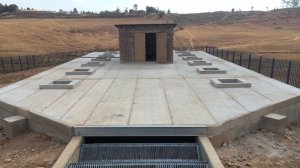
Civil Constructed Waste water treatment plant
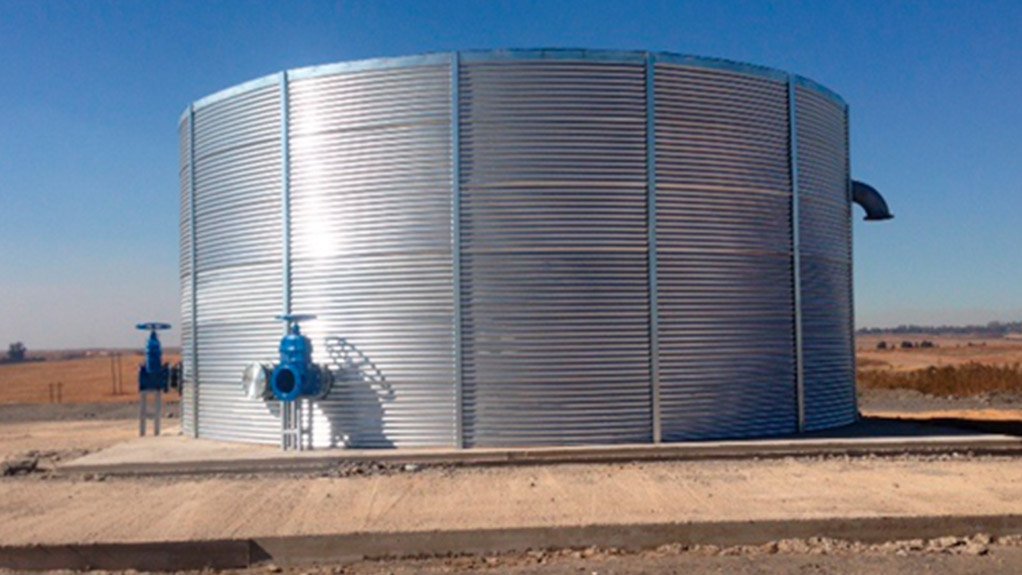
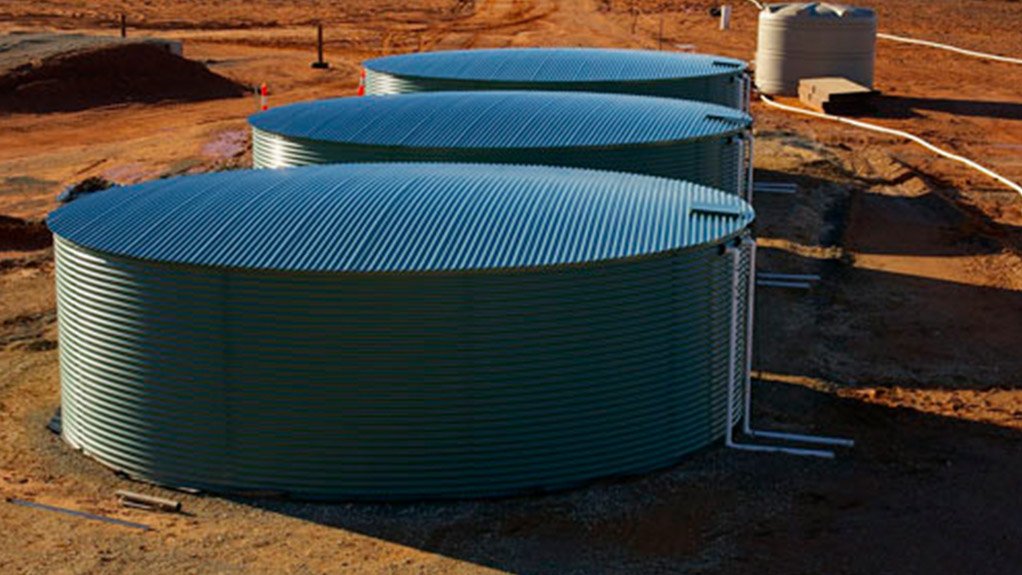
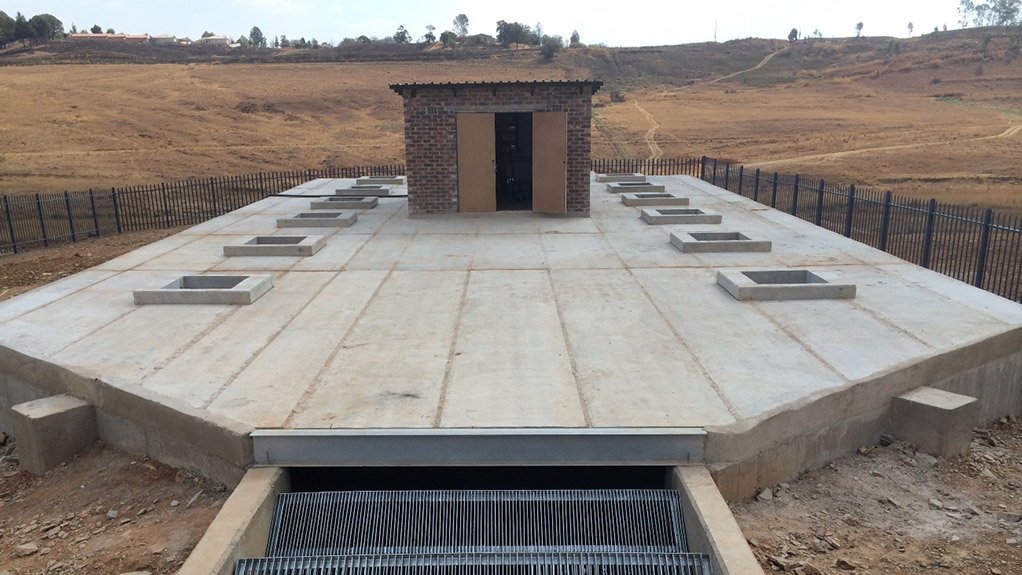
Their civil constructed plants are designed and constructed mostly for large flow industrial and housing development applications. The plants are aesthetically pleasing as they are constructed underground and can be covered with vegetation and are entirely civil designed and constructed to exact civil engineering requirements. These plants boast several advantages for clients including the fact that the civil construction can be subcontracted to local contractors to reduce construction costs.
Coetzer explains that provision can also be made for easy plant expansion through simple modular and common wall construction and that if the plant is gravity-fed, the system can operate without electricity for up to 48 hours. This makes the product an effective alternative for remote operations, for countries with unreliable power supply, or where no municipal connection is available.
A Greener Approach
Biological waste water treatment is an accepted practice used worldwide. The process involves confining naturally occurring bacteria at a very high concentration in the treatment process, whether it is plastic type, containerized type of civil constructed type. From here this bacteria, together with some protozoa and other microbes (collectively referred to as activated sludge) are treated in an anaerobic and an aerobic process. They are then returned to the anaerobic phase to eliminate sludge accumulation and waste generation.
“In a nutshell, the bacteria digest all impurities and the wastewater is then cleansed. The treated wastewater or effluent can then be discharged to receiving waters – normally a river or the sea – or alternatively used for irrigation, flushing of toilets or general non-potable uses,” explains Coetzer. “SewTreat has developed a highly effective multiple strain bacteria range that gets added to our plants, this specifically bred bacteria feed on the complex substances in the wastewater, converting them into simpler substances, improving final effluent on a reduced footprint.”
He notes that globally, the composition of effluents discharged to receiving waters is regulated by the national environment agencies. The legislation is concerned with the prevention of pollution, and therefore sets concentration limits on dissolved organic carbon (as BOD or COD), nitrogen and phosphates and other compounds which cause eutrophication in receiving waters.
It also attempts to limit the discharge of known toxic chemicals by setting allowable concentration limits in the effluent. “If we consider that 100% of the effluent can be recycled, if done properly, there is no doubt that through this we are providing large bank of water, which previously may not have been considered as ‘safe’ for the environment or community.”
Article Enquiry
Email Article
Save Article
Feedback
To advertise email advertising@creamermedia.co.za or click here
Research Reports

Projects
Latest Multimedia
Latest News
Showroom

ZF Aftermarket is the after-sales division of the world-renowned German ZF group, a global leader in mobility technology.
VISIT SHOWROOM
CSIR International Convention Centre (CSIR ICC) - the leading conference and events venue in Pretoria/Tshwane.
VISIT SHOWROOM

Press Office
Announcements
What's On
Subscribe to improve your user experience...
Option 1 (equivalent of R125 a month):
Receive a weekly copy of Creamer Media's Engineering News & Mining Weekly magazine
(print copy for those in South Africa and e-magazine for those outside of South Africa)
Receive daily email newsletters
Access to full search results
Access archive of magazine back copies
Access to Projects in Progress
Access to ONE Research Report of your choice in PDF format
Option 2 (equivalent of R375 a month):
All benefits from Option 1
PLUS
Access to Creamer Media's Research Channel Africa for ALL Research Reports, in PDF format, on various industrial and mining sectors
including Electricity; Water; Energy Transition; Hydrogen; Roads, Rail and Ports; Coal; Gold; Platinum; Battery Metals; etc.
Already a subscriber?
Forgotten your password?
Receive weekly copy of Creamer Media's Engineering News & Mining Weekly magazine (print copy for those in South Africa and e-magazine for those outside of South Africa)
➕
Recieve daily email newsletters
➕
Access to full search results
➕
Access archive of magazine back copies
➕
Access to Projects in Progress
➕
Access to ONE Research Report of your choice in PDF format
RESEARCH CHANNEL AFRICA
R4500 (equivalent of R375 a month)
SUBSCRIBEAll benefits from Option 1
➕
Access to Creamer Media's Research Channel Africa for ALL Research Reports on various industrial and mining sectors, in PDF format, including on:
Electricity
➕
Water
➕
Energy Transition
➕
Hydrogen
➕
Roads, Rail and Ports
➕
Coal
➕
Gold
➕
Platinum
➕
Battery Metals
➕
etc.
Receive all benefits from Option 1 or Option 2 delivered to numerous people at your company
➕
Multiple User names and Passwords for simultaneous log-ins
➕
Intranet integration access to all in your organisation