Creamer Media’s Engineering News Online
Advanced Search


We have detected that the browser you are using is no longer supported. As a result, some content may not display correctly.
We suggest that you upgrade to the latest version of any of the following browsers:
         
close notification
powered by
GOLD 1359.57 $/ozChange: -15.52
PLATINUM 1462.50 $/ozChange: -10.00
R/$ exchange 9.60Change: -0.05
R/€ exchange 12.31Change: 0.03
 
 
‘Severely underused’ standby generators could mitigate power shortages – industry executive
 
21st September 2012
TEXT SIZE
Text Smaller Disabled Text Bigger
 

Existing standby generators may be the key to mitigating the looming threat of power shortages in South Africa, assuming that State-owned power utility Eskom can seize the opportunity to take advantage of more than 3 500 MW of standby power already installed across the country, says engineering consulting and services company Carbon & Energy Africa GM Denis van Es.

While the cost of running generators, especially those fuelled by diesel, is signifi- cantly higher than simply relying on the national grid, the costs of downtime owing to power failures can be even higher.

“Everybody would be running their diesel generators if it wasn’t more expensive than Eskom’s tariffs, says Van Es, adding that South Africa enjoys some of the lowest electricity tariffs in the world.

Public Enterprises Minister Malusi Gigaba reiterated this at a press conference in March, saying that despite Eskom’s tariff increases over recent years, South Africa’s electricity tariffs remained among the lowest in the world.

Van Es points out, however, that major businesses, banks and hospitals have had to invest in generators to offset the damaging effects of unexpected outages.

He adds that, despite the cost of running generators, there are thousands of privately owned standby generators in South Africa not connected to the national grid. “These generators are only used sporadically, are essentially collecting dust and will only be used if there is a blackout some day.”

Van Es believes these generators are severely underused assets and that they hold significant potential to form part of a national demand management programme.

“Shouldn’t we consider ways of bringing these generators onto the grid? This would save government hundreds of millions of rands on the construction of additional gas turbines that would be used during peak consumption times,” he says.

Van Es points out that paying people for their generators’ operating costs and, thereby, contributing towards capital costs would be more cost effective for government than constructing new gas turbines. Moreover, the generators already exist. “All we need is a contractual and financial framework,” he says.

Van Es believes that using existing standby generators will significantly reduce the load on the grid but acknowledges that there are safety concerns over personnel working on lines that may be energised from both directions and the quality of supply from small generators.

His solution is to remove the load from the grid, replacing the supply with an on-site generator. “The circuits receiving their supply from the grid are made to be physically separate from the grid at the time of the switchover, thus removing the signifi- cant need to consider safety and quality issues with respect to the grid.”

Van Es envisages the possible use of standby generators as a demand-response option. “The intention is to operate the generators in times of need, either when there is insufficient supply or when a network constraint arises,” he says.

Eskom’s Response

In 2007, the State-owned power utility indicated that electricity supply would remain tight for the next five to eight years.

“The Medupi and Kusile power stations – coal-fired power stations that run all day – will account for the baseload once [they have been] completed. But to deal with the peaks, more agile equipment is needed – equipment that can speed up and slow down quickly when demand hits unexpected peaks,” says Van Es.

He notes that Eskom’s gas turbines can warm up and cool down significantly faster than coal-powered stations but the fuel for those turbines could cost the same as the diesel used to fuel generators.

Independence

Van Es states that South Africans have become too reliant on Eskom to provide a constant flow of electricity at a cheap price.

“This is the wrong approach. Each citizen should be looking after his or her own interests. Industry, in particular, would be served best if it were less dependent on an outside electricity supplier.”

This would also require industry to scrutinise its own energy consumption and find ways to reduce this load by using energy efficient processes, such as cogeneration.

“Businesses need to look at what they are throwing away – waste that could contain useful energy and that could be converted at their business sites and fed back into the electricity supply.”

Edited by: Chanel de Bruyn


To subscribe to Engineering News's print magazine email subscriptions@creamermedia.co.za or buy now.

FULL Access to Mining Weekly and Engineering News - Subscribe Now!
Subscribe Now Login
 
 
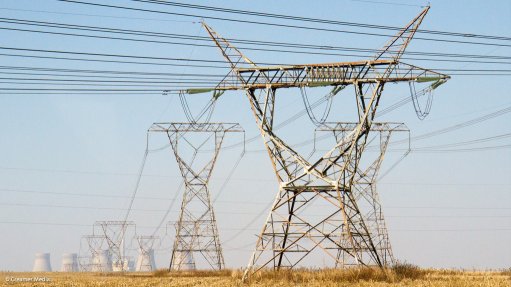
SPARING THE NATIONAL GRID Existing standby generators already installed across the country could significantly reduce the load on State-owned power utility Eskom’s grid, which would eliminate the threat of power surges
 
Picture by: Bloomberg
SPARING THE NATIONAL GRID Existing standby generators already installed across the country could significantly reduce the load on State-owned power utility Eskom’s grid, which would eliminate the threat of power surges
 
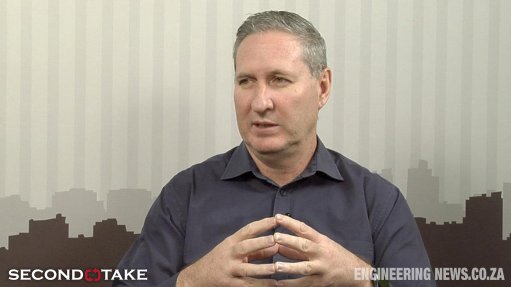
DENIS VAN ESSubsidising the public’s generator operating costs could save government hundreds of millions of rands on the additional gas turbines that would be used to support peak periods of electricity consumption
 

DENIS VAN ESSubsidising the public’s generator operating costs could save government hundreds of millions of rands on the additional gas turbines that would be used to support peak periods of electricity consumption
 
 
Previous Play Next