Creamer Media’s Engineering News Online
Magazine in Store Now!
Advanced Search
 
 
We have detected that the browser you are using is no longer supported. As a result, some content may not display correctly.
We suggest that you upgrade to the latest version of any of the following browsers:
         
close notification
powered by
GOLD 1242.71 $/ozChange: -2.93
PLATINUM 1550.50 $/ozChange: 18.50
R/$ exchange 7.19Change: 0.11
R/€ exchange 9.24Change: 0.10
 
 
SUSTAINABILITY REPORTING
Sasol's emissions fell in 2009 in line with the economy
0 COMMENTS  |  
ADD A COMMENT PRINT
 
 
20th November 2009
TEXT SIZE
Text Smaller Disabled Text Bigger
 

JSE-listed energy and chemicals producer Sasol decreased its absolute greenhouse gas (GHG) emissions to 71,3-million tons in 2009 as compared with 73,6-million tons in 2008, the company revealed in its 2009 sustainable development report, which was released on Friday.

However, it said that its emissions intensity, based on the carbon dioxide (CO2) equivalent for every ton of production, increased to 3,24 compared with 3 in 2008.

The increase was attributed to the group's reduced production tonnages during the year to June 30, 2009 - a year in which South Africa also descended into its first recession for 17 years.

Briefing the media on the report, which was also Sasol's tenth, group safety health and environment centre manager Fred Goede said that the figures had been verified externally, by PricewaterhouseCoopers, and that the report had been prepared in line with guidelines provided by the Global Reporting Initiative.

The company acknowledged that its operations, especially in South Africa, remained carbon heavy, with its Secunda complex alone emitting the same amount of CO2 as four large South African power stations, or eight average-sized US power stations, while producing 160 000 bl/d of oil equivalent.

The group was South Africa's second-largest emitter of the climate-altering gas, after power utility Eskom, which reported 221,7-million tons of emissions in its financial year to March 31, 2009.

Goede said that the company was committed to reducing its GHG emissions, while repositioning the company for a "carbon-constrained future".

The company had set a target of reducing its emissions intensity by 15% at all its operations by 2020, as benchmarked against levels recorded in 2005.

It also aimed to achieve a 20% reduction in absolute emissions for new coal-to-liquids (CTL) plants commissioned before 2020, and a 30% reduction for plants commissioned before 2030, also using 2005 as a baseline.

Goede said that the company also had a major drive to reduce its total water use, which fell marginally to 153-million cubic metres in 2009, from 154-million cubic metres.

"Water is a big challenge in South Africa and we need to do more work on reducing our own water consumption, while adopting a catchment view regarding water supply and impact," Goede said.

Sasol noted the following as sustainable development highlights for 2009:
- Finalising Sasol Inzalo, our broad-based black economic empowerment transaction, and establishing The Sasol Inzalo Foundation.
- Approving capital expenditure of R100-million for energy efficient projects, which should result in GHG reductions of some 760 000 tons a year.
- Achieving savings of about 18-million litres per day through its water recovery project at Secunda;
- Tripling the number of broad-based empowerment suppliers that the Siyakha Trust supports and raising the number of jobs created through its business incubator, ChemCity, to 2 000 since 2004.
- And, retaining its Dow Jones Sustainability Index listing.


Edited by: Creamer Media Reporter


Hide Comments  
 
This article contains no Comments


All comments must be approved by our editors, click here to read the editorial guidelines for comments. Please allow some time for our editors to approve your comment after posting.
 * Required Fields

image
image
 *


image
image
 *
 

image
image
 

Verification Image

image
image
 * Please enter the text you see in the above image.


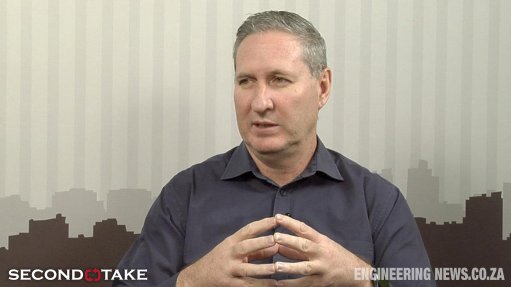
Sasol's safety health and environment centre manager Fred Goede
 
Picture by: Duane Daws
Sasol's safety health and environment centre manager Fred Goede