Creamer Media’s Engineering News Online
Advanced Search


We have detected that the browser you are using is no longer supported. As a result, some content may not display correctly.
We suggest that you upgrade to the latest version of any of the following browsers:
         
close notification
powered by
GOLD 1386.60 $/ozChange: -0.70
PLATINUM 1452.50 $/ozChange: -1.00
R/$ exchange 9.58Change: -0.03
R/€ exchange 12.38Change: -0.05
 
ENERGY ECONOMY
 
Sasol weighs up more power generation schemes, but says it must prioritise fuel security
 
28th March 2008
TEXT SIZE
Text Smaller Disabled Text Bigger
 

South African energy group Sasol is considering an array of power-generation options over and above an already approved plan to introduce 280 MW of new electricity capacity at Secunda by 2011, through a capital programme involving of R2,5-billion.

The JSE-listed group currently produces some 30% of the electricity it requires to produce liquid fuels and chemicals at production sites in the Mpumalanga and Free State provinces, and has even, at points, supplied electricity into the national grid, while power utility Eskom has engaged in load shedding as a result of supply-side constraints.

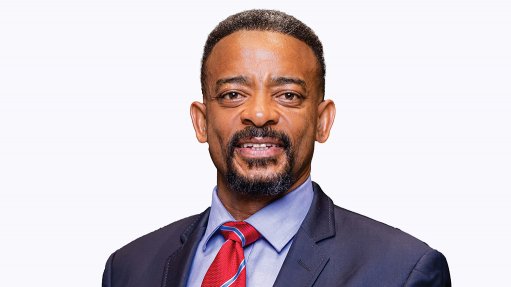
South African energy cluster head Dr Benny Mokaba says that, in addition to the Sasol board having approved funds for the installation of gas turbines at Secunda, the group is seriously investigating various other efficiency and generation options.

He declines to be drawn on precise figures, saying that assessments are still under way, but he has suggested to Engineering News previously that these efforts could yield upwards of 600 MW of own-generation and cogeneration capacity.

It is understood that the company will be submitting a bid for Eskom's ‘Pilot National Cogeneration Programme', tenders for which close at the end of May. It could also bid for the utility's so-called medium-term cogeneration tender, issued in February, where generation projects of between 5 MW and 1 000 MW, up to a combined capacity of 3 000 MW, will be assessed.

ELECTRICITY FROM GAS

The new gas turbines will be fuelled by natural gas from Mozambique, with Sasol and its partners having recently announced the construction of a R1,1-billion gas-compression station to facilitate a 20% expansion of natural gas delivery from Mozambique to South Africa by the end of 2009.

The gas-compression station will be based at Komatipoort in South Africa and will increase gas delivery capacity from the current 120-million gigajoules a year to about 147-million gigajoules a year. Construction will begin by mid 2008.

The additional gas will be used primarily as part of the first phase of a planned 20% expansion of the company's synfuel capacity at Secunda over the next eight years. But some of the additional gas is earmarked for the electricity generators.

CEO Pat Davies tells Engineering News that Sasol believes it can play an important role in dealing with the electricity crisis. But he stresses that the company's primary goal is to ensure reliable inland supply of liquid fuels, such as petrol, diesel and jet fuel, the supply of which is also tight. In fact, some company officials are particularly worried about diesel supplies, particularly if more affluent South Africans living in the hinterland purchase diesel generators for their homes and businesses, which could divert supply from transport to stationary applications.

"We have access to coal, we convert coal, we generate a third of our own electricity at the moment, we have access to natural-gas feedstock, and there are synergies between Eskom and ourselves. And we are looking for additional generation capacity," Davies explains.

SECUNDA AND MAFUTHA

This said, the growth in demand for liquid fuels will continue to make the electricity-versus-fuels equation challenging for the group.

Davies believes fuel supply will remain "reasonably tight" until new pipelines are built to transport fuel from the coast to the hinterland. There is also still haggling between State freight logistics group Transnet and the National Energy Regulator of South Africa, which is delaying the construction of the new multiproduct pipeline from KwaZulu-Natal to Gauteng.

"We are doing what we can to improve our production rates inland to compensate for that," Davies adds.

A key project in this regard is Sasol's plan to increase synfuel capacity at Secunda by 20% from the 155 000 bl/d production levels achieved in 2004. This would be done in phases, with some 15% of the additional capacity to be based on natural gas and the balance on coal.

Mokaba explains that, of the 15%, the Sasol board has approved enough money for the first 4%. The additional 11% is still in the feasibility stage, while the remaining 5%, possibly based on fine-coal technology, is still at the conceptual stage.

Further, Sasol has approved over R300-million to complete the feasibility investigations for the so-called Project Mafutha, which could involve the construction of an 80 000 bbl/d-plus coal-to-liquids facility in either the Free State or the Waterberg.

"The market is growing for liquid fuels so we need to fill that space by [installing] additional capacity. [We will do so] by using the same technology in Secunda and expanding that by 20%, and then with Mafutha adding about 80 000 bbl/d, at least, into that equation using the latest version of our coal-to-liquids technology," Davies explains.

WATER WORRIES?

Mokaba is also sanguine about the group's ability to achieve the Secunda expansion aspiration despite suggestions of water shortages, which could constrain the plant's production capacity.

There have been reports that the current scheme to augment water supply to the power stations and the synfuel complex in Mpumalanga is simply insufficient to cope with the higher load factors out of Eskom's plant, as well as the proposed Eskom and Sasol expansions.

However, Mokaba describes these reports as "alarmist". "It is true that South Africa is a water-restricted country. Therefore, every industry is looking at ways to save water. For instance, we are recycling our water four times in Secunda," Mokaba explains, adding that technological interventions, together with ongoing dialogue with the water authorities, should result in an "optimal way of dealing with any potential water shortage".

"We have seen the reports that the pipeline is not sufficient, but we will make a plan and find suitable technical and efficiency solutions," he adds, noting that it is also interrogating dry-cooling systems for both its new plant and the planned expansions.

Edited by: Martin Zhuwakinyu


To subscribe to Engineering News's print magazine email subscriptions@creamermedia.co.za or buy now.

FULL Access to Mining Weekly and Engineering News - Subscribe Now!
Subscribe Now Login


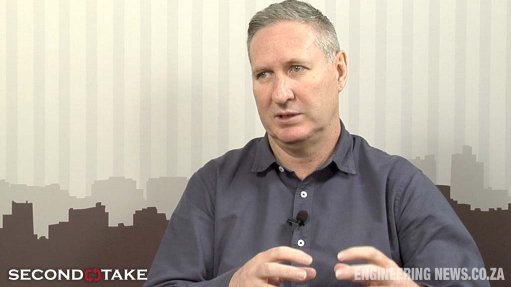
Sasol CEO Pat Davies discussing the role of the group in helping to ease South Africa's electricity tightness with Engineering News Editor Terence Creamer. Editing: Darlene Creamer. Video: Courtesy CorpCinema.
This video is licensed under a Creative Commons License
GET SELECTED VIDEO
Embed
Selected Video Download (3.17mb)
 
 
Picture by: Duane Daws