Creamer Media’s Engineering News Online
Magazine in Store Now!
Advanced Search
 
 
powered by
GOLD 1114.76 $/ozChange: 10.21
PLATINUM 1621.50 $/ozChange: 7.50
R/$ exchange 7.39Change: 0.03
R/€ exchange 10.13Change: 0.01
 
 
PETROCHEMICALS
Sasol studies ‘new energy’ technologies to lower environmental impacts
0 COMMENTS  |  
ADD A COMMENT PRINT
 
 
8th September 2008
TEXT SIZE
Text Smaller Disabled Text Bigger
 
Synthetic fuel manufacturer Sasol has indicated its desire to adapt its technology to more effectively address the environmental sustainability challenge involved in the ‘energy crunch’.

“We have set up an entirely new division in Sasol, a new business focusing on ‘new energy’, energy that has lower environmental impacts,” said CEO Pat Davies at the group’s results presentation in Johannesburg on Monday.

He said the group was investigating ‘new energy technologies’, or non-carbon energy technologies and was making “fairly good initial progress” with those.

“We have spoken about nuclear, and we are working at various options on the possibility of combining our technology with nuclear technology to provide us with a non-carbon source of process heat, particularly. There are some very interesting possibilities coming out there, but this is obviously ‘future stuff’. We are not doing wind energy or wave energy or any of those. We have to find things that are aligned with our core competencies,” stated Davies.

He said that the group had made a number of small investments, and was working with a number of universities on non-carbon forms of energy, but could not disclose much more information on those projects.

The group also highlighted its “well established and publicly communicated targets on energy efficiency”.

“The best way of dealing with carbon is not to produce it in the first place. So we have some stiff targets there, that and also greenhouse gas reduction – the two of them go hand-in-hand,” commented Davies.

He added that Sasol was also using waste gases that previously were flared, to generate more electricity for its own needs. Sasol hoped to produce about 300 MW for its own needs, and said that it had implemented energy efficiency programmes, which had allowed a saving of some 40 MW of electricity.

He said an example of one of the group’s technological innovations was Sasol’s latest gas-to-liquids (GTL) technology offering, which Davies said produced “very environmentally friendly diesel, zero sulphur, virtually no aromatics, a big ‘green’ fuel, but also on our lifecycle basis, from wheel to wheel as they put it – we do a little better, not much but a little better than the other forms of providing transportation fuels”.

CREDITS BANKED
The Sasol Nitro project, one of South Africa’s 11 Clean Development Mechanism (CDM) projects that was up and running and generating credits, had earned the group its first batch of carbon credits. “We, unlike one of our competitors, who has decided to sell theirs [carbon credits] have decided to keep ours, and we have banked them – they are worth about R100-million or so,” stated Davies.

The Sasol CDM project involved nitrous-oxide abatement. Another South African company with a nitrous-oxide abatement CDM project, was fertiliser manufacturer Omnia, which has previously indicated that its Envinox plant would reduce about 473 000 t/y of greenhouse gases, and add an extra R60-million a year to the bottom line of the company.

CARBON CAPTURE AND STORAGE
Davies explained that Sasol had a dedicated group of highly qualified and experienced people working on carbon capture and storage research, which was becoming a “big deal globally”.

“Anyone that burns coal, has an issue on carbon capture and storage, and finding solutions there. We believe we have the right technology, the right people, and the right will, to make a difference. We certainly want to be a part of the solution here, not merely a part of the problem,” Davies affirmed.

Speaking on the Sasol Mafutha project, which was in the prefeasibility study stage, and would be located in South Africa’s Limpopo province, Sasol executive director Benny Mokaba said the company intended to build the plant to be “as carbon capture ready as possible”.

BIODIESEL
With regard to biodiesel production, Sasol chemical cluster GM Reiner Groh stated that Sasol was still investigating the Sasol biodiesel from soya project. “But I must just indicate,” he added, “that there is not a very certain government framework at this point in time, which makes finalising a decision not very easy. We are committed to this kind of development and we are investigating it further.”

SUSTAINABILITY KUDOS
Sasol has, for the first time, been listed in the Dow Jones sustainability world index, which contains only 300 companies globally.

“To get on that list we had to be in the top 10% of the oil and gas sector. There are two other South African companies on that list - we are the only South African manufacturing company that has made it. So we are very proud of that and it speaks to our intentions to be a sustainable enterprise,” said Davies.

A defined set of criteria and weightings was used to assess the opportunities and risks deriving from economic, environmental and social developments for the eligible companies.

Edited by: Mariaan Webb


Hide Comments  
 
This article contains no Comments


All comments must be approved by our editors, click here to read the editorial guidelines for comments. Please allow some time for our editors to approve your comment after posting.
 * Required Fields

image
image
 *


image
image
 *
 

image
image
 

Verification Image

image
image
 * Please enter the text you see in the above image.


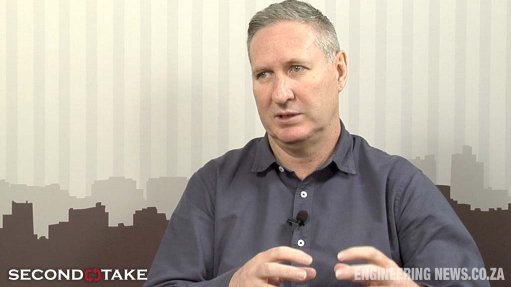
Sasol CEO Pat Davies discusses the group's environmental sustainability achievments and aspirations (08/09/2008) Video courtesy Corpcinema Edited by Shane Williams
This video is licensed under a Creative Commons License