Creamer Media’s Engineering News Online
Magazine in Store Now!
Advanced Search
 
 
We have detected that the browser you are using is no longer supported. As a result, some content may not display correctly.
We suggest that you upgrade to the latest version of any of the following browsers:
         
close notification
powered by
GOLD 1167.47 $/ozChange: 3.50
PLATINUM 1556.00 $/ozChange: 14.50
R/$ exchange 7.34Change: 0.01
R/€ exchange 9.57Change: -0.02
 
 
PROJECT MAFUTHA
Sasol may turn to Spekboom to capture carbon
0 COMMENTS  |  
ADD A COMMENT PRINT
 
 
5th December 2008
TEXT SIZE
Text Smaller Disabled Text Bigger
 

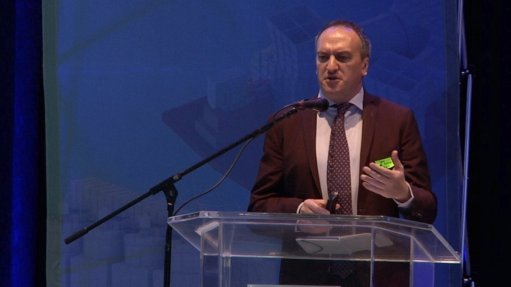
The prefeasibility study into Sasol’s new-generation coal-to-liquids (CTL) project in Limpopo, dubbed Project Mafutha, is proceeding on schedule, the group’s South African energy cluster head, Benny Mokaba, said recently.

He added that every effort was being made to ensure that the project would not only contribute to the economic development of South Africa and its energy security, but that it would also be environmentally sustainable.

Speaking at the release of the group’s sustainability report, Mokaba said that various mech-anical and organic carbon capture and storage solutions were being interrogated, including the prospect of planting thousands of hectares of spekboom, a plant able to absorb carbon dioxide (CO2).

In fact, initial studies suggest that the 80 000-bl/d Mafutha plant’s carbon emissions could possibly be offset by planting 100 000 ha of Spekboom.

In fact, the plant, which grows primarily in the Eastern Cape, has been found to possess significant carbon-storing capabilities. The evergreen succulent can reach a height of 2,5 m and advocates suggest that each hectare of spekboom could capture 4,2 t of carbon yearly.

But Mokaba told Engineering News that mechanical solutions, including carbon capture and storage, were also being given priority attention.

The group was convinced that it could capture the carbon emitted from its facilities and was participating in a study to map out potential storage sites. However, it was likely that many of the most suitable sites would be situated some distance from its existing operations in Sasolburg and Secunda, as well as the proposed operation in Limpopo province.

Currently, the company was producing over 3 t of CO2 for every ton of saleable product, which was down from the 3,45 t that was being produced in 2004. The group has set a target to reduce that level to 2,85 t for every ton of saleable product by 2014.

CEO Pat Davies said that Sasol was tackling the twin challenge of economic development and environmental sustainability through a range of initiatives and stressed that Sasol saw itself as part of the solution to the problem, emphasising that many of the solutions lay in the technological advancements that its engineers and scientists were driving.

Mokaba also said that he saw sufficient room in the South African economy for both the investment into Mafutha, as well as PetroSA’s crude-oil refinery planned for Coega, in the Eastern Cape.

He said that given the nature of the products produced through the CTL process, there would always be room for a “blend- ing” with other liquid fuel pro-ducts.

He also noted the maturity of many of the coastal refineries and the fact that many of these would battle to produce to the new environmental specifications without significant new capital expenditure.

Edited by: Martin Zhuwakinyu
 
 
Topics in this article


Hide Comments  
 
This article contains no Comments


All comments must be approved by our editors, click here to read the editorial guidelines for comments. Please allow some time for our editors to approve your comment after posting.
 * Required Fields

image
image
 *


image
image
 *
 

image
image
 

Verification Image

image
image
 * Please enter the text you see in the above image.


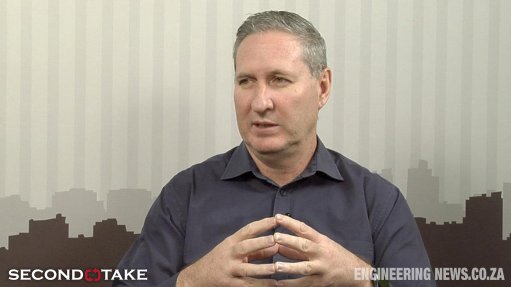
BENNY MOKABA
100 000 ha of Spekboom could absorb all Mafutha's carbon emissions (Duane Daws)
 
Picture by: Duane Daws
BENNY MOKABA 100 000 ha of Spekboom could absorb all Mafutha's carbon emissions (Duane Daws)