Creamer Media’s Engineering News Online
Advanced Search


We have detected that the browser you are using is no longer supported. As a result, some content may not display correctly.
We suggest that you upgrade to the latest version of any of the following browsers:
         
close notification
powered by
GOLD 1360.10 $/ozChange: -5.72
PLATINUM 1455.00 $/ozChange: -6.70
R/$ exchange 9.40Change: -0.09
R/€ exchange 12.07Change: -0.07
 
 
Sasol chemicals at a glance
 
20th March 2009
TEXT SIZE
Text Smaller Disabled Text Bigger
 

Sasol's chemical businesses produce a variety of commodity and higher-value petrochemicals, fertilisers, mining explosives and pipeline gas. Its products are derived from the beneficiation (the reduction of the sulphur and mineral content) of gas coal at Sasolburg, from feedstock purchased from Sasol Synfuels at Secunda, and through manufacturing facilities and joint ventures around the globe, reports Creamer Media's Research Channel Africa.

Sasol Polymers

Sasol Polymers produces and supplies ethylene, propylene, polyethylene, polypropylene, polyvinyl chloride, caustic soda, hydrochloric acid, mining reagents and sodium cyanide to local and international customers.

It has plants in Sasolburg and Secunda and has JVs in Malaysia and Iran. Iran is the site of Sasol Polymer's Ayra Sasol ethane cracker, which uses ethane as the source for long-chain hydrocarbons to be broken down into short-chain molecules.

Sasol Solvents

Sasol Solvents supplies chemicals such as alcohols, ketones, esters, acrylic acid testers, ethyl acetate, ethers, propionic acid, acetic acid and mining chemicals to customers worldwide. It has plants in Secunda, Sasolburg and Germiston in South Africa and in Moers and Herne in Germany, one of which is a maleic anhydride JV with Huntsman.

It has other regional companies in the Netherlands and Luxembourg; Paris; Milan; Solihull, the UK; Houston, Texas; Tokyo and Shanghai.

Sasol Olefins & Surfactants (SO&S)

SO&S manufactures and markets surfactants (most easily described as detergents, or chemicals that lower the surface tension of a liquid or the tension between two liquids), surfactant intermediates and inorganic speciality chemicals. Its products include paraffins, olefins (a synthetic fibre also known as polypropylene or polyethylene), alcohols, aluminas, zeolites (used in petrochemical cracking and in the separation and removal of gases and solvents) and oleochemicals (chemicals derived from biological oils or fats).

It has plants in Germany, Italy, Slovakia, the US, China, Dubai and South Africa. It has a Chinese JV alcohols plant with Wilmar China Investment to produce 60 000 t/y in Liányúngáng, north-eastern China.

Sasol's Other Chemical Businesses

Meanwhile, Sasol's other Chemicals Businesses fall under the company's chemical cluster umbrella term for the group that encompasses Sasol Nitro, Sasol Wax, Sasol Infrachem and Merisol.

Sasol Nitro

Sasol Nitro manufactures, markets and supplies ammonia, nitric acid, industrial explosives, fertilisers, sulphuric acid, phosphates and blasting accessories. It has plants in Sasolburg, Secunda and Bronkhorstspruit in South Africa.

It markets the ammonia, sulphur and speciality gases produced by other Sasol businesses.

Sasol Nitro oversees an ammonia business, an explosives business, a fertiliser business and Sasol Dyno Nobel which manufactures and supplies detonating cord, detonators and pentolite boosters (a high detonation pressure explosive for enhancing the explosive power of large diameter explosives).

Sasol Wax

This division manufactures and markets a comprehensive range of waxes, petroleum jellies and liquid paraffins derived from Fischer Tropsch and oil refinery feedstock to customers worldwide.

The products are supplied primarily to industries related to candle making, rubber, chipboard, cupcoating, cosmetics, personal care, dust prevention, polish, hot-metal adhesives, ink, bitumen and polymer conversion.

It encompasses Sasol Wax International Aktiengesellschaft and Sasol Wax in Hamburg, Sasol Wax Americas in Connecticut, Luxco Wax in California, Sasol Wax Malaysia, Sasol Wax Australia, the Alexandria Wax Product Company in Egypt, and Price's Candles in Johannesburg.

Sasol Infrachem

Sasol Infrachem converts natural gas for use as a petrochemical feedstock and provides utilities, infrastructure and site support to the chemical and related businesses in and around the Sasolburg complex. It is responsible for Sasolburg's site governance and managing Sasol's reputation in the Free State province.

Merisol

Merisol is a JV between Sasol and US chemical company Merichem. It manufactures cresols and phenolic products including xylenols and elkylphenols. Phenolic describes simple hydrocarbon groups, similar to alcohols, which are used where rigid materials are needed, particularly to create mouldings for consumer products, for some bearings, for insulation, and as a binder. It has plants in Johannesburg and Houston and joint production facilities in Sasolburg and Hong Kong.


To subscribe to Engineering News's print magazine email subscriptions@creamermedia.co.za or buy now.

FULL Access to Mining Weekly and Engineering News - Subscribe Now!
Subscribe Now Login
 
 
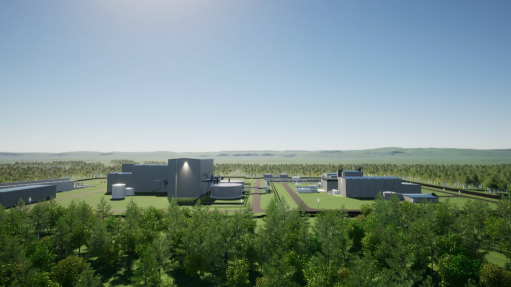
SECUNDA BY NIGHT
Sasol Secunda operates the world’s only coal-based synthetic fuels manufacturing facility
 

SECUNDA BY NIGHT Sasol Secunda operates the world’s only coal-based synthetic fuels manufacturing facility
 
SASOL ADVANCED SYNTHOL REACTOR
In South Africa, Sasol generates a substantial amount of its own energy requirements
 

SASOL ADVANCED SYNTHOL REACTOR In South Africa, Sasol generates a substantial amount of its own energy requirements
 
 
Previous Play Next
 
Facts
Sasol’s CTL process
Through petrochemicals giant Sasol’s proprietary Fisher-Tropsch technology, the company’s chemicals work-up plant at its Secunda operation is able to produce alcohols, acetic acid, ketones, and ethyl acetate. Sasol Solvents converts some of its higher alpha olefins into Sasol detergent-range alcohol and the plant recovers 1-pentene, 1-hexene, and 1-octene for customers from its C4 to C20 oil stream emanating from the Sasol Advenced Synthol (SAS) reactors. Sasol Secunda operates the world’s only coal-based synthetic fuels manufacturing facility, which uses unique Sasol to manufacture synthesis gas from low-grade coal. This is converted into a large range of petrochemicals.The process starts in the gasification plant where coal, with the aid of heat, pressure, steam, and oxygen, is converted into crude synthesis feed gas. The gasification condensates, and once cooled, yields tars, oils, pitches, and associated coproducts. Sasol also recovers ammonia, sulphur, and phenolics.About eight tons of coal at a time is fed into a compartment at the top of a Lurgi gasifier from a conveyor belt. Once loaded, the coal lock is closed tight and a gas is fed into it before the bottom of the lock is opened to feed coal into the body of the gasifier. This strategy maintains the high pressure that has been built up by the next step, which is feeding high-pressure steam and oxygen into the gasifier to decompose the coal. This produces what Sasol calls synthesis gas.The purified synthesis feed gas is sent to the (SAS) reactors, where the hydrogen and carbon monoxide react, under pressure with the aid of an iron-based catalyst, at a temperature of about 350 ˚C, to yield C1 to C20 hydrocarbons. the SAS process also produces oxygenated hydrocarbons and reaction water.Hydrocarbons from the SAS reactors are cooled successively in a product recovery plant until most components become liquified. Sasol exploits the difference in boiling points to yield separate hydrocarbon-rich fractions, a process called fractional distillation, as well as methane-rich gas, some of which it sells as pipeline fuel gas.Sasol splits the C2-rich stream into ethylene and ethane. The ethane is cracked in a furnace to produce ethylene for further purification, before being converted into polyethylene. The company also purifies propylene from the light hydrocarbon gases to provide feedstock for its Secunda polypropylene plant, and Sasolburg butanol and acrylates plants.Through proprietary Sasol technology, the plant recovers 1-pentene, 1-hexene, and 1-octene for customers from its C4 to C20 oil stream emanating from the SAS reactors. Oxygenates from the SAS aqueous stream are separated and purified in the company’s chemical work-up plant, to produce alcohols, acetic acid, ketones, and ethyl acetate. Sasol Solvents also converts some of its higher alpha olefins into Sasol detergent-range alcohol.What remains of the coal is ash, which forms a support for the hot coal, known as the fire bed. Ash is removed from time to time, through a mechanical process involving a rotating grate.For the above process to work efficiently, the coal must come in lumps no smaller than five millimetres in diameter, and no larger than 100 mm. Smaller lumps, known as fines, could get carried upwards in the rising gas and would take significant effort to remove. If the fines coalesced in the fire bed, they would create areas fo greater resistance to the flow of gas, making operating conditions unstable.Lumps of coal larger than 100 mm are undesirable because they tend to roll towards the periphery of the gasifier, which also creates inconsistencies in the bed’s overall resistance to gas flow. In short, particle size distribution of the coal in the gasifier is important to the gasification process.