Creamer Media’s Engineering News Online
Advanced Search


We have detected that the browser you are using is no longer supported. As a result, some content may not display correctly.
We suggest that you upgrade to the latest version of any of the following browsers:
         
close notification
powered by
GOLD 1388.77 $/ozChange: 13.68
PLATINUM 1458.50 $/ozChange: -14.00
R/$ exchange 9.58Change: -0.03
R/€ exchange 12.36Change: -0.03
 
ENERGY EFFICIENCY
 
SA’s industrial energy intensity falls, but still lags world average
 
23rd March 2012
TEXT SIZE
Text Smaller Disabled Text Bigger
 

The energy intensity of South African industry – measured by the tons of oil equivalent (toe) used to produce $1 000, or a unit, of manufacturing value added (MVA) – declined by a material 33% between 1990 and 2008, a recently published United Nations Industrial Development Organisation (Unido) report shows.

In fact, the Industrial Development Report 2011 shows that South Africa’s industrial energy intensity fell from 1.2 toe for every unit of MVA in 1990, to 0.8 toe for a unit of MVA by 2008. These saving were better than those achieved in the rest of the Southern African region and similar to levels realised by countries with comparable income levels.

But in an address to a South African audience, Unido’s director of research and statistics Augusto Alcorta stressed that a significant gap remained between South Africa’s industrial energy intensity and the global average, which had declined to around 0.35 toe for a unit of MVA. In other words, South Africa’s industrial energy intensity remained more than double the world average

Therefore, more policy and firm-level efforts were required for the country to begin fully reaping the environmental and economic advantages associated with pursuing energy efficiency on a large scale.

Globally, industry accounts for 25% of all greenhouse-gas emissions and energy efficiency initiatives could play a significant role in reducing emissions.

But the economic spinoffs were equally compelling, particularly in a context where industry was spending $1-trillion a year on energy inputs.

A Unido survey of 119 energy efficiency projects in developing countries discovered an average payback period of 23 months and an average rate of return of 40% for projects of a five-year duration. In addition, the smaller, less complex projects, such as the insulation of pipes and the use of natural light and ventilation, yielded the largest rates of return.

“What really caught our attention was the high profitability of low investment projects – the low-hanging fruit – which indicated that energy efficiency is something that is worth exploring for small and medium enterprises,” Alcorta explained.

Unido estimates that there is still potential globally to save a further $230-billion through investing in energy efficiency, $165-billion of which could be saved in developing countries.

However, serious impediments remained to large-scale adoption, despite rising proof of environmental, economic and social dividends. Many firms lacked sufficient information, which made them reticent to invest in energy efficient solutions, while government policies and incentives were often inadequate to support adoption.

Policymakers, Unido asserted, should formulate a coordinated energy strategy, supported by monitoring and implementations mechanisms, that established targets, benchmarks and standards, including for sector-specific programmes.

Key policy approaches include laws and regulations, negotiated agreements, information-based instruments, new technology and innovation support, market-based instruments and financial facilities, the report stated.

Financial facilities, such as loans, guarantees, revolving funds and venture capital funds, were also required to increase the availability of capital and lower the cost and risks associated with energy efficiency programmes.
 

Edited by: Creamer Media Reporter


To subscribe to Engineering News's print magazine email subscriptions@creamermedia.co.za or buy now.

FULL Access to Mining Weekly and Engineering News - Subscribe Now!
Subscribe Now Login


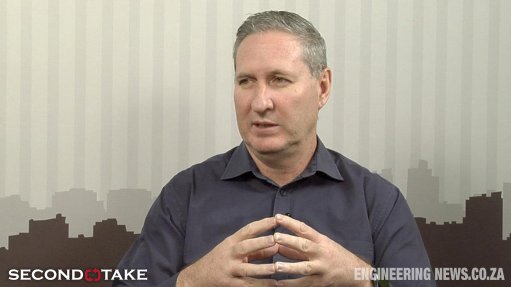
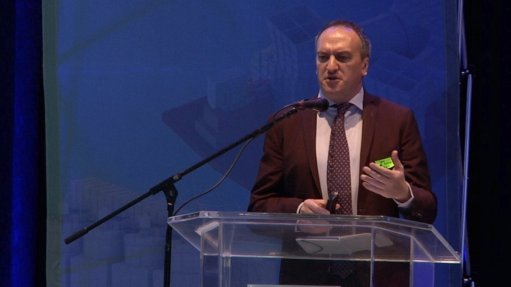
Unido’s director of research and statistics Augusto Alcorta on the opportunity to raise global energy efficiency further and on South Africa's improved performance. Camera Work: Nicholas Boyd. Editing: Darlene Creamer.
This video is licensed under a Creative Commons License
GET SELECTED VIDEO
Embed
Selected Video Download (6.74mb)
 
Unido’s director of research and statistics Augusto Alcorta
 

Unido’s director of research and statistics Augusto Alcorta