By: Terence Creamer
1st March 2007
The South African government and key State-owned enterprises, such as Eskom and Transnet, are expected to spend some R409-billion on public-infrastructure projects over the next five years as part of a drive to ease constraints in the power, transport and water sectors. In addition, priority attention is being given to projects that have to be ready in time for the quadrennial Fifa World Cup, to be held in South Africa during June and July of 2010 - including five new stadiums and five refurbished stadiums.
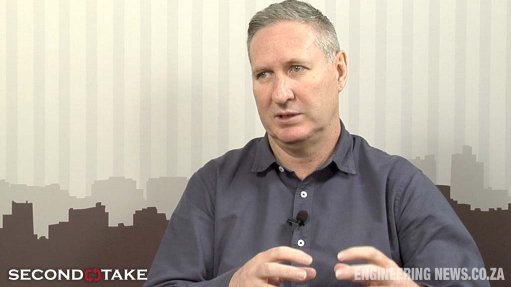
Speaking following the release of strong interim results, Murray & Roberts (M&R) executive director Sean Flanagan, who is responsible for the high-profile 2010-type projects within the group (including Gautrain and the World Cup stadiums), said that there was a “complete imbalance” between government's delivery capacity and that of the contractor community.
By way of example, he pointed out that, on the R25-billion rapid-rail Gautrain project, the only permanent government employee able to engage with the complexities of the project was Gautrain project head Jack van der Merwe. The balance of the Gautrain team, Flanagan said, was made up entirely of outside consultants.
“Government has the money and the projects, but they simply do not have the capacity to deliver those projects . . . so when we sit down to negotiate there is a massive problem,” Flanagan lamented, adding that this reality was making it difficult to reach closure on deals.
He was particularly perturbed about the slow decision-making surrounding the 68 000-seater R2-billion Green Point stadium, in Cape Town, where a M&R-WBHO consortium was the preferred bidder on a project that had to be completed in 34 months. “We should have been on site two months ago and we were expecting to be appointed in December. But it is now March and there is still haggling over the last R180-million,” he said.
Similarly, at the smaller 45 000-seater Peter Mokaba stadium in Polokwane - where M&R subsidiary Concor was part of the preferred consortium - progress had “fizzled”. However, this R1-billion project could be built in 25 months.
“We want to and we must deliver on these projects in time for the World Cup . . . and there is almost as much pressure from Fifa to start the projects as there is to finish them. But as we keep telling everyone, 'we are never going to finish if we don't start' - even a humble engineer is able to work that one out,” Flanagan quipped.
Flanagan also stressed that, while the Bombela Consortium (Bombardier Transportation (25%), Bouygues Travaux Public (25%), Murray & Roberts (25%), and Strategic Partners Group (SPG) (25%)) was working tirelessly to complete the first phase of the Gautrain (involving the link from OR Tambo International Airport to Sandton and Sandton to Midrand) in time for the World Cup, it was under no contractual obligation to do so.
“We will, one year into the project, which will be September, sit with government to see whether or not it is possible to accelerate elements of the work in order to complete. But at this stage we have no obligation to do so,” he stressed.
SA must move toward design-build
Flanagan said that he also felt that projects had to be conceived differently, proposing that they be delivered on a design-build, rather than a construct-only basis.
He said that, the only reason that the Gautrain project had gotten off to the flying start it had, was because M&R had full control over the design, which enabled it to gear up for the start of construction - including taking on 300 people on risk even before commercial closure and long before financial close.
By contrast, Flanagan reported that it had still not had sight of the final design for the Green Point stadium, which he said would add to the risk of slow delivery.
This is not the first time M&R has called for an overhaul in the way tenders were managed, and several other built-environment professionals have backed that call.
One of those in support of the design-build concept is South African consulting engineering group, SSI. Its CEO, Naren Bhojaram has told Engineering News previously that the approach being taken on World Cup and infrastructure projects was not geared to fast-track delivery. He argued that all World Cup-related infrastructure should have been delivered through turnkey-type or even a public private-partnership arrangements, instead of along the traditional nonintegrated lines.
Other worries
Flanagan was also strident in his criticism of the way black economic-empowerment (BEE) rules were being administered. He pointed out that the group's various businesses now had to comply with various industry charters, but that over and above that government was setting in place unique BEE requirements for its various projects.
“We are finding a different requirement on just about every job. There is no way that we, or our competitors, can comply with seven, eight, or nine different requirements.
“All it does is reduce our percentage involvement in the projects and, therefore, we will not be prepared to put all our people, our balance sheet and our reputation at risk,” Flanagan warned.
Edited by: Terence Creamer