Energy and chemicals group Sasol, which is a coinvestor in the development of a thin film solar-panel technology start-up enterprise, reported on Friday that the "development phase" for a commercial-scale project should begin in Germany in December, opening the way for a South African production facility that could become operational within "two-and-a-half" years.
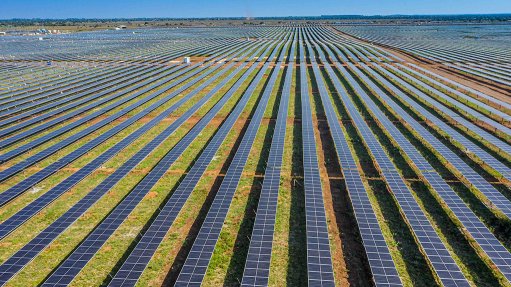
The head of the JSE-listed group's new energy unit, Henri Loubser, confirmed that the facility would be established in Paarl, in the Western Cape, and would have a capacity to produce 40 MW of the copper-indium-gallium-diselenide (CIGS) modules yearly.
The CIGS solution is considered to be a second-generation thin-film photovoltaic (PV) technology, with material cost advantages over PV solutions based on crystalline silicon. PV technology is able to convert solar energy directly into electricity and has been included into South Africa's latest renewable energy feed-in tariff structure.
South Africa's State-owned Central Energy Fund, Sasol, the University of Johannesburg (UJ) and the National Empowerment Fund are pursuing the South African project jointly as a public-private partnership (PPP). The European Investment Bank has also lent €40-million to PPP to support the construction of the local PV production facility. Sasol has a 40% interest in the start-up PV enterprise.
"We are confident that the development phase of the project will kick off in December," Loubser said, adding that Sasol was sending a team to Germany during November to facilitate the final agreements for the programme.
The development phase is expected to continue for between 12 months and 18 months. Thereafter, the facility will be relocated from Germany to South Africa in a project that could take another 12 months to complete.
News of the advances in the South African project comes as MiaSolé, a US manufacturer of CIGS thin-film PV modules, has announced that it has started shipping its CIGS thin-film modules from its California production facility.
In a press statement issued in mid-November, CEO Dr Joseph Laia reported that it had shipped modules to 30 customer sites in Germany, Italy, Spain, France, Portugal and various locations in the US. "We now have commercial projects in the ground, under development and on the drawing board," Laia said.
Sasol's Loubser acknowledged the growing competitive pressures surrounding PV, but said that the South African investors were confident that the development phase would prove that the technology was indeed cost and efficiency competitive.
The other second-generation thin-film solutions emerging were amorphous-silicon panels and cadmium-telluride units. Further, there was much work is going into so-called third-generation solutions, which could reduce costs further and improve efficiencies up to 40%. The efficiency of the current systems is between 8% and 20%.
The South African CIGS solution has been advanced by Vivian Alberts, a professor in the department of physics at UJ, and a patent was filed in 2003.
Land had been procured in the Western Cape for the new PV facility, while a German company was producing and testing the production machinery at a facility in Bradenburg.
A R12-million pilot production facility was commissioned in March 2006 but work was now required to prove commercial-scale production.
"The moment that the technology step has been proven . . . then the equipment, which was erected in Germany, will be moved to Paarl, and expanded in capacity," Loubser explained.
OTHER PROJECTS
Meanwhile, Sasol new energy unit was also working on a range of other low-carbon technologies and solutions, in line with targets for reducing the carbon insensitivity of its current and future coal-to-liquids (CTL) fleet.
Group safety health and environment centre manager Fred Goede reaffirmed that the company was aiming to lower the carbon intensity (the percentage of carbon dioxide for a ton of final product) of its existing CTL plants in South Africa, as well as their absolute emissions.
A reduction target of 15% by 2020 had been set for its existing plants, as benchmarked against 2005 levels, while future CTL facilities would need to be 30% less carbon intense against the same benchmark. The group, which emitted 71,3-million tons of greenhouse gases in 2009, also had an aspiration of lowering its absolute emissions by 20% for new CTL plants commissioned before 2020 and 30% for plants commissioned before 2030.
Loubser said that the plan included the deployment of energy-efficiency solutions, renewable energy, hydro and nuclear energy, as well as carbon capture and storage (CCS) technologies.
A series of projects were already under way, with Sasol targeting to improve the energy efficiency of its utilities by 15% a unit of production by 2015, based on a baseline set in 2000.
Solar-energy was another big focus area, with Loubser indicating that, besides the PV investment in Paarl, the group was participating in solar water heating and concentrating solar power (CSP) projects.
It was currently funding a University of Stellenbosch project to research various CSP technologies, which would inform its decision as to which solution it could support. Sasol expected to make a final technology choice by June, 2010.
It was also possible that the company could participate in some of the many hydroelectric schemes currently under consideration in the region, while it was also mulling over its nuclear-energy options.
Loubser said that it envisaged a possible process-heat/electricity role for the pebble-bed modular reactor (PBMR), which is being researched by a South African State-owned company. However, he warned that the protracted timeframes surrounding the development of the PBMR might make it difficult for the solution to be integrated into some of its near-term project plans.
Sasol also had ambitious CCS plans, and it "will not commit to invest in future CTL, or other coal-based plants, without clear mitigation solutions".
For instance, CCS had been integrated into the prefeasibility analysis for a possible new CTL plant being studied for China.