Creamer Media’s Engineering News Online
Advanced Search


We have detected that the browser you are using is no longer supported. As a result, some content may not display correctly.
We suggest that you upgrade to the latest version of any of the following browsers:
         
close notification
powered by
GOLD 1346.55 $/ozChange: -19.27
PLATINUM 1442.50 $/ozChange: -19.20
R/$ exchange 9.42Change: -0.11
R/€ exchange 12.09Change: -0.09
 
CLIMATE CHANGE
 
SA should realistically manage Durban climate meeting expectations
 
20th January 2011
TEXT SIZE
Text Smaller Disabled Text Bigger
 

The eyes of the world would look upon Durban in December, when South Africa hosts the global climate change negotiations, but the country would need to realistically manage expectations regarding what could emerge from the conference.

“It’s important that we are very real about what is possible” at the seventeenth conference of the parties (COP17), said Department of Environmental Affairs deputy director-general Joanne Yawitch, who forms part of the South African negotiation team.

“At the same time,” Yawitch continued, “there is a sense that you can’t dump the big political questions anymore. We are going to need to engage with some of the issues that the Mexicans [at COP16 in Cancun] didn’t. So, it puts us in a situation where one must not build expectations too high, but at the same time one must not dumb them down too much either.”

She added that striking the appropriate balance was important to ensure that the conference in Durban did not deliver an agreement that was either meaningless, or unachievable.

At the most recent meeting, COP16 in Cancun, Mexico kept expectations for a legally binding agreement very low, compared with the COP15 gathering in Copenhagen, which had high expectations but delivered only disappointment.

One of the major issues was the changing political dynamics between member states. The US was unlikely to move very far in the negotiations owing to domestic politics, while other countries such as China would not take on obligations unless the US did.

Expectations were likely to be high leading up to the Durban meeting, because the first commitment period under the Kyoto Protocol ends in 2012, and the world is looking for clarity on the framework under which emissions reduction will operate going forward.

It is as yet unclear whether there would be a second legally-binding commitment period under the Kyoto Protocol, or whether an entirely new treaty would be established, or whether a non-legally binding treaty would be established.

South Africa put forward its country commitments on greenhouse gas emission (GHG) reduction at Copenhagen in 2009, and now further work is needed at a sectoral level to reach these targets.

At the 2009 climate change conference, under the Copenhagen Accord, South Africa said that its emissions would peak, and plateau and decline.

It committed to take nationally appropriate mitigation actions to enable a 34% deviation below the ‘business as usual' emissions growth trajectory by 2020, and a 42% deviation below the ‘business as usual' trajectory by 2025.

The reduction commitments were conditional on receiving financial and technology assistance from developed nations.

The commitments were once again reiterated at the 2010 conference in Cancun, where agreements within the purely political Copenhagen Accord, were more formally recognised, and the Cancun Agreement emerged.

“We need to start looking at, how do we peak, plateau and decline? What is it that we are going to need to do, and what is it that we need from the international community to do more, to reach what we listed in Copenhagen? I think the challenge for business - and I think we have engaged with it around the [national] policy process in quite a lot of detail - is to say, what does that mean for business sector by sector, and then eventually industry by industry?” questioned Yawitch.

KPMG resources economist and sustainability adviser Rohitesh Dhawan reiterated that the major message for business taken from the Cancun meeting was that “success in the green economy will be driven by business through governments, and not by governments through business”.

He said that both the public and private sectors needed to fully grasp the opportunities that could be presented by nationally appropriate mitigation actions and low carbon development strategies.

“Its becoming fairly evident that the global climate policy will consist of individual national country actions, joined up to some framework. Within these individual national country actions the private sector will play an increasingly important role, both on adaptation and mitigation through technology and finance,” he said, highlighting the need for robust government and business dialogue.
 

Edited by: Mariaan Webb


To subscribe to Engineering News's print magazine email subscriptions@creamermedia.co.za or buy now.

FULL Access to Mining Weekly and Engineering News - Subscribe Now!
Subscribe Now Login


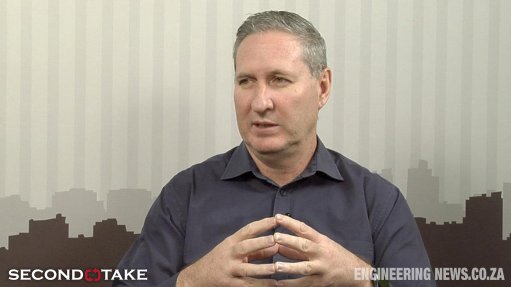
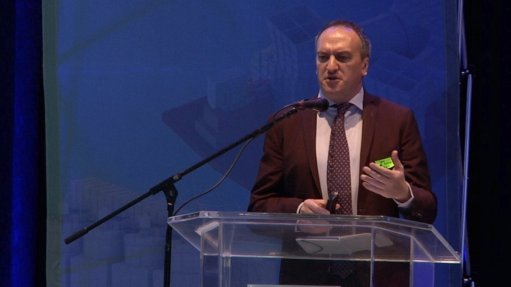
Environmental Affairs DDG Joanne Yawitch discusses the global climate change conference to be held in Durban
This video is licensed under a Creative Commons License
GET SELECTED VIDEO
Embed
Selected Video Download (5.48mb)