Creamer Media’s Engineering News Online
Magazine in Store Now!
Advanced Search
 
 
We have detected that the browser you are using is no longer supported. As a result, some content may not display correctly.
We suggest that you upgrade to the latest version of any of the following browsers:
         
close notification
powered by
GOLD 1252.31 $/ozChange: 6.67
PLATINUM 1556.00 $/ozChange: 24.00
R/$ exchange 7.22Change: 0.08
R/€ exchange 9.27Change: 0.07
 
 
EDUCATION AND SKILLS
South Africa should promote entrepreneurship to grow economy
7 COMMENTS  |  
ADD A COMMENT PRINT
 
 
29th July 2010
TEXT SIZE
Text Smaller Disabled Text Bigger
 

South Africa’s economy was falling further and further behind the rest of the continent owing to deficiencies in the education system and its skills development efforts, which was, in turn, eroding the country’s competitive ability, Econometrix chief economist Azar Jammine said on Thursday.

Jammine pointed out during a discussion on the World Bank’s ‘Second Investment Climate Assessment' report, that South Africa’s economy has been following the trends of the world economy, but that it had not followed the rest of the African countries’ economic growth trends.

South Africa’s role on the African continent has declined and it was falling behind the rest of Africa.

Jammine noted that in most other countries on the continent, the role of government was getting smaller, while businesses, and particularly small businesses, were allowed to grow.

However, in South Africa, there was far too much power in the hands of government, big businesses and organised labour and not enough power in the hands of small businesses.

The country’s private sector was thriving, but, however vibrant it might be, it was still not resilient enough, given the lack of small businesses, he said.

The high unemployment rate, which currently stood at 25,3%, the fact that so many people were becoming discouraged from looking for jobs and other structural challenges, which were partly to blame for the underperformance of the local economy, had much to do with a lack of education or the deficiencies of the education system, he added.

Despite South Africa spending a lot of funds on education, the matric pass rate has been dropping over the past seven years.

Jammine highlighted that out of the 1,5-million children who had started school in 1997, only about one-third had reached grade 12. Of those, only 60% had passed matric and only 7% had received university exemption.

Jammine highlighted that the science and mathematics statistics were also worryingly low, questioning how a country could build its skills base and promote entrepreneurship if the education system was underperforming.

Gordon Institute of Business Sciences China-Africa Network director Dr Martyn Davies added that the South African economy was also falling further and further behind that of other developing countries like China and India, owing to the level of education and the fact that skills training was lagging.

Both Davies and Jammine agreed that entrepreneurship was the best way to grow local employment.

However, Davies highlighted that the disconnect between the first and second economies in South Africa was a big challenge.

South Africa was trying to apply an ideal first-world regulatory system to an emerging, developing world environment, which would not succeed, he stated.

Meanwhile, Davies said that Africa was, post the economic crisis, faced with the most enabling, liquidity providing environment it was ever likely to see, given the rise of developing Asian countries like China, India and South East Asia and their increasing demand for mineral commodities, which Africa had an abundance of.

Edited by: Mariaan Webb


Hide Comments  
 
Readers Comments
 
image image
This is a good assessment. Small businesses face a bewildering forest of red tape that wipes out a lot of productive time on useless administration - mainly to pay lots of tax and keep the bean counters happy. Now we have to go through even more hoops each year to keep up the registration of our company name! No doubt as I write some grey clad functionary is busy dreaming up new ways to create more useless paperwork to boost his ego and further gum up the system. I have a PhD in engineering and have been running my one man specialist business for 10 years, but the ever changing system remains a mystery to me. So I am forced to pay a smart accountant to figure it all out and keep me from inadvertently becoming a criminal when I fail to discern (in sheer ignorance) that I am about to contravene some new rule that has just been invented and no one bothered to inform me about. (Or worse still the new rules are buried somewhere in a deadly dull 100 page document that only someone with nothing better to do would care to read. How I wish it was as simple as shelling out some of my hard earned money to pay an accountant. Sadly I still have to waste large swathes of my productive time digging out all the information that is demanded. That adds up to a lot of useless friction that just generates heat to no good purpose. Our country is richly endowed with natural resources. By contrast, California, has hardly any. Yet if regarded as a country, would be the 5th biggest economy in the world. Why? Part of the reason is that some years ago a conscious decision was taken to enable small businesses to flourish. With an average company size of about 20, they have succeeded beyond imagination. We are heading in the other direction by erecting more and more bureaucratic obstacles. No wonder so few want to start new businesses!
image image 
image
Chris Herold on 30 Jul 10
image image
Chris sums it up - the barriers to entry are becoming significantly greater than the rewards, and the increased regulation has by and large been caused by disfunctional regualatory systems in the first place.
image image 
image
Mike on 30 Jul 10
image image
South Africa has huge potential for small business. Transnet rail, Transnet ports, making profit by supporting the industry giants, has opportunities which have never been exploited by entrepreneurs. Why? No entry for small guys. The screaming business opportunity, “come and get me” is given out by lengthily tenders only a qualified attorney is able to understand. Loading trains, offloading wagons, Pushing wagons left and right, collecting data is an opportunity which can generate income for people who are willing to work and can add value to Transnet. What is needed? Capital, training and a few administrator who guide and monitor the day to day activity of entrepreneurs trying to understand how business works. When will the doors open to all that, maybe when those, sitting in air-conditioned offices, get there where you get dirty hands. Jochen Stutzner
image image 
image
jochen Stutzner on 31 Jul 10
image image
Yes,by fighting crime effectively,protect people against property hijackers,allow business o space to flourish and end this politically corre t nonsense where only politically correct gets tenders. Have a police unit that will interact with traders so as to ensure there are no threats against them or their clients because right now traders are besieged by drug-dealers and these low-life type gangs w atre told are street urchins and car-guards.
image image 
image
Tim on 02 Aug 10
image image
It depends what kind of entrepreunership you`re harping about because to run a country successfully there has to be holistic approach where all government departments collaborate in every service delivered. As for economic growth you need all those in a country to pay their taxes including pets too and there has to be conservative use of taxes by adhering to sustainable development principles so that you don`t have to renew frequently.
image image 
image
Tim on 03 Aug 10
image image
Yes, there is huge unemployment in our country and employees are too stringent on qualifications rather than employing a person on their experience.It is also difficult sustaining business,if you are in business, because organizations only want to deal with big corps.Training is an issue in our country.Organizations should put more emphesis on skill development and trianing instead of looking first at their bottom line and production.Safety is first.Training can only increase production and profits.Although the standard of education has decreased in the past 2 decades as we all know,learners that perform are not given the opportunity to enter professional fields of study,re "THE QUOTA SYSTEM".How unfortunate for them?If they are given the opportunity,only then will our country develop and sustain itself.
image image 
image
DD on 04 Aug 10
image image
I live in the States, Washington, DC, arguably the heartbeat of the world. Population ~600,000; 56% black; 36% white. The City is divided into 4 quadrants (NE, NW, SE, SW) with whites generally living in the NW. The city is a microcosm of our Nation (and a case study for other multi-cultural communities globally.) We do not pretend to have the racial divisions that created our country solved, however, until SA addresses the educational disparities soon (by the government and private sector) it risks sinking into a tenuous situation with its growing population of young people (35% between 0-21 years of age) - most of whom feel a heightened sense of hopelessness and frustration. Equal educational opportunity (along with hope for employment) will begin to stabilize the frustrations of many, leading to the emergence of strong communities, cities (townships), that are capitalizing on its greatest asset - its people. Apartheid, much like America's racial divide, cannot be hoped away, it must be legislated in the courts (painful but necessary.) Litigate anything that smells of injustice. Nations rise and fall from internal strengths and challenges; SA is no different than America. If you will not live together or respect each person's strength, then provide equal access to education for all. America has 105 HBCU (Historically Black Colleges and Universities) institutions (the oldest was formed in 1837.) They are powerful places for a community that was (is) discriminated against. They incubate future teachers, doctors, engineers, business people, lawyers, activists. Your government must support this venture throughout the country - it's the only way SA will create a stronger and peaceful nation that believes in the power of each citizen. America has come a long way; SA has a model it can use as an example.
image image 
image
V on 07 Aug 10
 
 
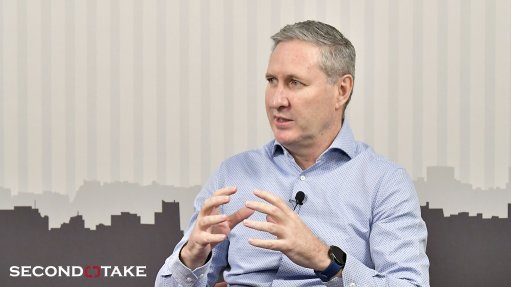
GIBS China-Africa Network director Dr Martyn Davies discusses South Africa's first and second economies (Videographer: Nicholas Boyd; Editing: Darlene Creamer)
This video is licensed under a Creative Commons License
GIBS China-Africa Network director Dr Martyn Davies
 
Picture by: Duane Daws
GIBS China-Africa Network director Dr Martyn Davies
 
Previous Play Next