Creamer Media’s Engineering News Online
Advanced Search


We have detected that the browser you are using is no longer supported. As a result, some content may not display correctly.
We suggest that you upgrade to the latest version of any of the following browsers:
         
close notification
powered by
GOLD 1746.95 $/ozChange: 13.29
PLATINUM 1666.00 $/ozChange: 8.00
R/$ exchange 7.61Change: -0.04
R/€ exchange 10.10Change: -0.08
 
Nuclear energy
PBMR concentrates on core competences and diversifies markets
 
31st July 2009
TEXT SIZE
Text Smaller Disabled Text Bigger
 

South Africa’s nuclear reactor technology development enterprise, the PBMR Company, is in discussions with a foreign country – which cannot yet be identified – which wants to create a nuclear energy sector with South African assistance and expertise. This would be provided by the PBMR Company and by the South African Nuclear Energy Corporation (Necsa).

This comes as the PBMR Company is entering the business of providing services to overseas nuclear industries. “We’re creating a services division,” reveals PBMR CEO Jaco Kriek.

“We have been requested by other countries to provide services and we’re now going to do this.” This will enable the company to generate income.

It also forms part of the company’s ambition to become South Africa’s nuclear engineering company, in addition to being the developer of the fourth-generation, high-temperature gas-cooled pebble bed modular [nuclear] reactor (PBMR – hence the company’s name).

“We now have a clear understanding of the role the company should play in the larger nuclear industry, and the skills that we have,” he affirms. “There is a bigger role for us as a company.”

Addressing the PBMR Workshop on Localisation Opportunities on Thursday, Kriek had asserted that the capability that has been built up by the PBMR Company should be used not only in support of PBMRs but also of other nuclear power reactor designs selected by South Africa, and indeed other countries, as well.

“We have to make sure that the company’s capabilities are used for the benefit of South Africa, not just for the PBMR.”

He also explained that, as a business the PBMR Company was cutting back on its activities. “We did too much in the past,” he admitted. For example, it would not be involved in the manufacture of the nuclear fuel spheres (popularly known as pebbles) that will power its reactor design. “It is clear now that Necsa should be the fuel manufacturer in South Africa. We have found our niche.”

He highlighted that South Africa’s National Nuclear Regulator had, following what has become international practice, agreed to split the licensing process into two: design and construction. As a result, the design will be approved and licensed separately from construction, and the PBMR company can be certified as the design authority.

“PBMR will be the home of the technology,” Kriek elucidates to Engineering News Online. “We will design the reactor, the fuel and the fuel plant, and license these designs with the regulators. Then, we will get involved with suppliers to manufacture the components, especially the nuclear island [the reactor and its systems, including containment], the steam generator, and the steam turbine. These are the key elements. We will then provide services to the PBMR operators, just as Areva does to Eskom for Koeberg.” (Eskom is South Africa’s national power utility and Koeberg is its only nuclear power station.)

When the time comes to build the first PBMR, Eskom will apply for the construction licence.

The first PBMR, now designated DPP200, will use a two-stage indirect cycle system in which superheated helium from the reactor core will turn water into superheated steam in heat exchangers and this steam will then drive turbines to generate power. Originally, the idea was to use a single-stage direct cycle in which the helium drove a gas turbine.
However, the steam circuit is proven technology in the nuclear sector and the indirect cycle has the huge advantage that the steam it produces can be used also, or instead, for process heat.

The PBMR Company is currently redesigning the PBMR for this dual application. “We want to complete it [the design] by about two years from now, and then do the licensing of the design,” states Kriek. The company hopes that DPP200 will start operating in 2018.

Edited by: Creamer Media Reporter
FULL Access to Mining Weekly and Engineering News - Subscribe Now!
Subscribe Now Login


Hide Comments  
 
Readers Comments
 
image image
Looking at the JSE, it is evident that South Africa is still largely a country that exports rocks and imports it again after its value has been increased several times over. Civilian companies that do these value adding are often the product of government funding. The Boeing 747, for instance, is derived from a military transport aircraft with a substantial amount of US taxpayer’s money sunk into R&D for that project. Compared to the cost of a new power station, the supposed R7-billion of local R&D ploughed into the PBMR is a drop in the ocean. If we want to progress from a nation of farmers and rock hewers, we had better start supporting our local R&D efforts in a serious way.
image image 
image
Jochie van der Merwe on 04 Aug 09
image image
What interests me is that "they" are spending/have spent billions (I believe R7bn but not certain) of tax payers money on R&D without any public participation. I would like to see some sort of referendum system put in place for this kind of public spending. It's worrying, for example, to imagine what Mr Kriek and his buddies are paying themselves with our money. I'm also interested in this nameless foreign company wishing to use South Africa as a nuclear testbed. Or have I misunderstood and the experiments are to take place in this nameless foreign country? Why do I have this niggle in my gut?
image image 
image
Eric Mair on 01 Aug 09
 
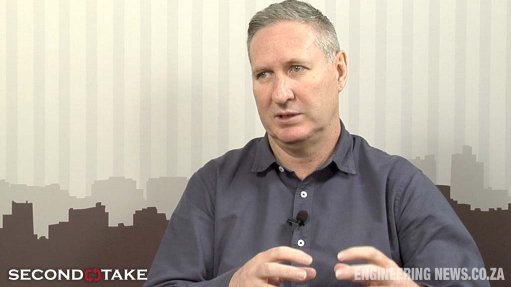
PBMR CEO Jaco Kriek
 
Picture by: Duane Daws
PBMR CEO Jaco Kriek