Creamer Media’s Engineering News Online
Advanced Search


We have detected that the browser you are using is no longer supported. As a result, some content may not display correctly.
We suggest that you upgrade to the latest version of any of the following browsers:
         
close notification
powered by
GOLD 1379.75 $/ozChange: -6.18
PLATINUM 1468.00 $/ozChange: -18.50
R/$ exchange 9.52Change: -0.11
R/€ exchange 12.26Change: -0.18
 
SPACE INDUSTRY
 
SA, Nigeria to use space technology to benefit Africans
 
21st October 2011
TEXT SIZE
Text Smaller Disabled Text Bigger
 

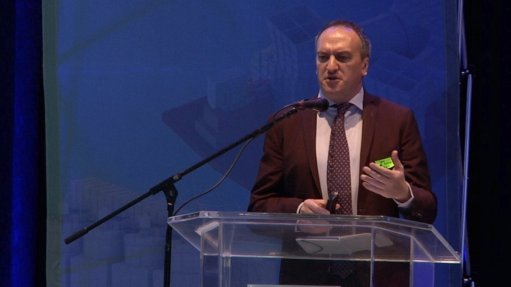
South Africa’s expectations from the space industry have been informed by its current priorities and in this light the key objective has been to use space science and technology to benefit society, South African National Space Agency (Sansa) CEO Sandile Malinga said in Cape Town earlier this month.

Speaking at the International Astronautical Conference, Malinga said that earth observation, through appropriate satellites, had been identified as one of the ways to benefit society, as it would provide tools for planning, resource management, disaster management and other similar applications.

Malinga said that government was looking at playing a direct role in the development of the satellites themselves.

“Our government is looking at probably holding a stake in one of our [satellite] companies. That has not been finalised but that is the current thinking,” he said.

The Nigerian National Space Research and Development Agency’s Seidu Mohammed said that Nigeria had similar policies and expectations as South Africa regarding space.

“The space policy in Nigeria identifies that space technology shall be used as part of the overall strategy for the development of various sectors in Nigeria and bringing good quality life to the Nigerian people,” he said.

Nigeria approved a 25-year road map for the medium-term implementation of the country’s space policy and established a partnership between government, industry and academia to achieve this, Mohammed said.

A key objective had been to increase local competency in the satellite design and construction sector and he said that Nigerian skills had been developing steadily since 2003. The most recent achievement was the launch of the SATX satellite in mid-2011, which was designed by Nigerian engineers in conjunction with Surrey Satellite Technology.

“Subsequently, we expect that our assembly, integration, testing and design centre will be fully developed by 2025 so that satellites can be built back home in Nigeria,” Mohammed predicted.

He said that the Nigerian 25-year space policy was taking cognisance of the fact that high-technology industries in Nigeria were “still very weak and need to be given time and encouragement to grow”.

With a population of over 150-million in Nigeria, Mohammed said that $1-billion leaves the country every year due to communication services and if even 50% of this amount could be captured through the development of local capacity in the communication and satellite sectors then it would be a significant contributor towards the creation of local jobs. This was a significant driver in Nigerian localising satellite and communication skills.

In terms of looking at collaborations with industry to continue implementing the Nigerian space road map, the country would continue its existing partnerships with the UK and China.

However, Mohammed was also enthusiastic in his recognition that there was already strength in the South African space industry and would like to see more partnerships between the two countries involving high technology development, particularly satellites.

“We also expect that some of these companies in South Africa should also have a footprint in Nigeria, so that Nigerians can buy into it so that it becomes a truly African affair.”

Edited by: Martin Zhuwakinyu


To subscribe to Engineering News's print magazine email subscriptions@creamermedia.co.za or buy now.

FULL Access to Mining Weekly and Engineering News - Subscribe Now!
Subscribe Now Login