Creamer Media’s Engineering News Online
Magazine in Store Now!
Advanced Search
 
 
powered by
GOLD 1075.76 $/ozChange: -2.50
PLATINUM 1506.00 $/ozChange: 2.00
R/$ exchange 7.71Change: -0.02
R/€ exchange 10.60Change: -0.01
 
 
2010 WORLD CUP
SA launches ‘greening' strategy for 2010 World Cup
0 COMMENTS  |  
ADD A COMMENT PRINT
 
 
26th November 2009
TEXT SIZE
Text Smaller Disabled Text Bigger
 

South Africa's FIFA 2010 World Cup organising committee (OC), together with the Department of Environmental Affairs and the event host cities, on Thursday launched the national ‘greening 2010' framework, which aimed at reducing the environmental footprint of the sporting spectacular.

Participants unveiled the ‘green goal' logo, and signed a pledge committing their support to the green goal initiatives, which focused on the environmental aspects of waste, energy, transport, water, biodiversity, and responsible tourism before and during the event.

The cross-cutting themes of the initiative were carbon offset and emissions reduction programmes, sustainable procurement, job creation, and communication and outreach.

"Our focus for this World Cup is that it must raise awareness, and substantially change matters relating to the environment. If the World Cup can strengthen our ability to deal with this challenge, it will be a move forward," said 2010 FIFA World Cup OC CEO Danny Jordaan at the launch of the initiative.

"There is already a lot going on, but people just don't know about it," said Environmental Affairs Deputy Minister Rejoice Mabudafhasi of the greening aspects related to the sporting event.

"We need to strike a balance between the social, economic, and environmental sustainability benefits of this World Cup. We have got to adopt an event greening approach. Environmental issues demand serious attention. Event greening can be expanded to other events, as South Africa hosts many major international sporting events. We must have world-class greening event," she reiterated.

Although the participants at the press briefing could not elaborate on the projects they intended undertaking to offset greenhouse gas emissions, beyond planting trees, it was understood that the national department would use the logo and green goal programme as a way to garner funds to be put to use in emission-offsetting projects in future.

Spectators making the long, carbon-emission intensive journey to South Africa could voluntarily contribute to a fund, which would later develop projects to offset emissions related to travel.

Much work was also being done by individual host cities, and the City of Durban, for example, had established that its carbon footprint for the soccer event would be about 307 000 t of carbon-dioxide equivalent. Importantly, the city has committed to carbon neutrality by implementing industrial offset programmes, as well as undertaking a reforestation project.

A carbon footprint for the entire event had been calculated, with funding from the Norwegian Embassy. It has been estimated that the footprint of the event, including international travel (which accounted for 67% of the footprint), would be about 2 753 250 t of carbon-dioxide equivalent.

A feasibility study for developing a carbon-neutral World Cup had also been established.

By virtue of its location, the emissions for the South African World Cup would be considerably higher than that of Germany in 2006, as spectators would be travelling from further destinations.

The waste aspect would look at minimising waste generation, and maximising waste sorting, reuse and recycling. The energy priorities would aim at improving energy efficiency and minimising energy consumption and increasing the use of renewable energy.

With regard to transport, the strategy would try to minimise the use of, and emissions from private vehicles by maximising the availability, accessibility and efficiency of public transport systems. Access for pedestrians and cyclists would also be improved through appropriate surfacing and lighting.

Improved water conservation and water use efficiency was also a key priority. The consumption of water would be minimised and rainwater capture and greywater recycling would be increased. The protection of wetlands and minimal pollution of water resources would also be key.

Protecting and enhancing biodiversity was also an important aspect of the framework, and the green goal would seek to maximise recreation and tourism experiences associated with biodiversity.

The framework would also promote responsible tourism through maximising energy and water efficiency, and minimise waste generation in all hotels, guest houses and bed and breakfast establishments. Green goal would further establish an environmental rating system based on clear criteria and standards, and use every opportunity to sensitise visitors to the need to conserve water and energy.


Edited by: Creamer Media Reporter
 
 
Topics in this article


Hide Comments  
 
This article contains no Comments


All comments must be approved by our editors, click here to read the editorial guidelines for comments. Please allow some time for our editors to approve your comment after posting.
 * Required Fields

image
image
 *


image
image
 *
 

image
image
 

Verification Image

image
image
 * Please enter the text you see in the above image.


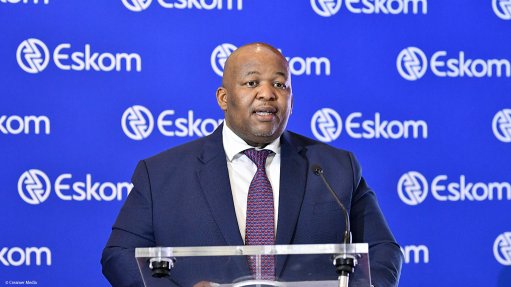
FIFA 2010 World Cup OC CEO Danny Jordaan
 
Picture by: Duane Daws
FIFA 2010 World Cup OC CEO Danny Jordaan
 
Previous Play Next