Creamer Media’s Engineering News Online
Advanced Search


We have detected that the browser you are using is no longer supported. As a result, some content may not display correctly.
We suggest that you upgrade to the latest version of any of the following browsers:
         
close notification
powered by
GOLD 1360.00 $/ozChange: -15.09
PLATINUM 1460.50 $/ozChange: -12.00
R/$ exchange 9.59Change: -0.04
R/€ exchange 12.30Change: 0.03
 
economy
 
SA economy has globally competitive aspects
 
28th August 2012
TEXT SIZE
Text Smaller Disabled Text Bigger
 

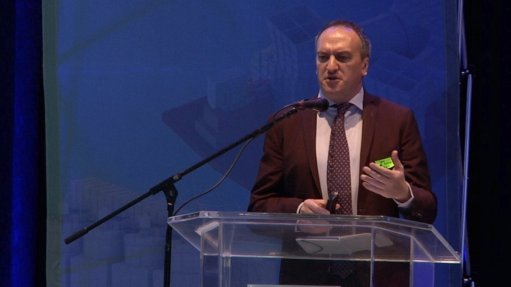
The South African economy has a number of competitive attractions in the global context, economist Chris Hart said on Tuesday.

"The country is solvent, there is yield and there is growth," Hart said in Johannesburg.

"We see this reflected in our financial markets, where investors are supporting our bonds and supporting our stock markets. That suggests that South Africa has an attraction as an investment destination."

However, the country's internal problems were hampering long-term investment, he said.

Hart, chief economist at Investment Solutions, was speaking at a Johannesburg Chamber of Commerce and Industry breakfast.

He said policy uncertainty played a role in hampering the growth and movement of long-term investment, and the country needed policy certainty.

Long-term investment was essential in industries such as mining, agriculture and manufacturing.

"It's not a case to say we've got policy certainty – you've got a choice between dreadful and awful – which is what happened in the mining industry," he said.

"It needs to be supportive policy choices to attract investment."

Hart said it was extremely difficult for small businesses to be formed and to operate in the South African economy, and this contributed to the high unemployment rate.

The economy faced a major problem with its levels of unemployment.

"The reason for unemployment is internal more than external," he told the meeting.

"Unemployment [in South Africa] is exceptional."

He compared South Africa's unemployment rate to that of Brazil. In 2002, joblessness in both countries started decreasing. Then came the 2008 global financial crisis.

The period between 2002 and 2008 generated many jobs. Brazil's unemployment rate decreased after this, but not South Africa's.

"Polokwane also happened... and that's a problem," he said, referring to the African National Congress' elective conference, held in Polokwane in December 2007, where President Jacob Zuma was voted in as ANC president.

"The unemployment rate suggests that we need to be looking at this as a national priority. I think job creation is one of our lowest policy priorities."

The regulatory structure for small businesses was wrong because regulations required economies of scale to administer, which was inappropriate for small business, he explained.

"Your source of capital for small business is largely your households, [which] are effectively savings deficient," he added.

"[Households are savings deficient] because of policy, which basically taxes household capital formation; and it's taxing the things like dividend and interest, which reduces the viability of actually saving."

The fact that people were not being compensated with interest also contributed to the lack of savings.

South Africans should put small business formation at the centre of policy by restructuring the regulatory framework, he said.

The country was fortunate because it was in a good "neighbourhood", with Africa seen as a potential growth region.

"South Africa can still be a gateway, but that opportunity is closing because Africa, in its own right, is establishing itself."

Countries with improving constitutional arrangements, such as Senegal, Ghana, Malawi, Nigeria and Zambia, were places to target in terms of business, Hart said.

Edited by: Sapa

To subscribe to Engineering News's print magazine email subscriptions@creamermedia.co.za or buy now.

FULL Access to Mining Weekly and Engineering News - Subscribe Now!
Subscribe Now Login